
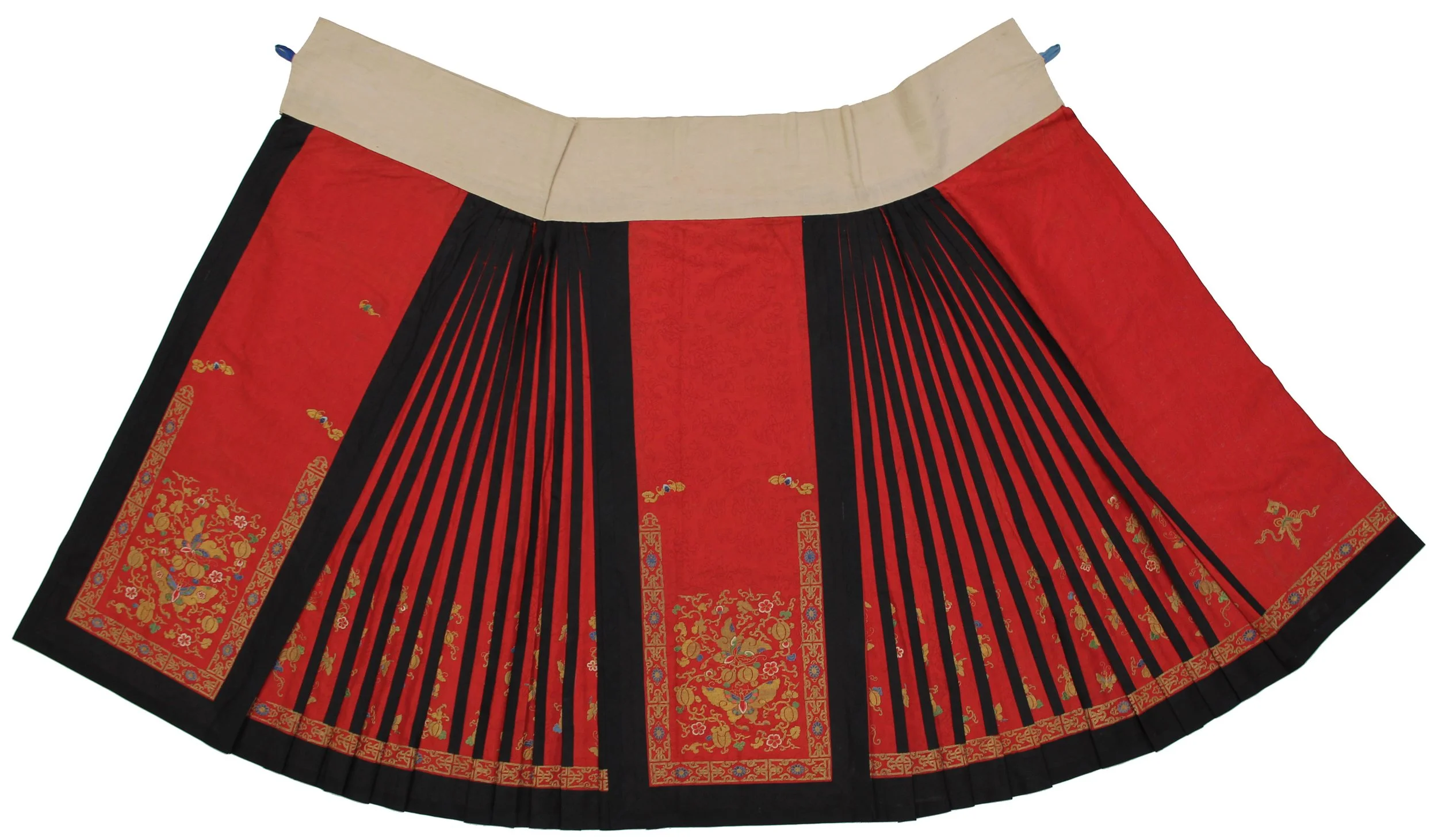
Mǎmiànqún (马面裙)
The mǎmiànqún is a long women’s skirt constructed from two overlapping panels of fabric, with pleated portions at the sides and unpleated sections at the center front and center back. Mamianqun translates to “horse-face” skirt and derives its name from the shape of “horse-face” structures on traditional Chinese city walls, which were rectangular bastions protruding from the wall designed to eliminate blind corners and thus increase the defensive capacity of the wall. The silhouette of the wall is similar to how the skirt is broken into alternating pleated and flat portions. The mamianqun was worn from the Song Dynasty through the Qing Dynasty, and is now very popular amongst the modern Hanfu revival movement.
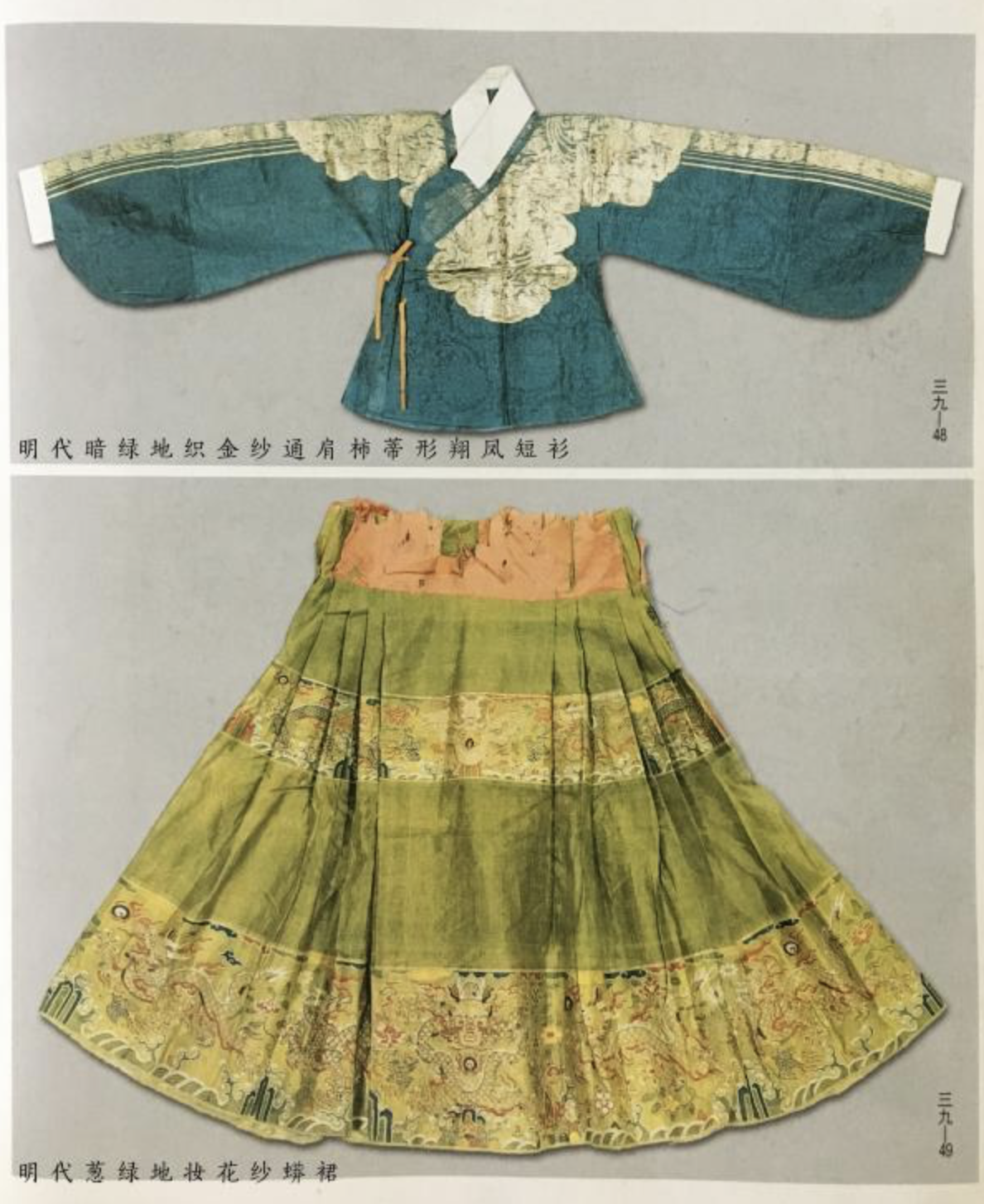
Ǎoqún (袄裙)
The ǎoqún (袄裙) is a set of garments consisting of a long-sleeved top worn layered over a pleated skirt. The upper garment of the aoqun was called the ǎo (袄) if it was lined or the shān (衫) if it was unlined. The lower garment, or qún (裙), was most often a mǎmiànqún (马面裙) skirt. Aoqun were most popular during the Ming Dynasty and Qing Dynasties, and were typically made from silk and decorated with embroidery or made from rich brocades.
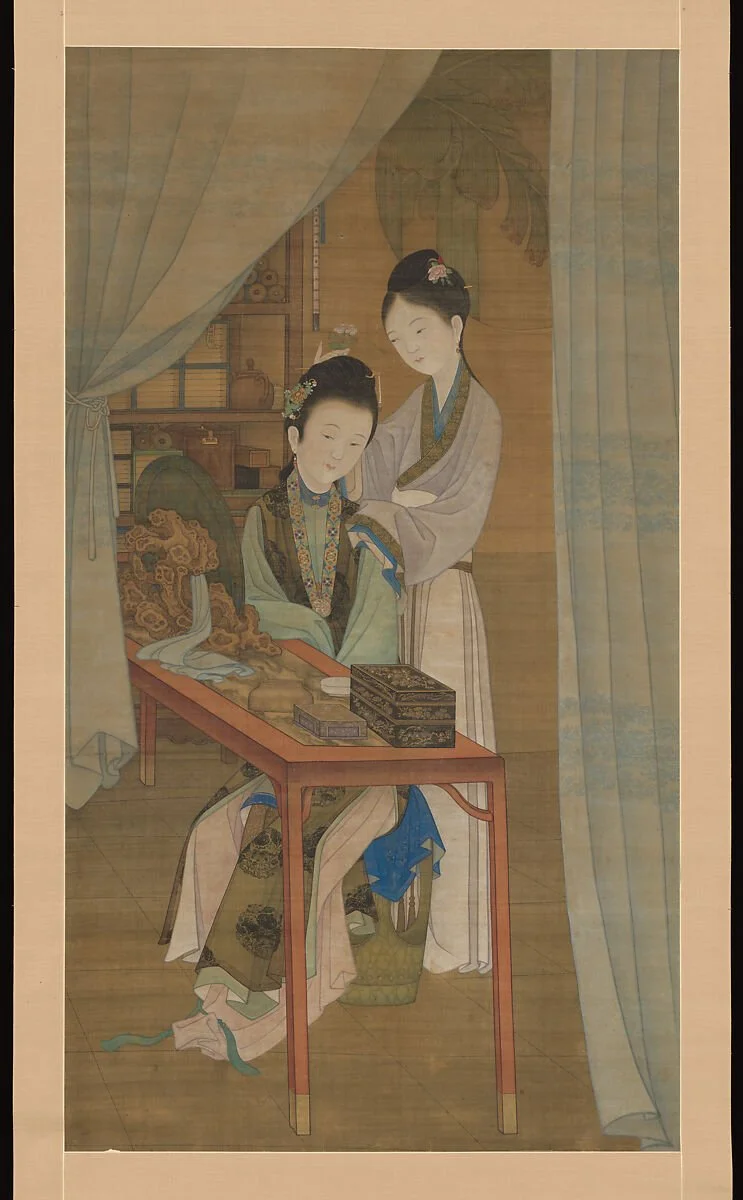
Bǐjiǎ (比甲)
The bijia is a women’s vest featuring a vertical opening in the front and side slits reaching up to the hips or underarms. The bijia could range in length from the thigh to the calf, and could feature a short straight collar, a round collar, or a square collar. Bijia were typically made from silk or cotton and were commonly worn over a top and skirt such as a shan and mamianqun.
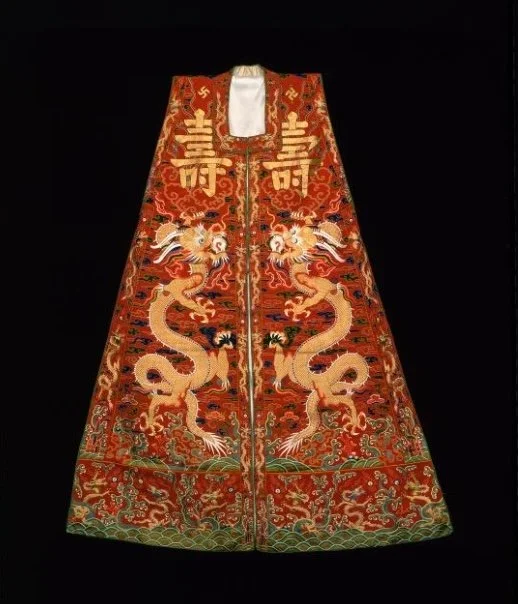
Zhàojiǎ (罩甲)
The Zhaojia is a men’s sleeveless surcoat with a straight opening in the front and a square collar, worn as part of the military uniform in the Ming Dynasty. The length can vary from the thigh to the calf. The zhaojia features side slits and a slit at the center back to accommodate horseback riding.
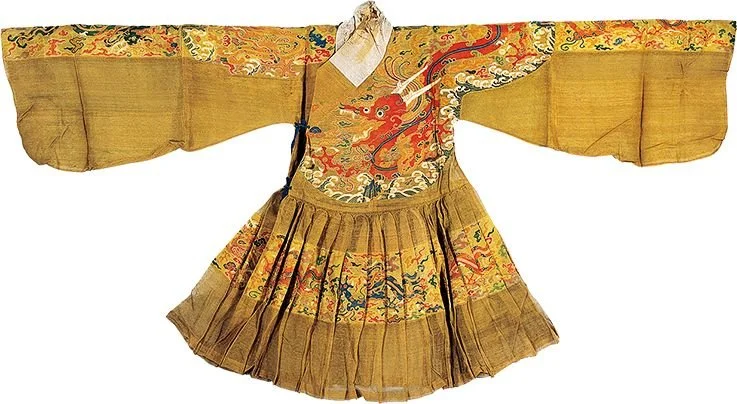
Tiēlǐ (贴里)
The tieli is a crossed-collar men’s robe with a pleated skirt worn in the Yuan Dynasty through the Ming Dynasty. An exclusive form of ceremonial tieli were known as cìfú (赐服). Cifu were decorated with 4-clawed dragon-like creatures and could be broken down into categories: mǎngfú (蟒服, python robe); fēiyúfú (飞鱼服, flying fish robe); dòuniúfú (斗牛服, fighting bull robe); and qílínfú (麒麟服, qilin robe).
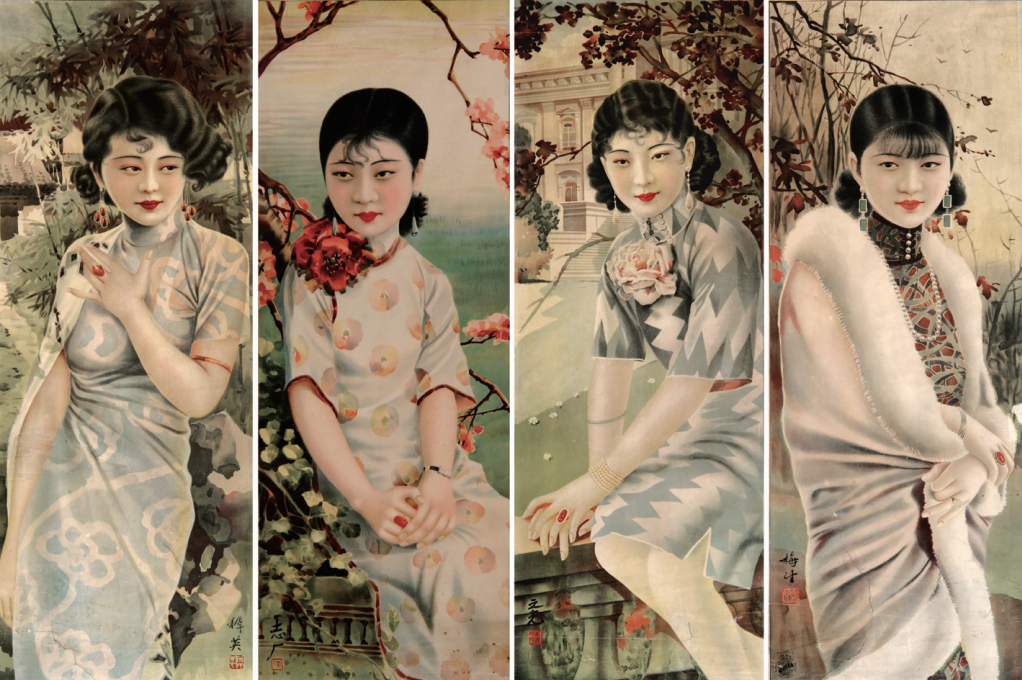
Qípáo (旗袍)
The qipao (“flag robe”), also known as cheongsam, is a style of dress that evolved from traditional Manchurian women’s clothing and is now very popular in modern wear. Originally long-sleeved, loose, and floor-length, in the last century, qipao have undergone drastic changes in hemlines, waistlines, collars, sleeves, and embellishments following rapidly changing trends. The qipao has ultimately evolved into a modern fashion staple on the international scale.
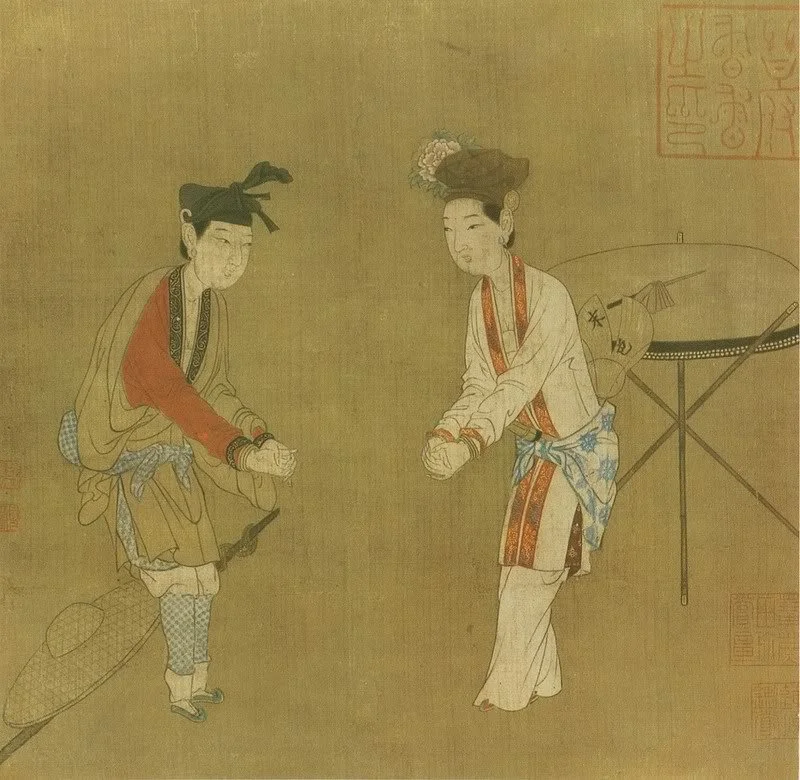
Hédāngkù (合裆裤)
The hedangku are a type of unisex loose trousers with an oversized waistband folded and cinched around the waist with a tie. Hedangku are often worn as an undergarment beneath robes or skirts, or paired with a loose top.
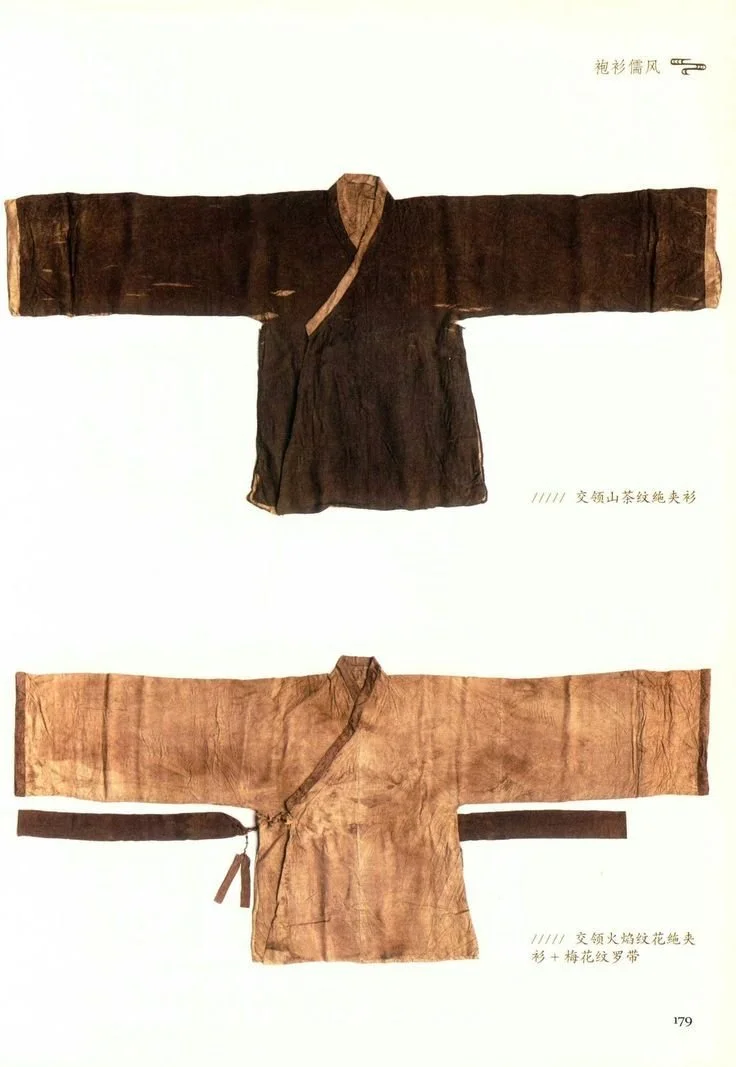
Shùhè (裋褐)
The shuhe is a unisex utilitarian cross-collar top, typically paired with a pair of trousers (called ku/kun), worn by commoners and martial artists. The hem of the shuhe can range in length, typically falling between the hip and the thigh; and the sleeves of the shuhe typically reach between the wrist to slightly beyond the fingertips.
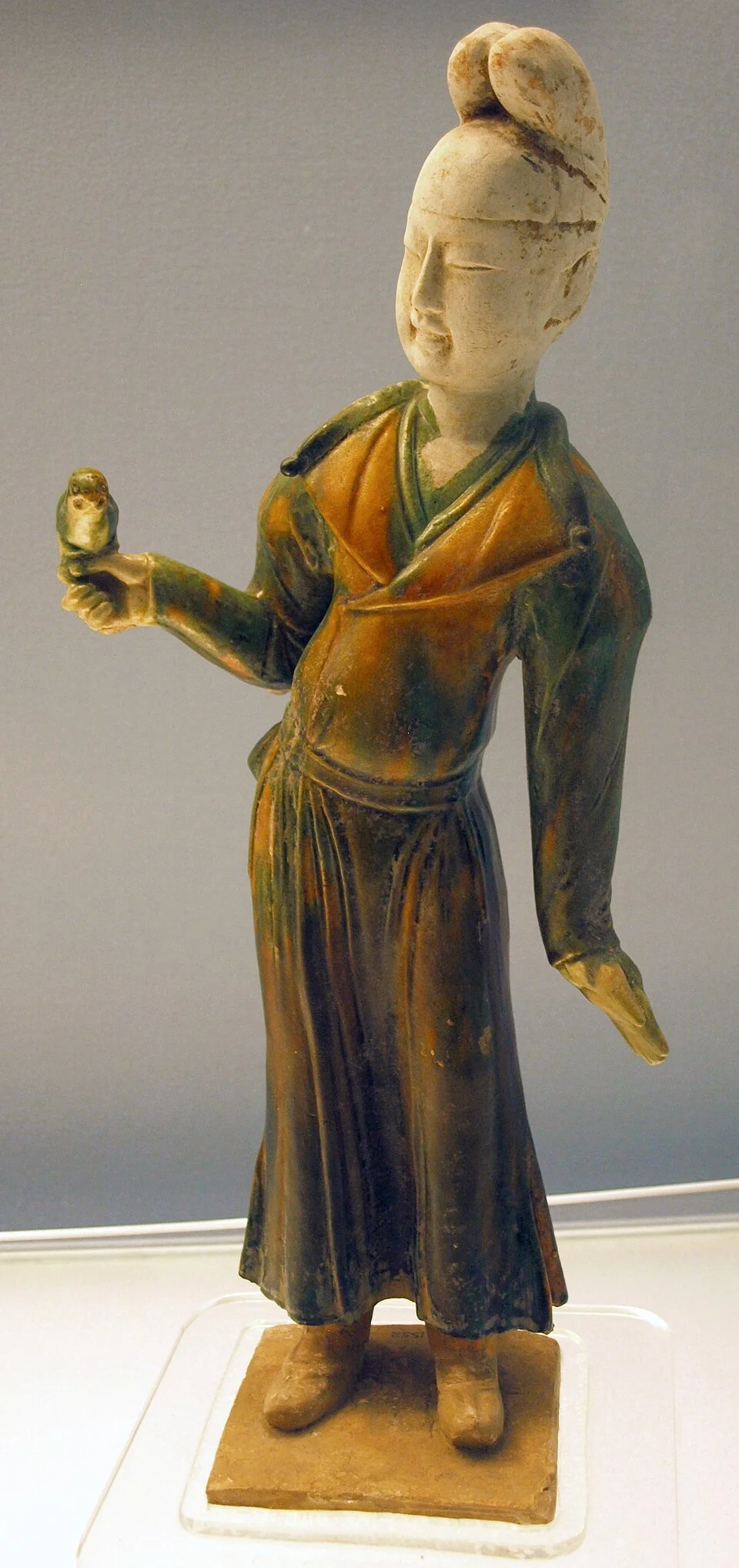
Fānlǐngpáo (翻领袍)
The fanlingpao is a type of Hufu robe from Central Asia featuring overturned lapels. Although the exact origin of the fanlingpao is unknown, it is generally believed to have been influenced by Sogdian culture—an Iranian people who lived in today’s Uzbekistan and Tajikistan—who wore a similar robe featuring a central closure.
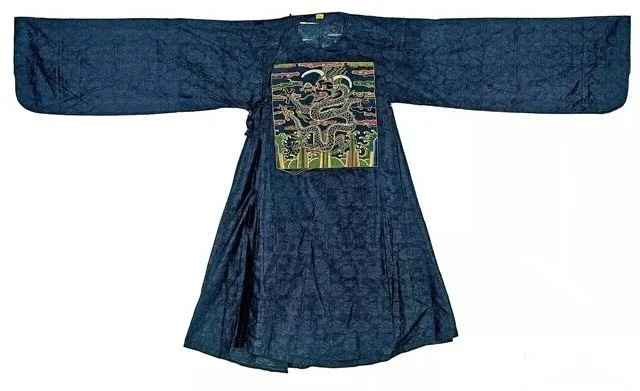
Yuánlǐngpáo (圆领袍)
The yuanlingpao is a long round-collared outer robe worn layered on top of other garments, such as the zhiduo or tieli. The yuanlingpao evolved from the Hufu fanlingpao of Central Asia which features curved overturned lapels.
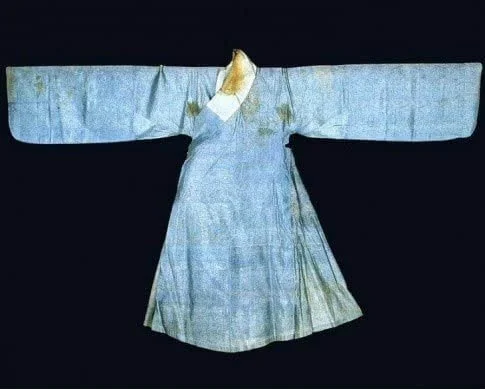
Zhíduō (直裰)
The zhiduo is a cross-collar long men’s robe favored by scholars, officials, and Buddhist monks. Zhiduo can have straight sleeves or wide curved pipa sleeves, and the hem length should fall between the knee and the ankle. Typically, the collar has a white collarguard sewn on top of it designed to be replaced when it becomes soiled or worn out. Zhiduo were worn between the Tang Dynasty and the Ming Dynasty, however styles slightly varied between dynasties.
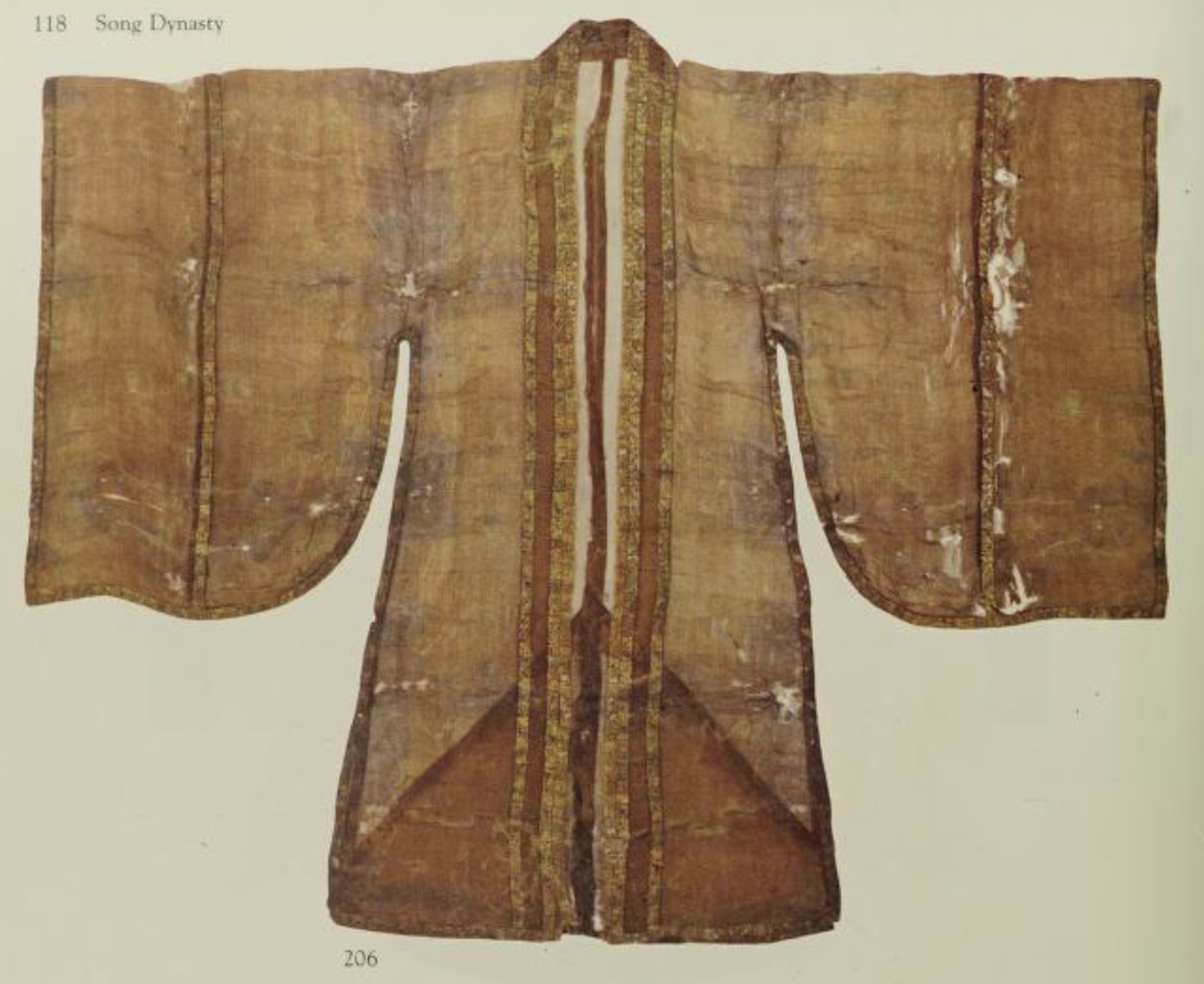
Dà Xiù Shān (大袖衫)
The da xiu shan is an ankle- to floor-length overcoat with long sleeves that trail to the knees or to the ankles. The collar of the da xiu shan is straight and vertical and often features a tie at around knee height. The da xiu shan was a staple amongst the women of the Tang Dynasty, who often wore it over high waisted qixiong ruqun dresses.
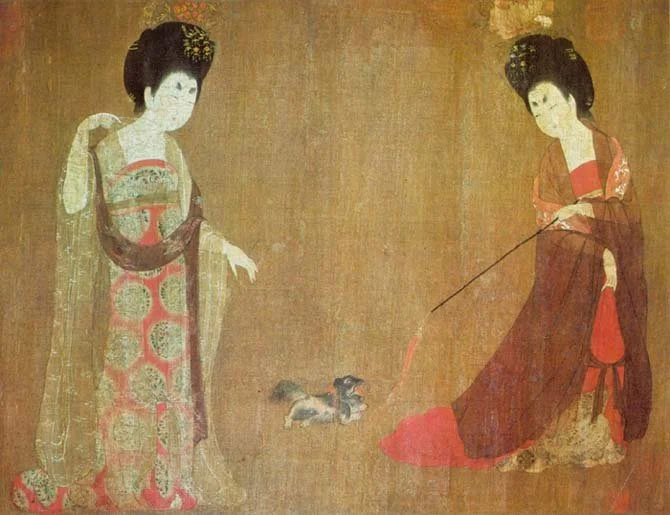
Qíxiōng Rúqún (齐胸襦裙)
The ruqun is a style of Hanfu featuring a narrow-sleeved short jacket called a ru worn fastened underneath a pleated skirt called a qun. The qixiong ruqun is a specific style of ruqun that skyrocketed to popularity in the Tang Dynasty where the ruqun ties above the bust right beneath the armpits. The qixiong ruqun has become emblematic of the Tang Dynasty, but was worn from the Sui Dynasty through the Five Dynasties Period.
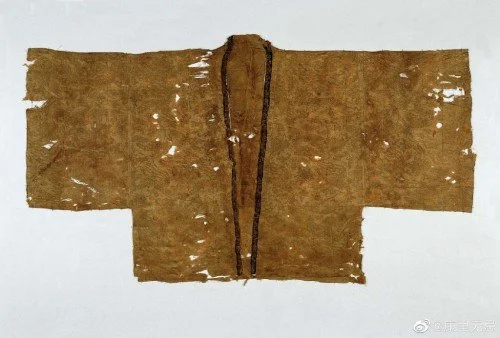
Bànbì (半臂)
The banbi is a short jacket with short sleeves. The collar of the banbi was most commonly straight and vertical (duijin) and could feature ties in the front. However crossed-collar (jiaoling), round-collar (yuanling), u-shaped-collar (tanling), and square-collar (fangling) variations were also made.
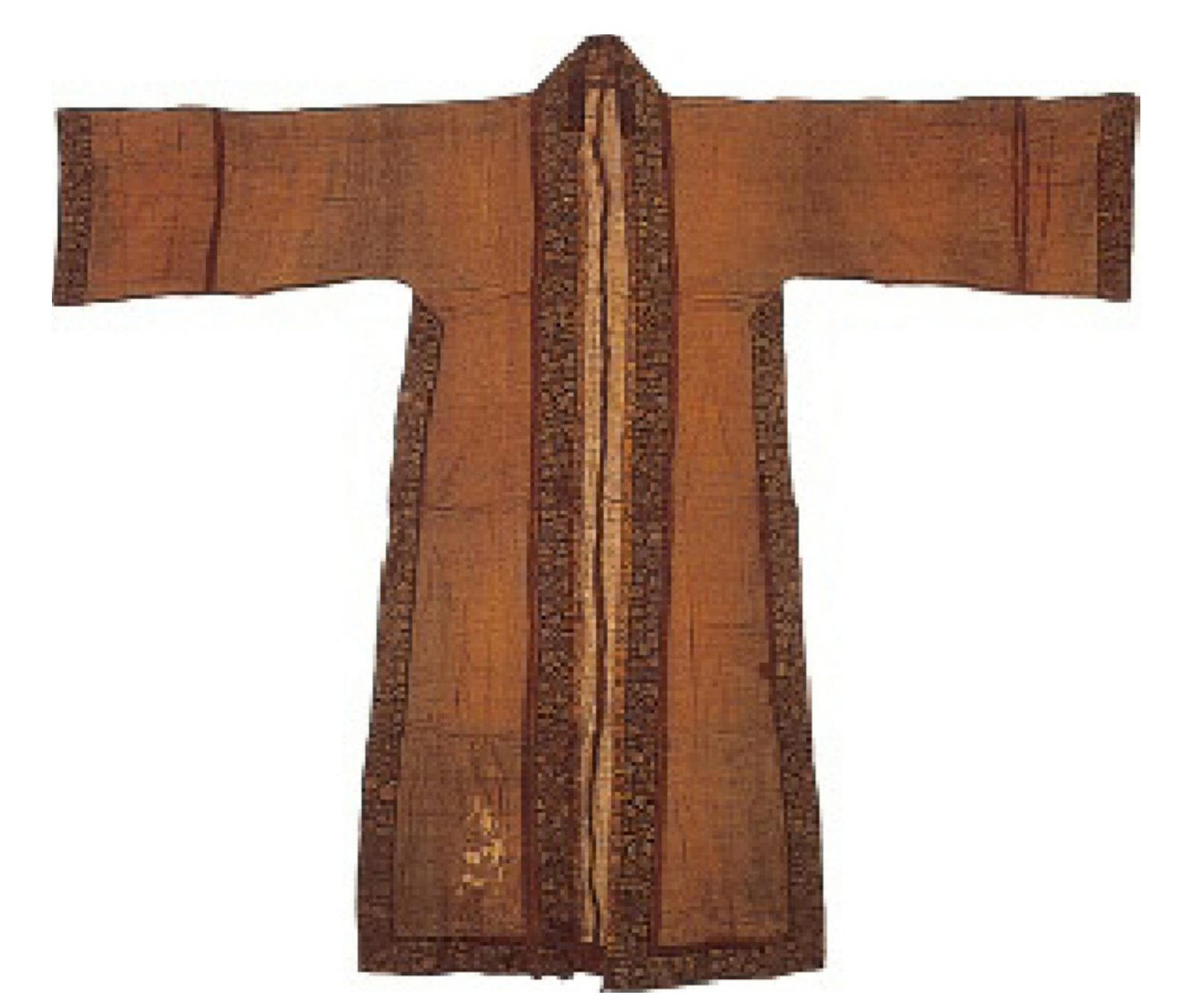
Bèizi (褙子)
The Beizi is an overcoat with straight vertical collars that are not fastened in the front so that the inner layers of the outfit are visible. Beizi can range in length from ankle-length to above the knee; and the sleeves can be deep or narrow, long or short. Often, there are side slits reaching up to the waist or armpit. The beizi was often worn over a yichang style upper garment and skirt (qun) or trousers (ku/kun).
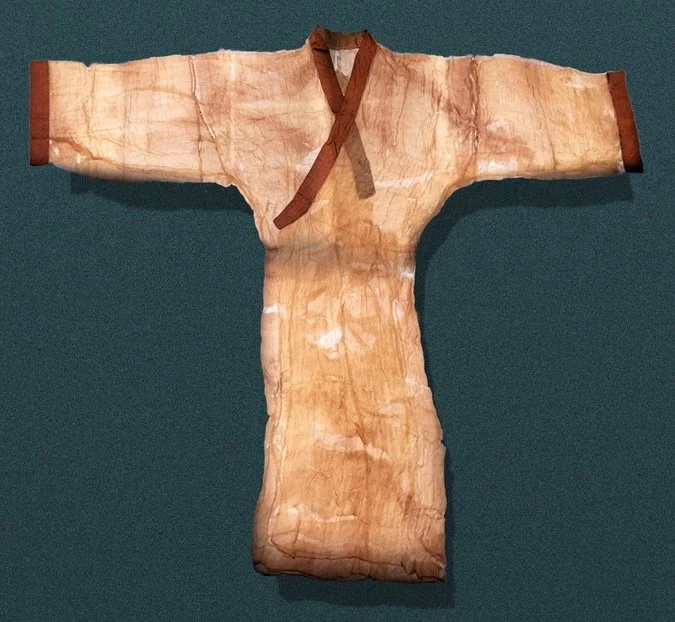
Shēnyī (深衣)
The ancient Chinese placed great symbolic importance between the division of an upper garment, called a yi, and a lower garment, called a chang. The separation of the garments was meant to represent the greater order of the heavens and the earth. In the Warring States Period, the two-piece yichang evolved into a long crossed-collar one-piece garment called the shenyi. The shenyi still had a seam at the waist, to represent the symbolic divide between the heavens and the earth.
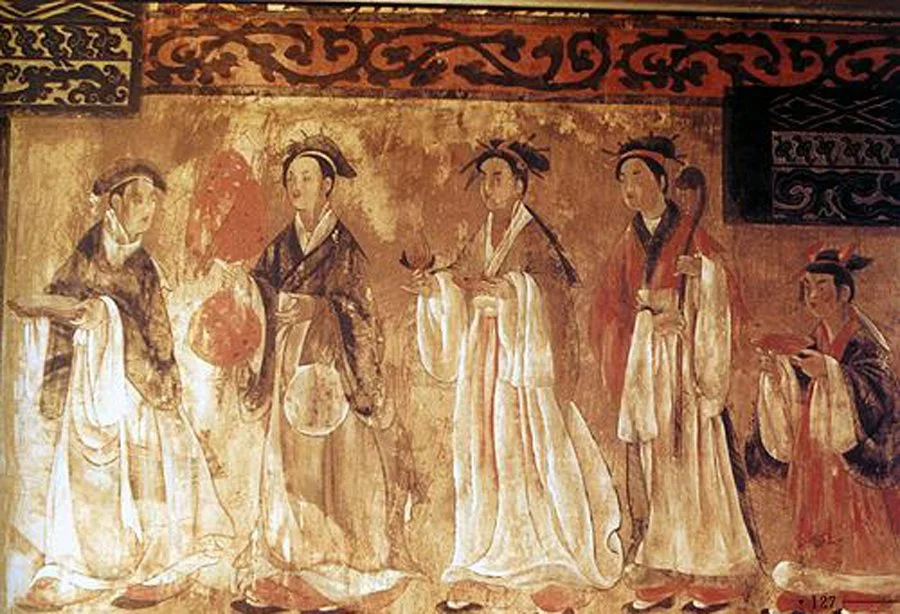
Yīcháng (衣裳)
Yichang is a generic term for a style of clothing consisting of an upper garment, the yi, and a lower garment, the chang. Most commonly, the upper garment would be a cross-collared top and the lower garment would be a skirt (qun) or trousers (ku/kun).