
Qípáo (旗袍)
The qipao (“flag robe”), also known as cheongsam, is a style of dress that evolved from traditional Manchurian women’s clothing and is now very popular in modern wear. Originally long-sleeved, loose, and floor-length, in the last century, qipao have undergone drastic changes in hemlines, waistlines, collars, sleeves, and embellishments following rapidly changing trends. The qipao has ultimately evolved into a modern fashion staple on the international scale.
The original qipao, worn by Manchu women at the end of the Qing Dynasty, was straight cut, loose, and floor-length with narrow wrist-length sleeves. Frog closures fastened the garment from the neck to the underarm across the right side of the body in the traditional Chinese way. Decorative trims lined the cuffs, collar, front placket, and hems, with curving swirls along the side seams. The garment was made from silk or satin and richly embroidered with elaborate patterns.
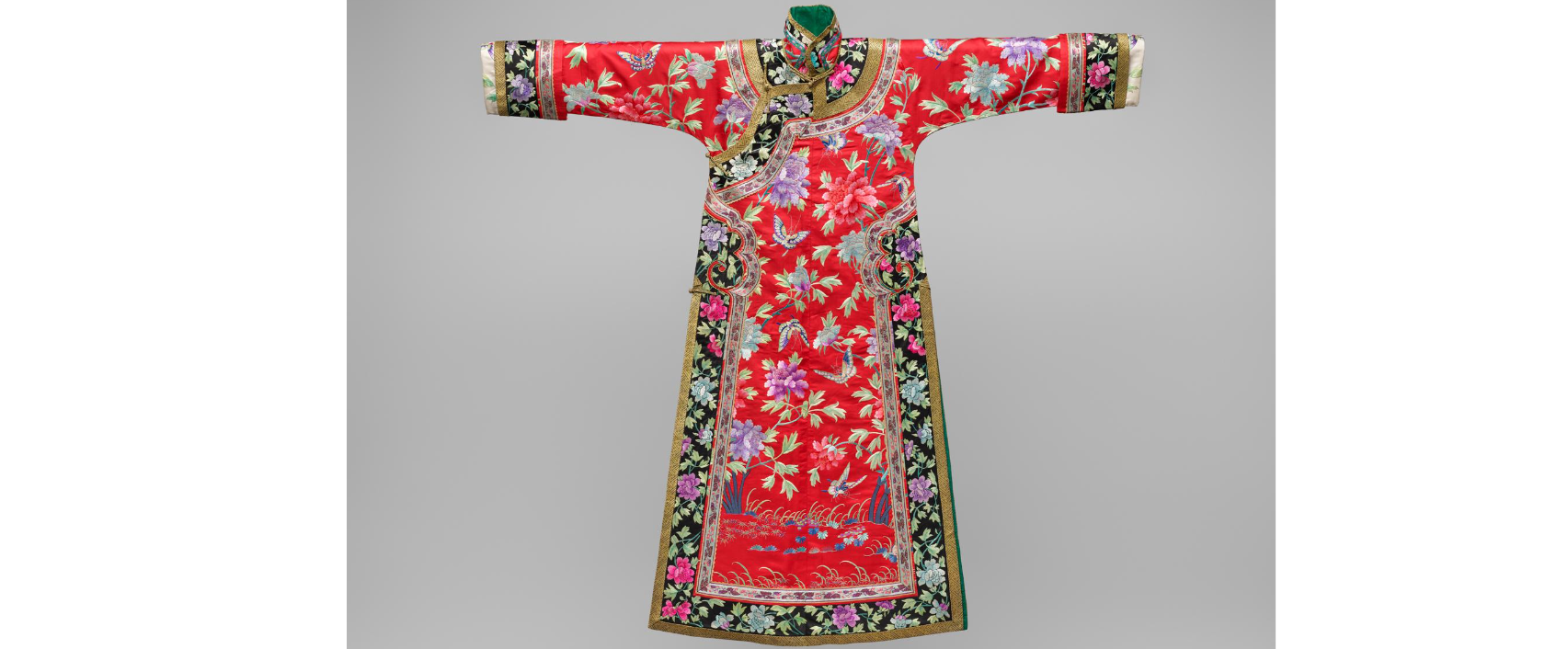
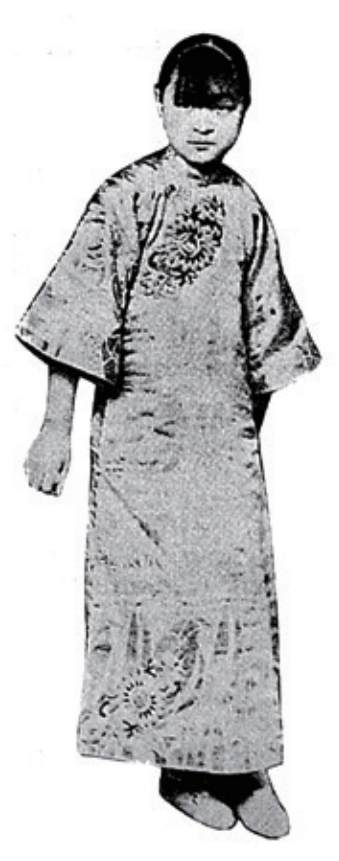
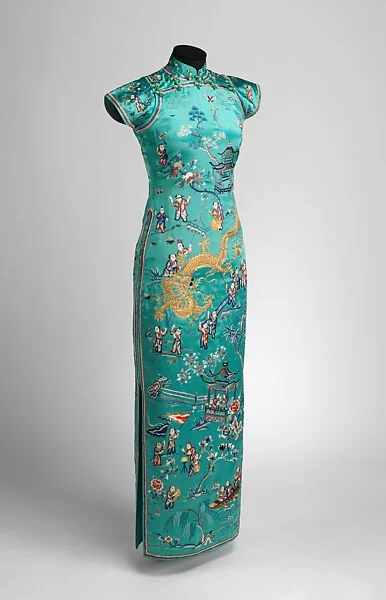
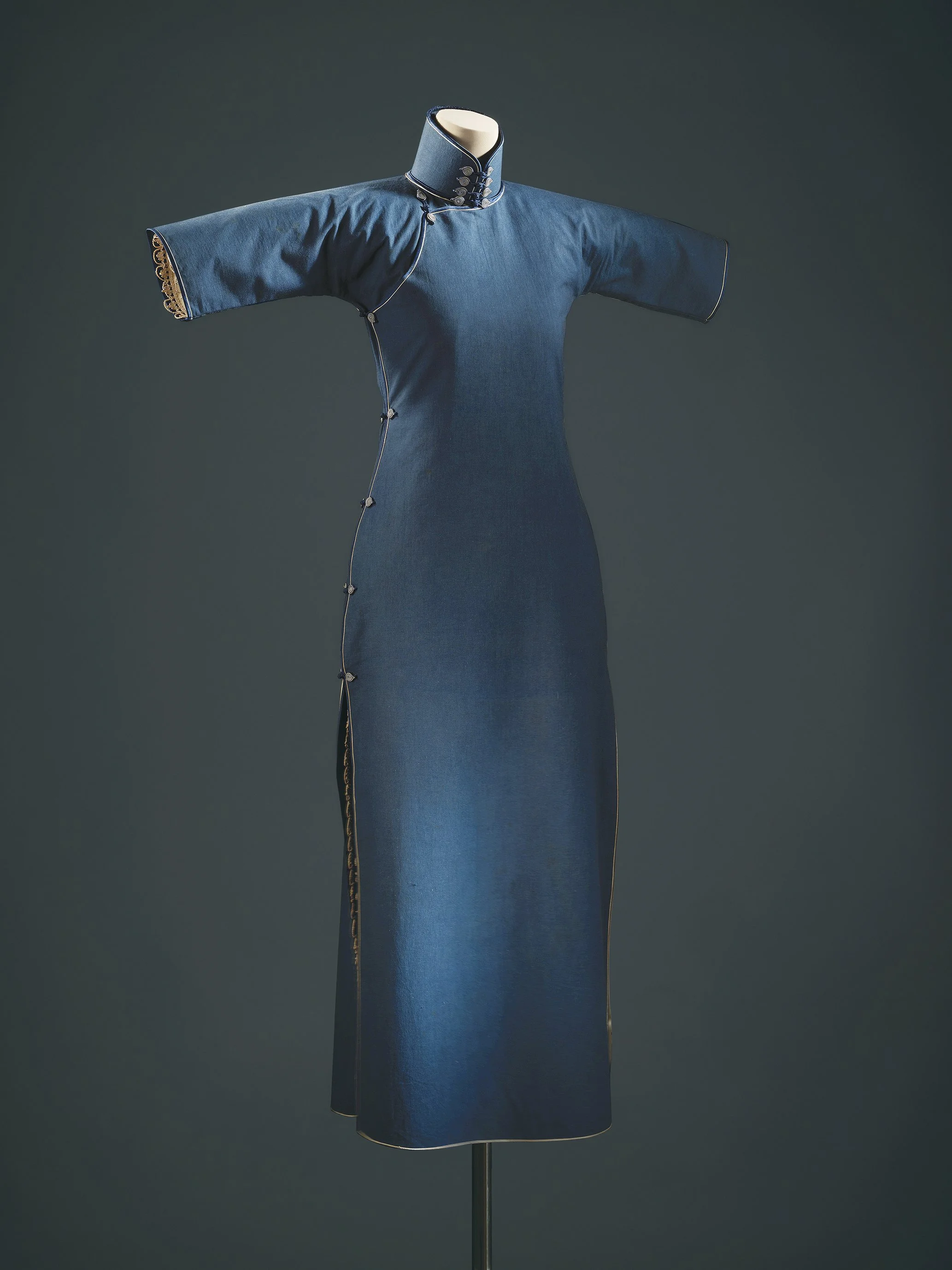
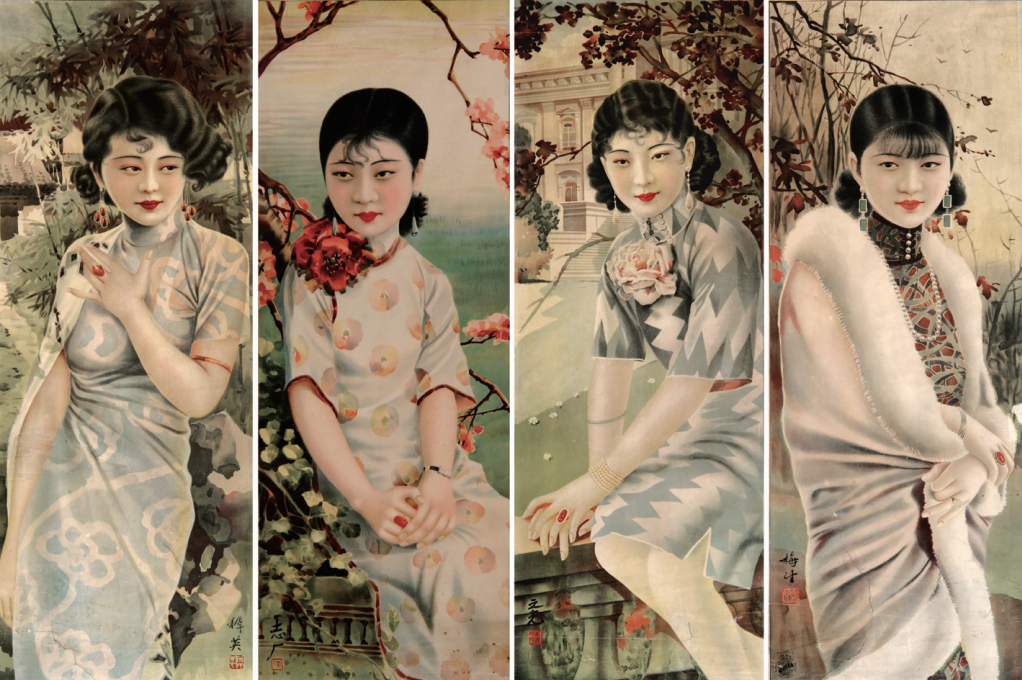

In 1921, a group of female high school students in Shanghai pioneered an early version of the modern qipao. It was a blue, loose-fitting, ankle-length cotton dress with bell-sleeves. There was no trim along the collar, font placket, or hem, and the robe looked very austere and formal. It quickly gained popularity amongst women in metropolitan cities like Beijing and Shanghai.
By the 1930s, the qipao hem had shortened greatly, the armscye and sleevecap became tight and curved to mimic Western tailoring, and the waistline narrowed with side vents reaching up to the thigh. The sleeves, which were originally wrist-length, shortened to the elbow, then to the upper arm, and then were sometimes removed altogether. Although traditional Chinese clothing concealed the contours of the body, modern fashion trends of highlighting the curves of a woman’s body led to the qipao silhouette becoming very form-hugging. Fabric choices also diversified, from the traditional jacquard brocade to lighter-weight printed cottons, linens, silks and wools. The wide decorative trims of the Qing Dynasty were replaced by delicate piping along the collars, front placket, cuffs, and hems.
By the 1940s, qipao had diversified into a huge range of substyles and experimental designs. As Western fashions evolved, so too did qipao trends. When stockings and high heels were in vogue, the qipao side slit was raised to the hip to show off the hosiery. When lace was in fashion, layers of lace were added to the hem of the qipao. Matching scarves, hats, and furs were also added to complete the qipao ensemble.
In the modern day, innovative designers are constantly creating new iterations on the classic qipao silhouette, from wedding gowns, to company uniforms, to Olympics uniforms, to daily wear.
Sew Your Own
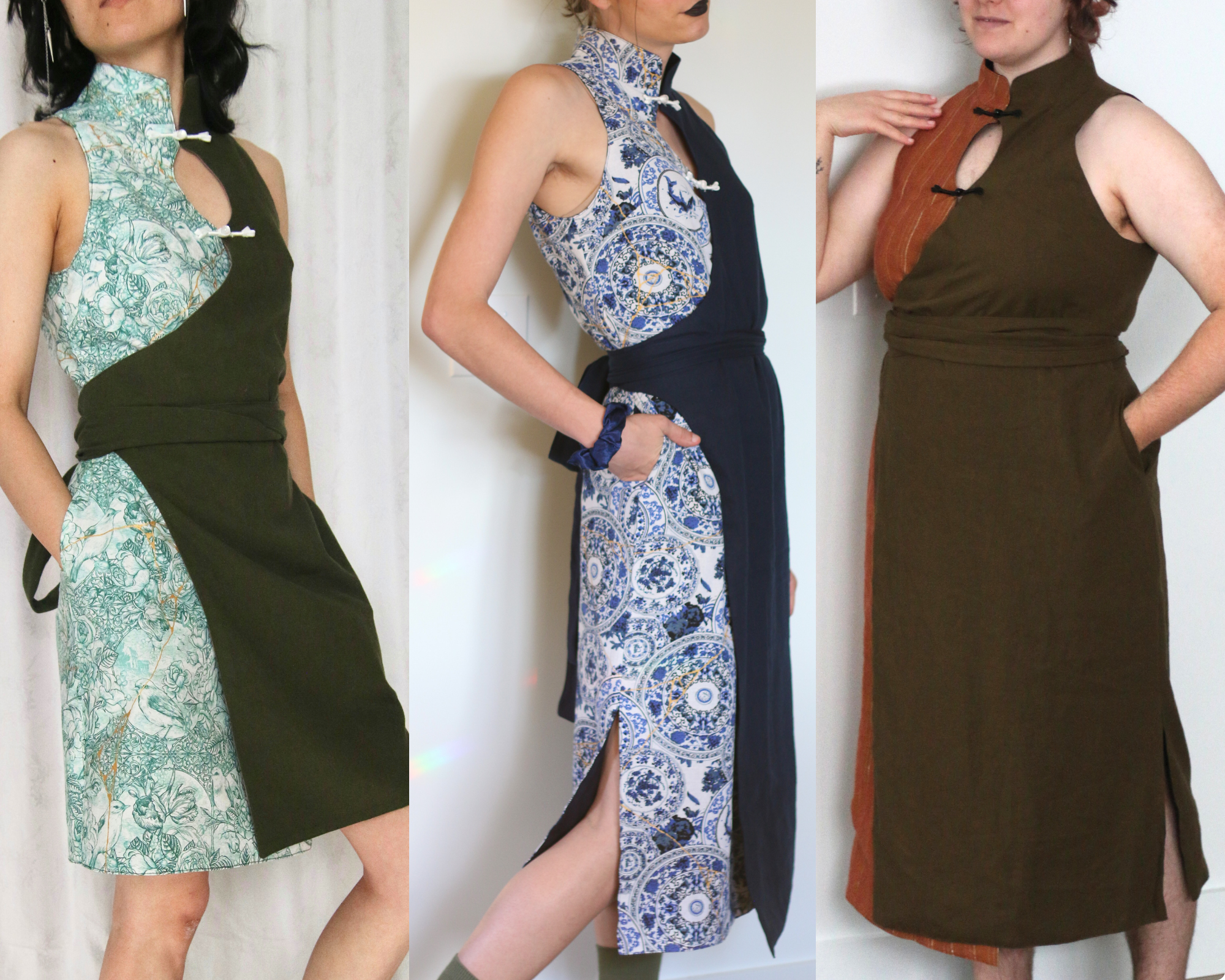
Interested in making a qipao? Use “The Socialite” qipao wrap dress pattern—my modern twist on a traditional silhouette.
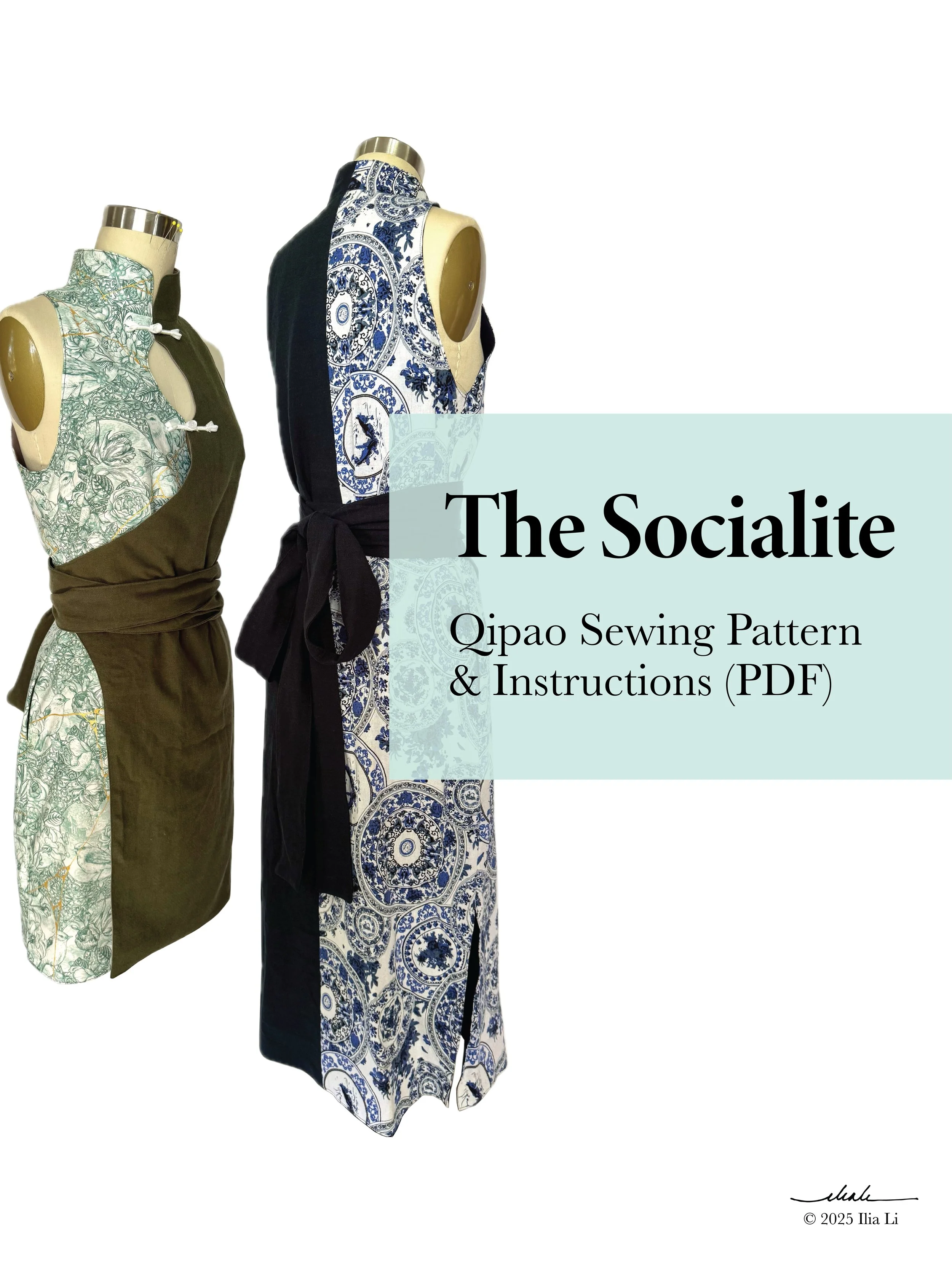
Looking for an elegant but comfortable dress with pockets?
“The Socialite” dress is my modern twist on a qipao (also known as cheongsam), which I designed for my slow fashion clothing line. The wrap design makes the waist adjustible and comfortable, and the sewing pattern comes with both an midi-length version and a knee-length version. It’s fully lined, and yes, it has deep pockets!
This digital download includes:
Printable sewing pattern & fully illustrated sewing instructions for the wrap qipao dress
Printable patterns are compatible with US Letter, A4 paper, and A0 paper
4 sizes S/M/L/XL covering approximately US women’s XS-XXL (see size chart image for detailed measurements)
Estimated yardage and sample cutting layouts
Note that I pattern in metric, so the standard seam allowance is 1cm (3/8in). Information to alter the seam allowance is provided.
When you purchase this pattern, a checkout page will open containing a link to the digital download that will last for 24 hours. You will also receive an email with the same link. The download is a zip file which you will need to unzip to access the PDFs of the printable patterns and instructions. Please make sure to provide your correct email address so that the digital download is delivered to you successfully and remember to download it within 24 hours of delivery. To use the digital pattern, print out the pattern PDFs, tape together the numbered grid of pages, and then cut out the pattern pieces.
Note that this pattern is to be used for your personal use only. Commercial use and redistribution are not permitted.
Sources Consulted (photo sources listed in image captions):
Chinese Clothing by Hua Mei
5000 Years of Chinese Costume by Xun Zhou
Research of Qipao and Textiles in Republic of China by Gong Jianpei
