
Shùhè (裋褐)
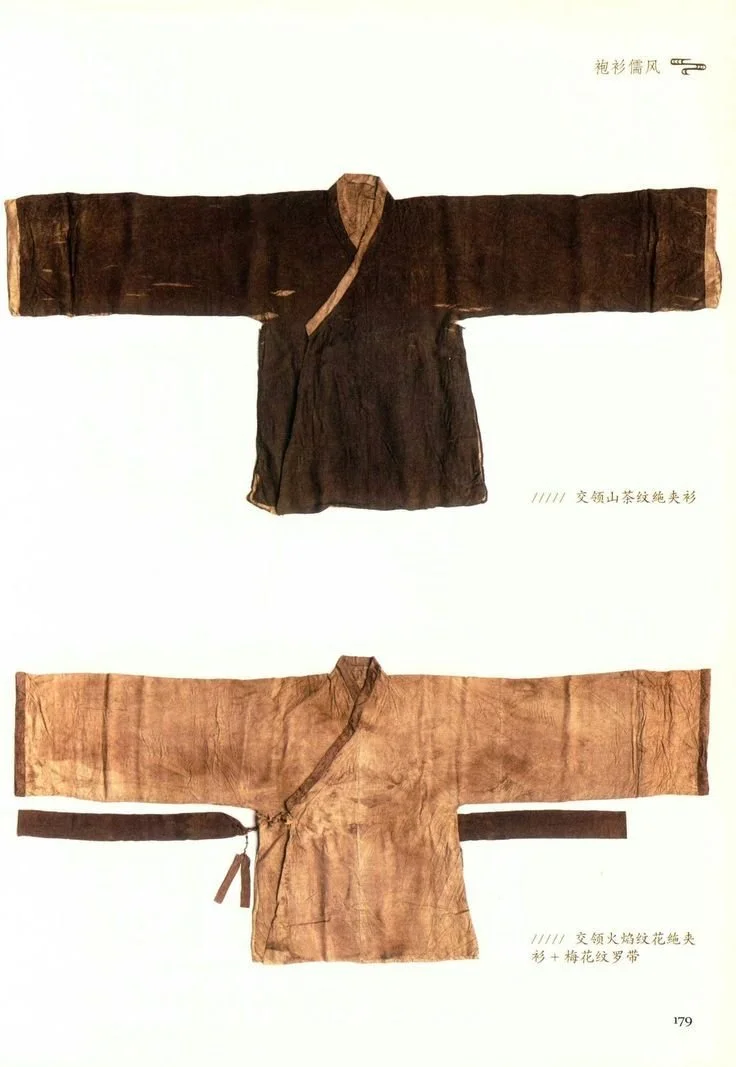
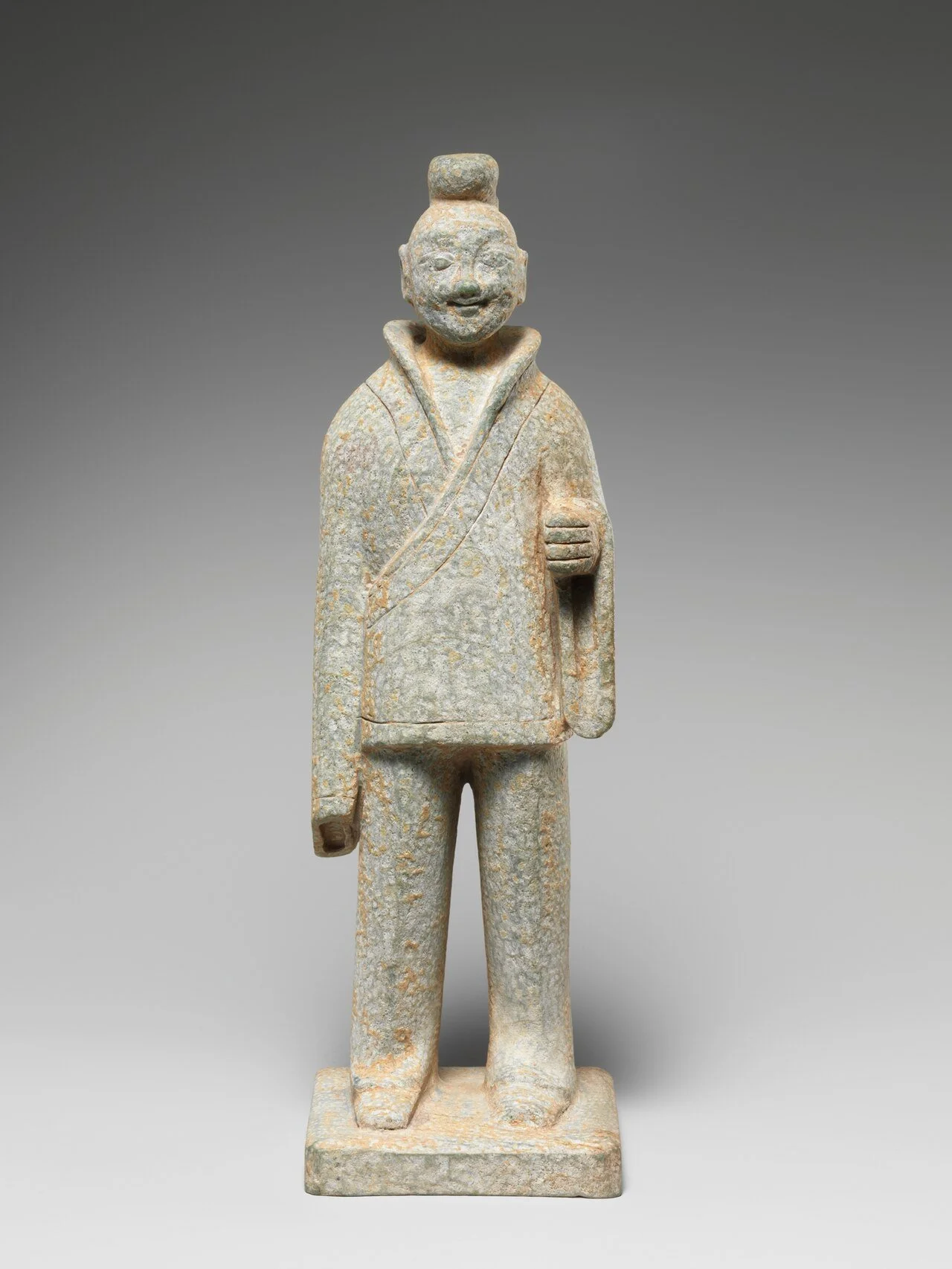
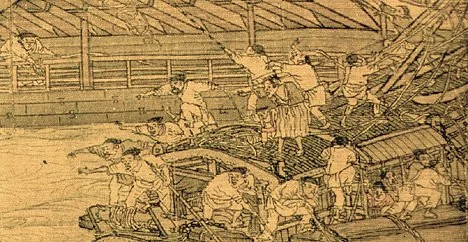
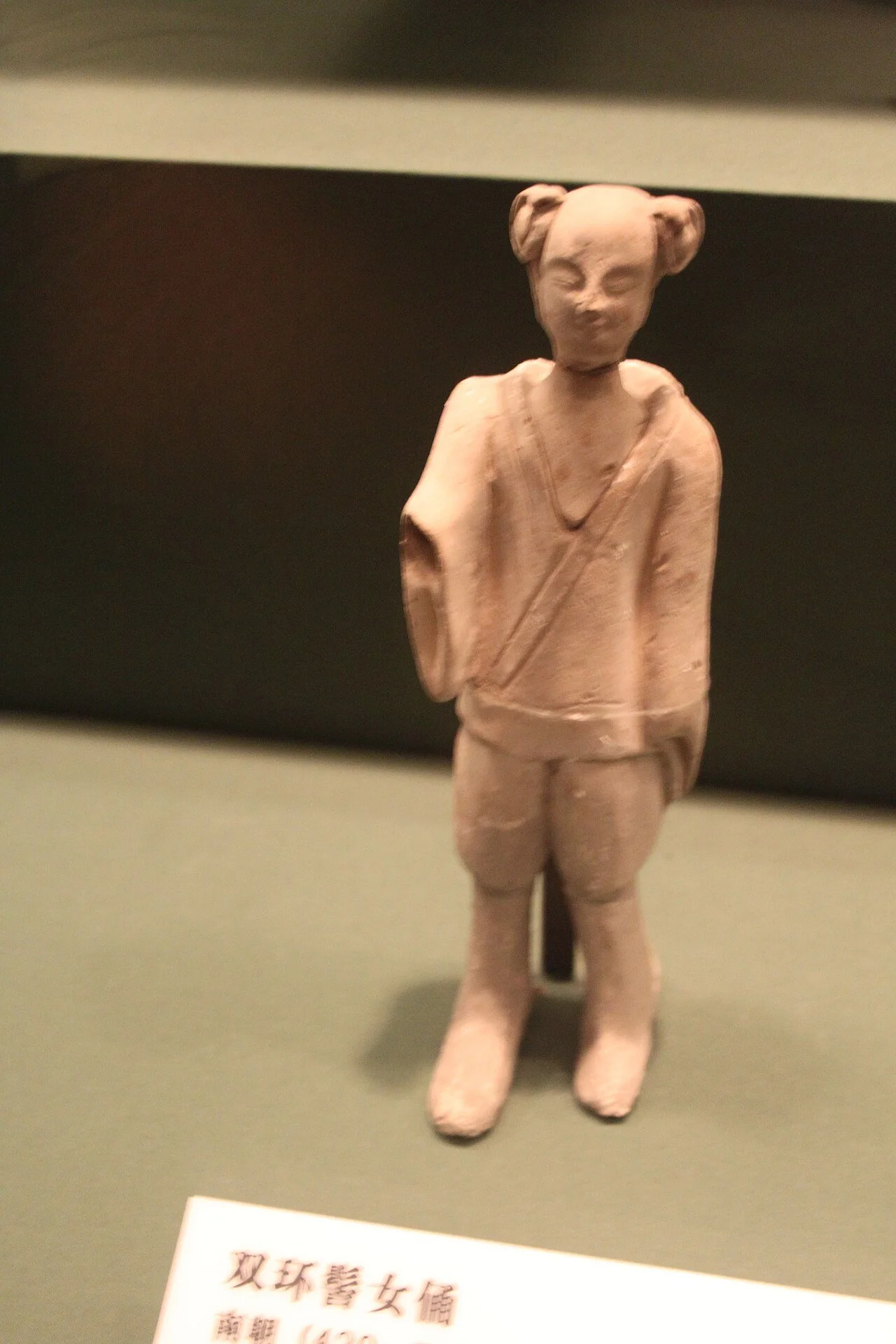
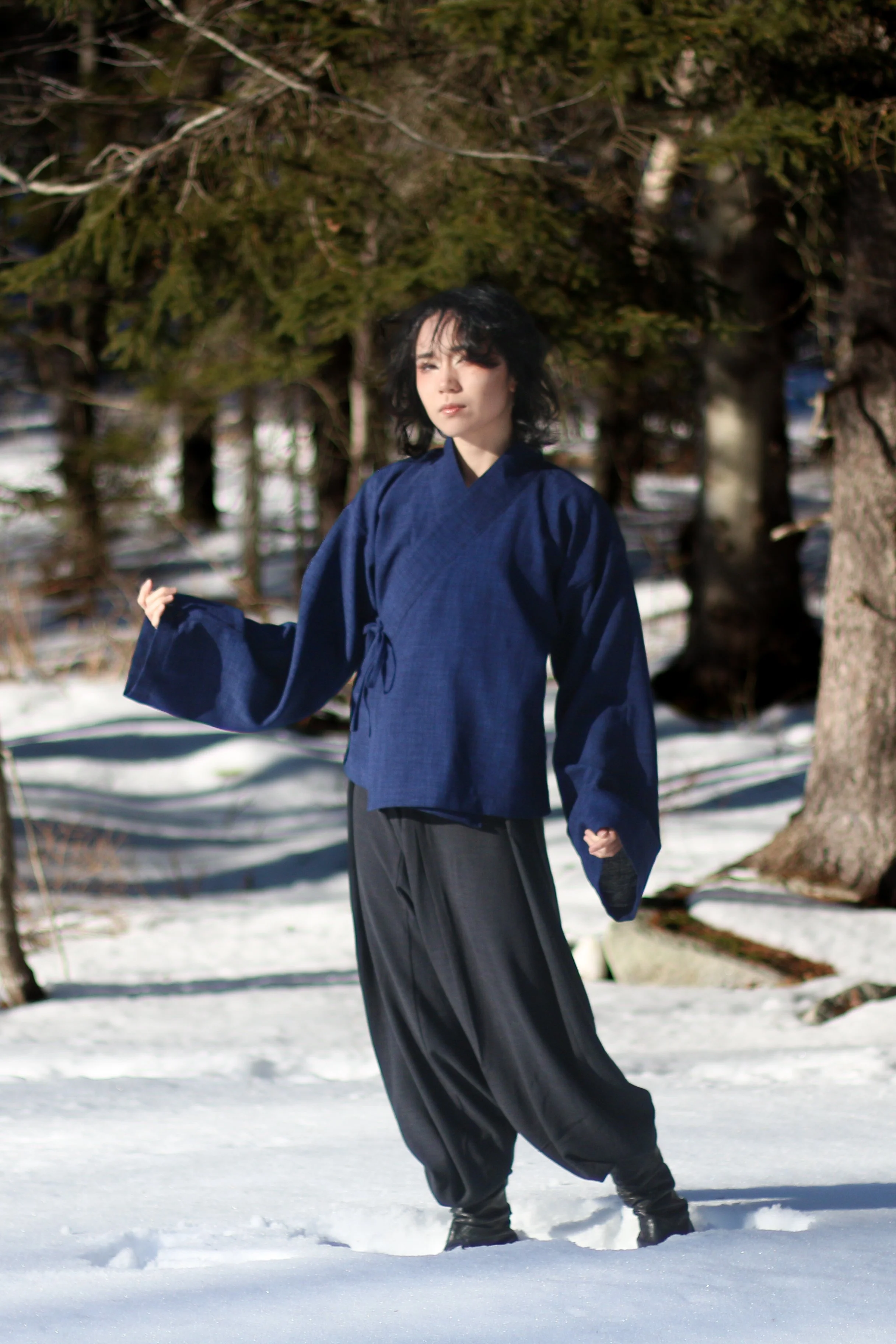
The shuhe is a unisex utilitarian cross-collar top, typically paired with a pair of trousers (called ku/kun), worn by commoners and martial artists. The hem of the shuhe can range in length, typically falling between the hip and the thigh; and the sleeves of the shuhe typically reach between the wrist to slightly beyond the fingertips. It was common to tie a fabric sash around the waist to secure the shuhe. To provide excellent mobility, shuhe were often made with side slits below the waist. The trousers could also be secured below the knee with a string to hold them out of the way while working. In line with its reputation as a utilitarian garment, shuhe were generally made with a collarguard, designed to be removed and replaced when it became soiled or worn out.
The shuhe was most popular between the Zhou Dynasty and the Ming Dynasty, and was typically made from coarse cloth, such as hemp or animal fibers. Shuhe were often undyed and brown, but could be dyed black, gray, or blue. Commoners were generally forbidden from wearing fine fabrics or flashy jewelry, so the shuhe was unembellished and unaccessorized. Shuhe fall under the broader umbrella category of shānkù (衫裤), which is a generic term for an outfit consisting of a cross-collar top and long trousers.
Sew Your Own
Interested in making your own shuhe? Use “The Adventurer” hanfu sewing pattern (includes shuhe, hedangku, fanglingpao, and accessories patterns).
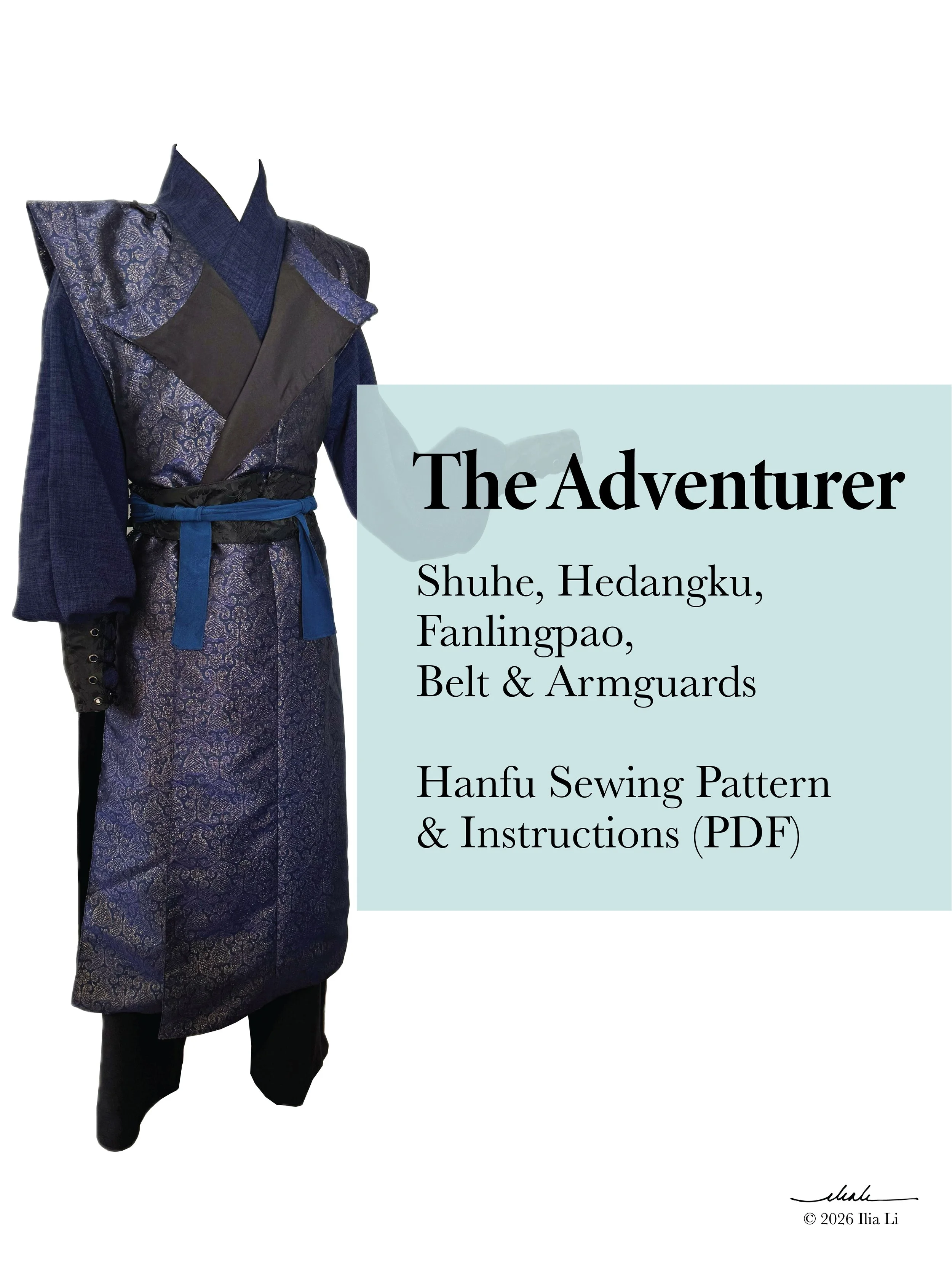
Looking for a Hanfu sewing pattern? Making a wuxia, xianxia, or danmei cosplay or Chinese historical reenactment costume? Want a pattern that provides info on how to properly wear Hanfu and historical considerations like sleeve length and fabric choices? I have made just the pattern for you! This pattern includes 3 garments—a shuhe, hedangku, and fanlingpao, as well as accessories (belt and armguards)—which can be worn layered together or separately. The fanlingpao, belt, and armguards in this pattern are designed in a fantasy style that has become popular in modern wuxia/xianxia media. The shuhe and hedangku in this pattern are designed in a more historical way.
This digital download includes:
Printable sewing pattern & fully illustrated sewing instructions for 3 garments plus accessories: Shuhe, Hedangku, Fanlingpao, Belt & Armguards
Printable patterns are compatible with US Letter, A4, and A0 paper
4 unisex sizes covering approximately US men’s XS-L or women’s XS-XXL and instructions on how to resize your pattern
See size chart image for detailed measurements
Instructions on how to wear Hanfu
Historical considerations for fabrics, colors, motifs, and fit
Estimated yardage & sample cutting layouts
Note that I pattern in metric, so the standard seam allowance is 1cm (3/8in). Information to alter the seam allowance is provided
When you purchase this pattern, a checkout page will open containing a link to the digital download that will last for 24 hours. You will also receive an email with the same link. The download is a zip file which you will need to unzip to access the PDFs of the printable patterns and instructions. Please make sure to provide your correct email address so that the digital download is delivered to you successfully and remember to download it within 24 hours of delivery. To use the digital pattern, print out the pattern PDFs, tape together the numbered grid of pages, and then cut out the pattern pieces.
Note that this pattern is to be used for your personal use only. Commercial use and redistribution are not permitted.
Sources Consulted (photo sources listed in image captions):
Chinese Dress from the Qing Dynasty to the Present Day by Valery Garrett
Hanfu: A Visual Primer of Historical Han Chinese Attire by the Northern California Hanfu Association
Study and Digital Restoration of Costumes Unearthed from the Tomb of Zhao Boyun by Geheng Feng, Kaixia Li, Ziyi Xie, and Fandong Kong
