
Fānlǐngpáo (翻领袍)
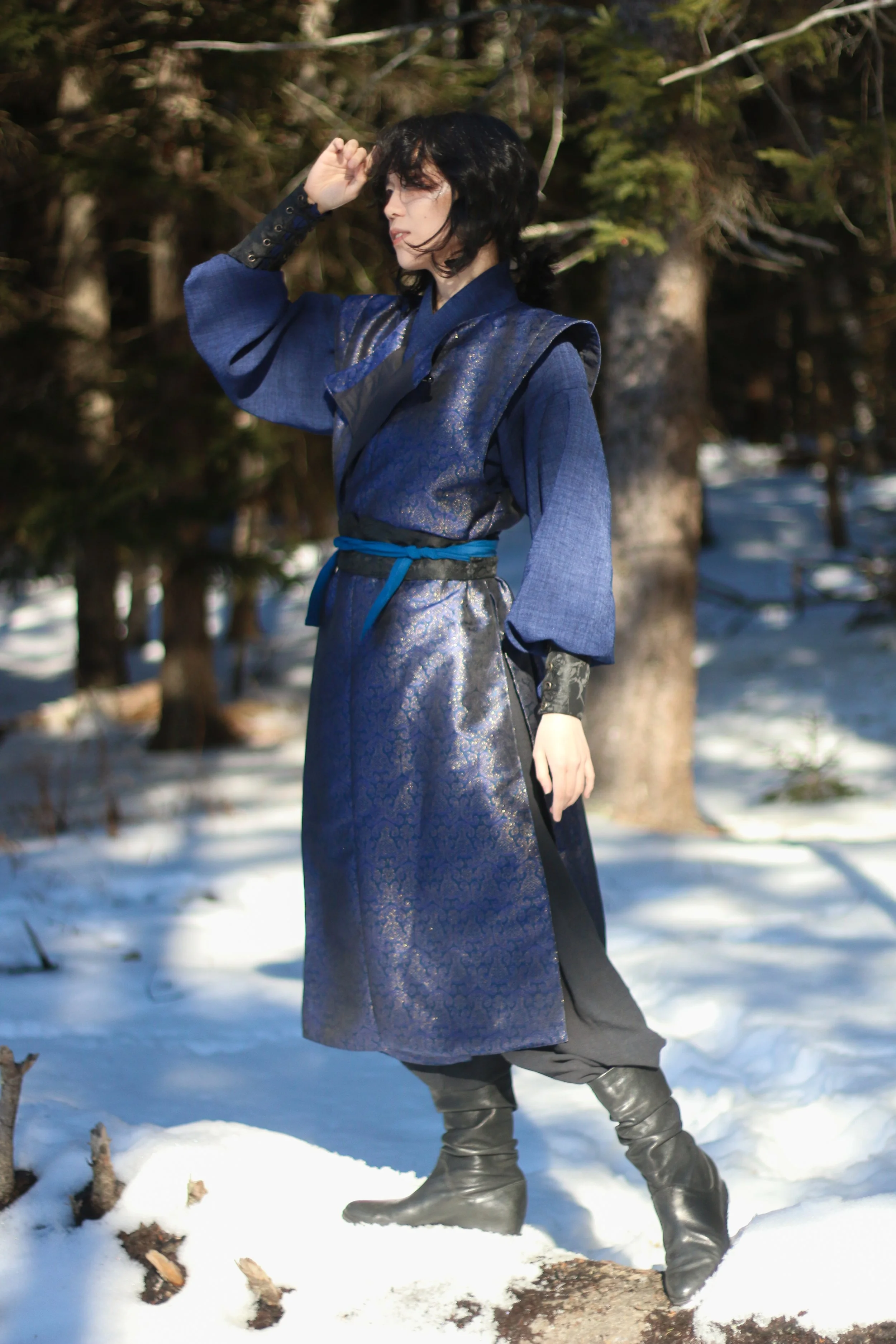
The fanlingpao is a type of Hufu robe from Central Asia featuring overturned lapels. Although the exact origin of the fanlingpao is unknown, it is generally believed to have been influenced by Sogdian culture—an Iranian people who lived in today’s Uzbekistan and Tajikistan—who wore a similar robe featuring a central closure. After arriving in China via the silk road, the fanlingpao would be altered so that the front of the robe would overlap across the right side of the chest in the traditional Han fashion. This would subsequently inspire the yuanlingpao, a similar round-collared Hanfu robe worn with the lapels fastened close around the neck. Fastening the closures on the collar of the fanlingpao could convert it into the round-collared yuanlingpao.
Fanlingpao were most popular between the Wei Dynasty and the Tang Dynasty and were primarily worn by men, but became popular amongst women as well during the Tang Dynasty. The hem of the fanlingpao can range in length, typically falling between the knee and the ankle. Fanlingpao have straight, narrow cuffed sleeves.
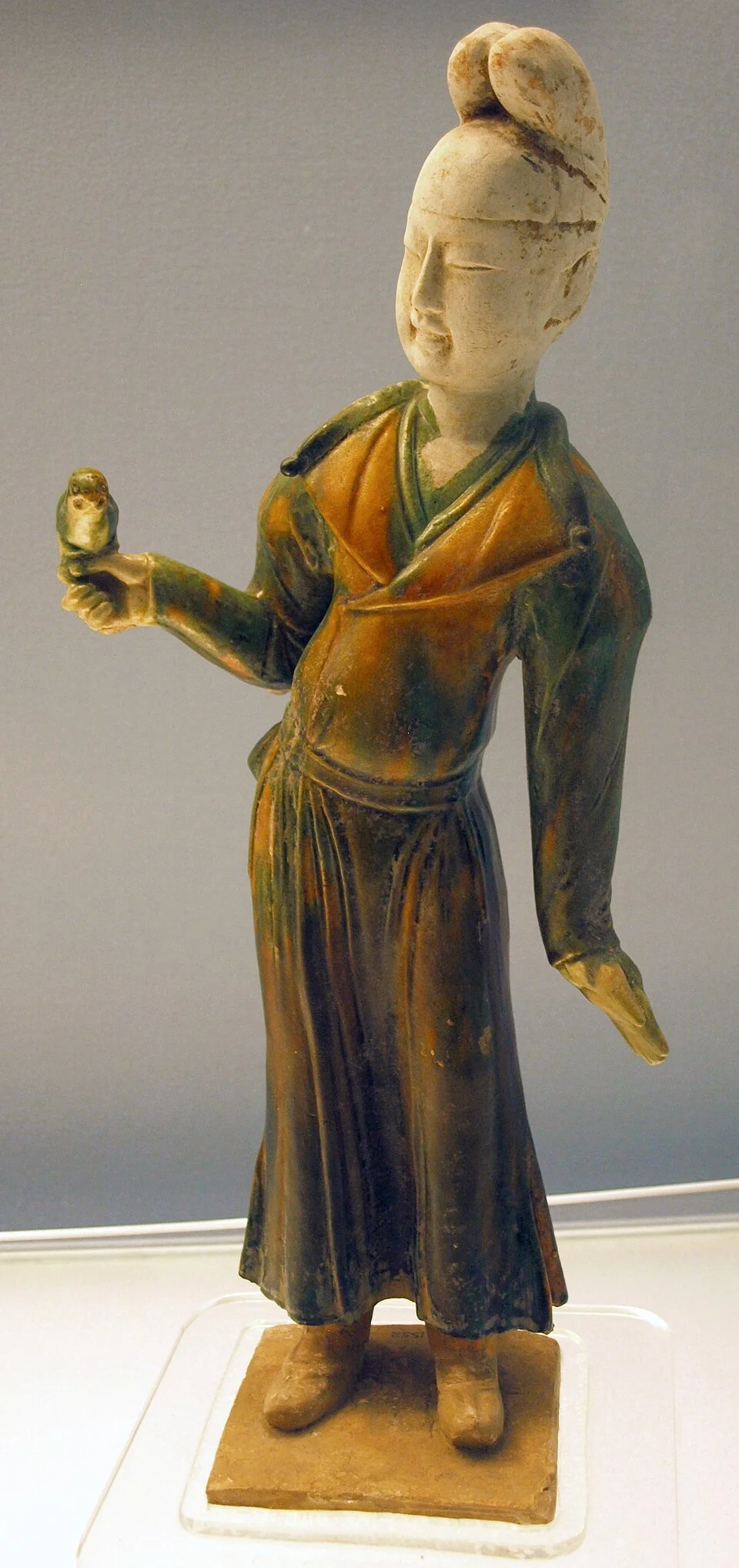
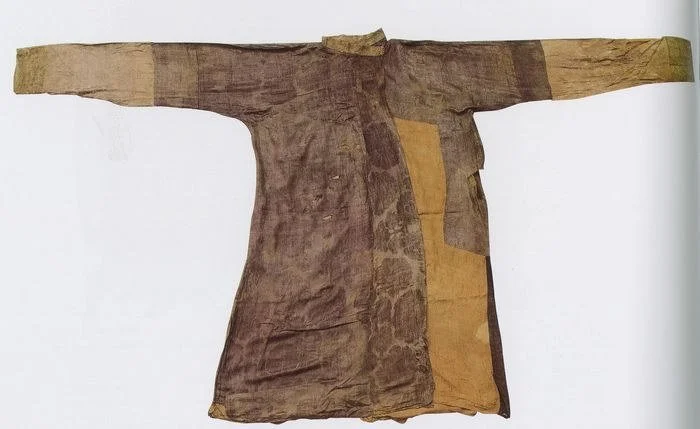
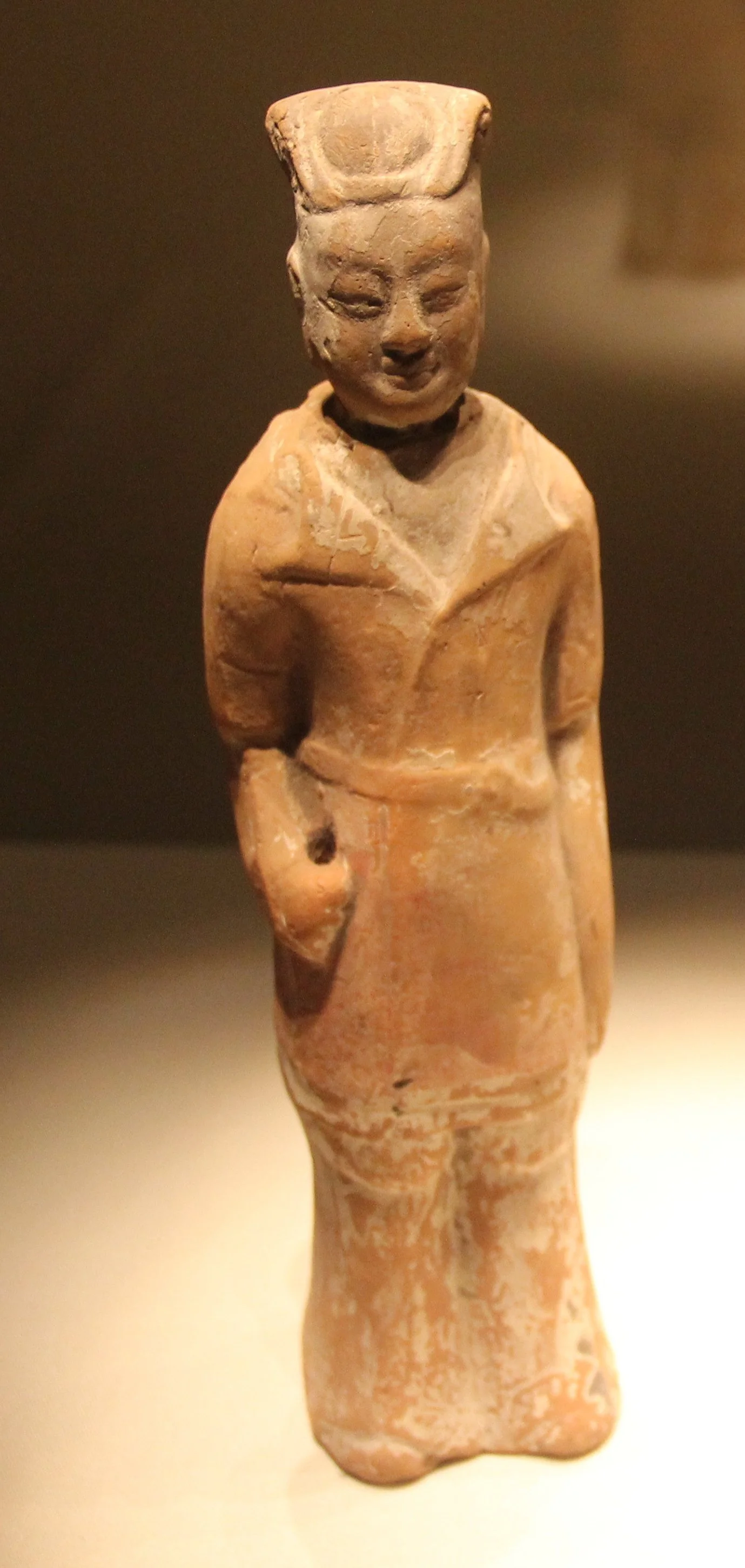
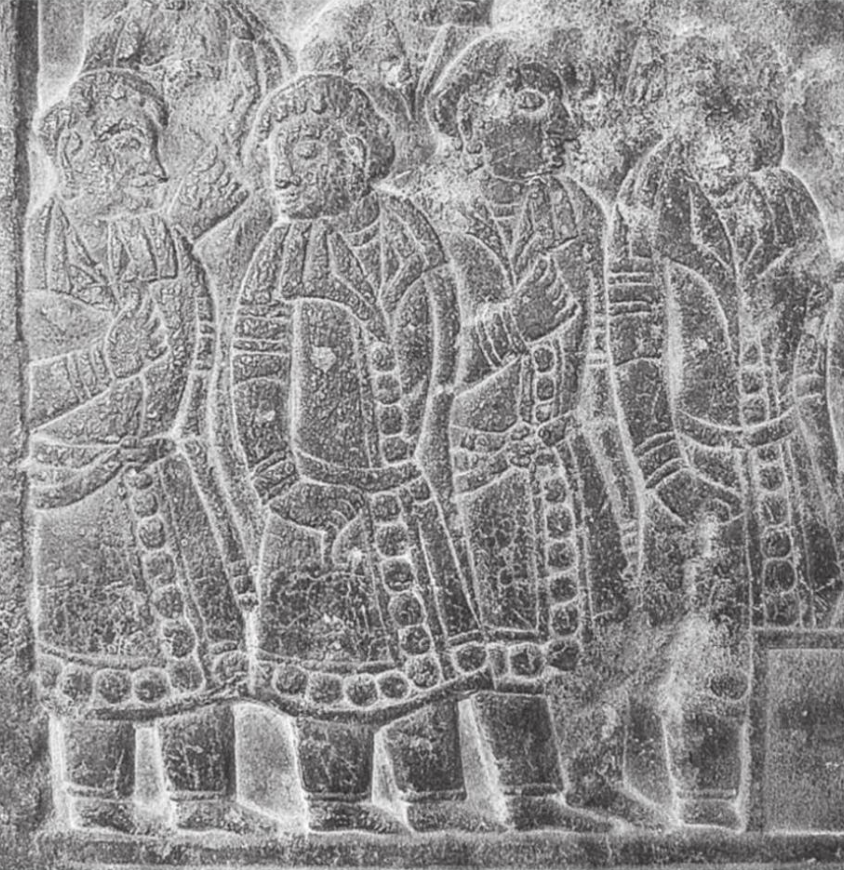

Fanlingpao often feature bright patterns on the lining fabric to create a beautiful contrast on the inside of the open lapels. Since Hufu traveled down the silk road, the brocade decorating the fanlingpao could feature Chinese, Indian, Persion, and Turkic designs.
It was popular to belt the fanglingpao with a leather belt featuring hanging leather straps to hold useful items, known as a die xie dai. The die xie dai originated from the northern tribes and became very popular between the Wei and Tang Dynasties, even becoming part of the uniform for civil officials and military officers in the Tang Dynasty.
Sew Your Own
Interested in making your own fantasy-style fanlingpao? Use “The Adventurer” hanfu sewing pattern (includes shuhe, hedangku and fanlingpao patterns).
Interested in making your own historical fanlingpao? Use “The Official” hanfu sewing pattern (includes zhiduo and yuanlingpao patterns) and convert the yuanlingpao sleeves to straight cuffed sleeves and wear the lapels open.
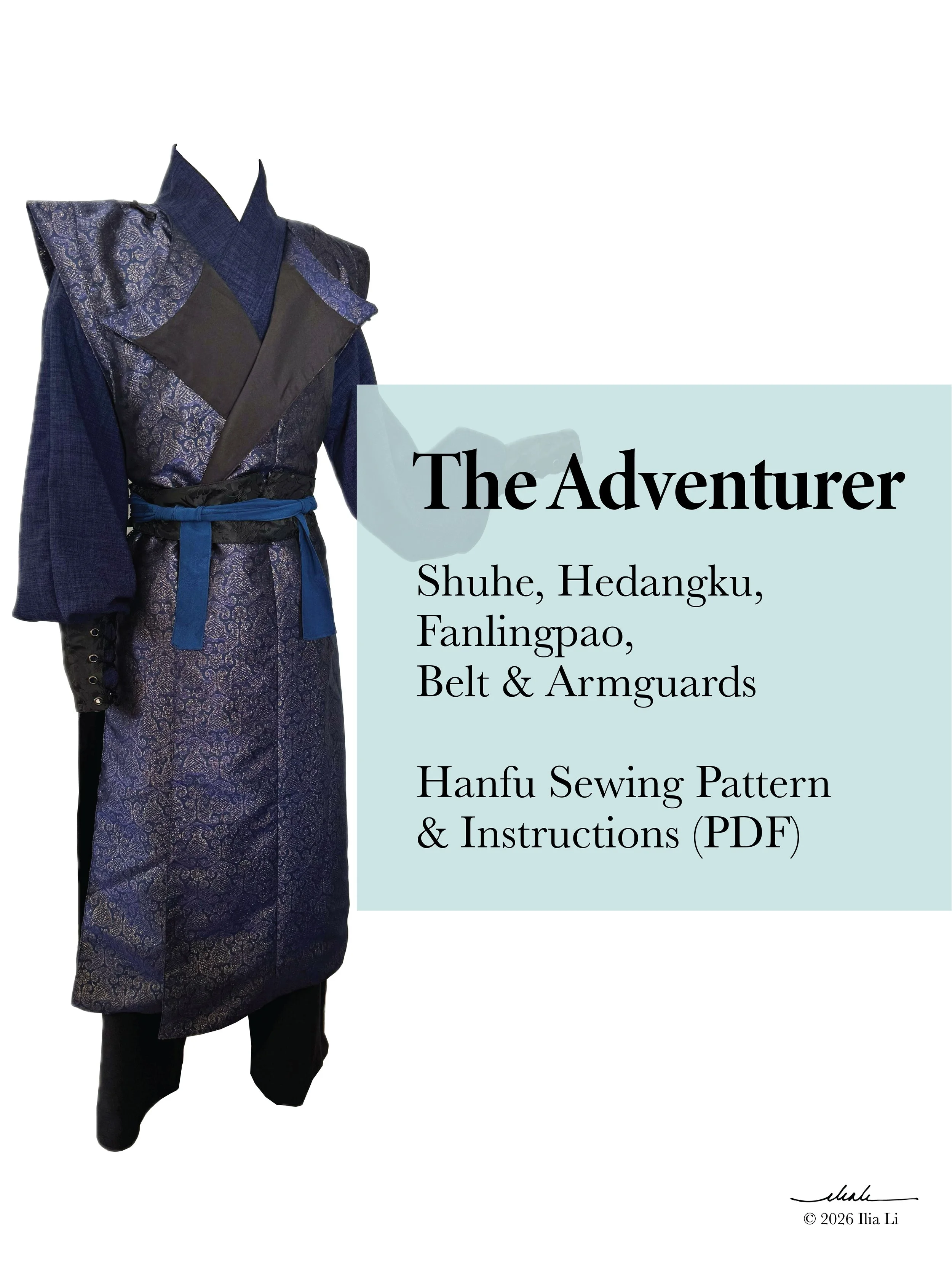
Looking for a Hanfu sewing pattern? Making a wuxia, xianxia, or danmei cosplay or Chinese historical reenactment costume? Want a pattern that provides info on how to properly wear Hanfu and historical considerations like sleeve length and fabric choices? I have made just the pattern for you! This pattern includes 3 garments—a shuhe, hedangku, and fanlingpao, as well as accessories (belt and armguards)—which can be worn layered together or separately. The fanlingpao, belt, and armguards in this pattern are designed in a fantasy style that has become popular in modern wuxia/xianxia media. The shuhe and hedangku in this pattern are designed in a more historical way.
This digital download includes:
Printable sewing pattern & fully illustrated sewing instructions for 3 garments plus accessories: Shuhe, Hedangku, Fanlingpao, Belt & Armguards
Printable patterns are compatible with US Letter, A4, and A0 paper
4 unisex sizes covering approximately US men’s XS-L or women’s XS-XXL and instructions on how to resize your pattern
See size chart image for detailed measurements
Instructions on how to wear Hanfu
Historical considerations for fabrics, colors, motifs, and fit
Estimated yardage & sample cutting layouts
Note that I pattern in metric, so the standard seam allowance is 1cm (3/8in). Information to alter the seam allowance is provided
When you purchase this pattern, a checkout page will open containing a link to the digital download that will last for 24 hours. You will also receive an email with the same link. The download is a zip file which you will need to unzip to access the PDFs of the printable patterns and instructions. Please make sure to provide your correct email address so that the digital download is delivered to you successfully and remember to download it within 24 hours of delivery. To use the digital pattern, print out the pattern PDFs, tape together the numbered grid of pages, and then cut out the pattern pieces.
Note that this pattern is to be used for your personal use only. Commercial use and redistribution are not permitted.
Sources Consulted (photo sources listed in image captions):
Chinese Clothing by Hua Mei
5000 Years of Chinese Costume by Xun Zhou
Hanfu: A Visual Primer of Historical Han Chinese Attire by the Northern California Hanfu Association
Western Cultural Factors in Robes of Wei, Jin, Southern and Northern Dynasties as Well as Sui and Tang Dynasties by Qiwang Zhao & Qianyun Lyu
Sogdian Costume in Chinese and Sogdian Art of the 6th-8th Centuries by Sergey Yatsenko
