
Shēnyī (深衣)
The ancient Chinese placed great symbolic importance between the division of an upper garment, called a yi, and a lower garment, called a chang. The separation of the garments was meant to represent the greater order of the heavens and the earth. In the Warring States Period, the two-piece yichang evolved into a long crossed-collar one-piece garment called the shenyi. The shenyi still had a seam at the waist, to represent the symbolic divide between the heavens and the earth.
The shape of the shenyi was deeply influenced by emerging Confucian ideals, which forbid close contact of men and women. The garment was designed to fully cover the body in wrapped fabric, but still allow for maximum freedom of movement by having the garment be loose everywhere except for at the waist. The Confucian Book of Rites even outlined strict rules for the construction of the shenyi, including specifications for using 12 strips of cloth to represent the 12 months, and rules for trim colors and ornamentations based on whether the parents and grandparents were alive.
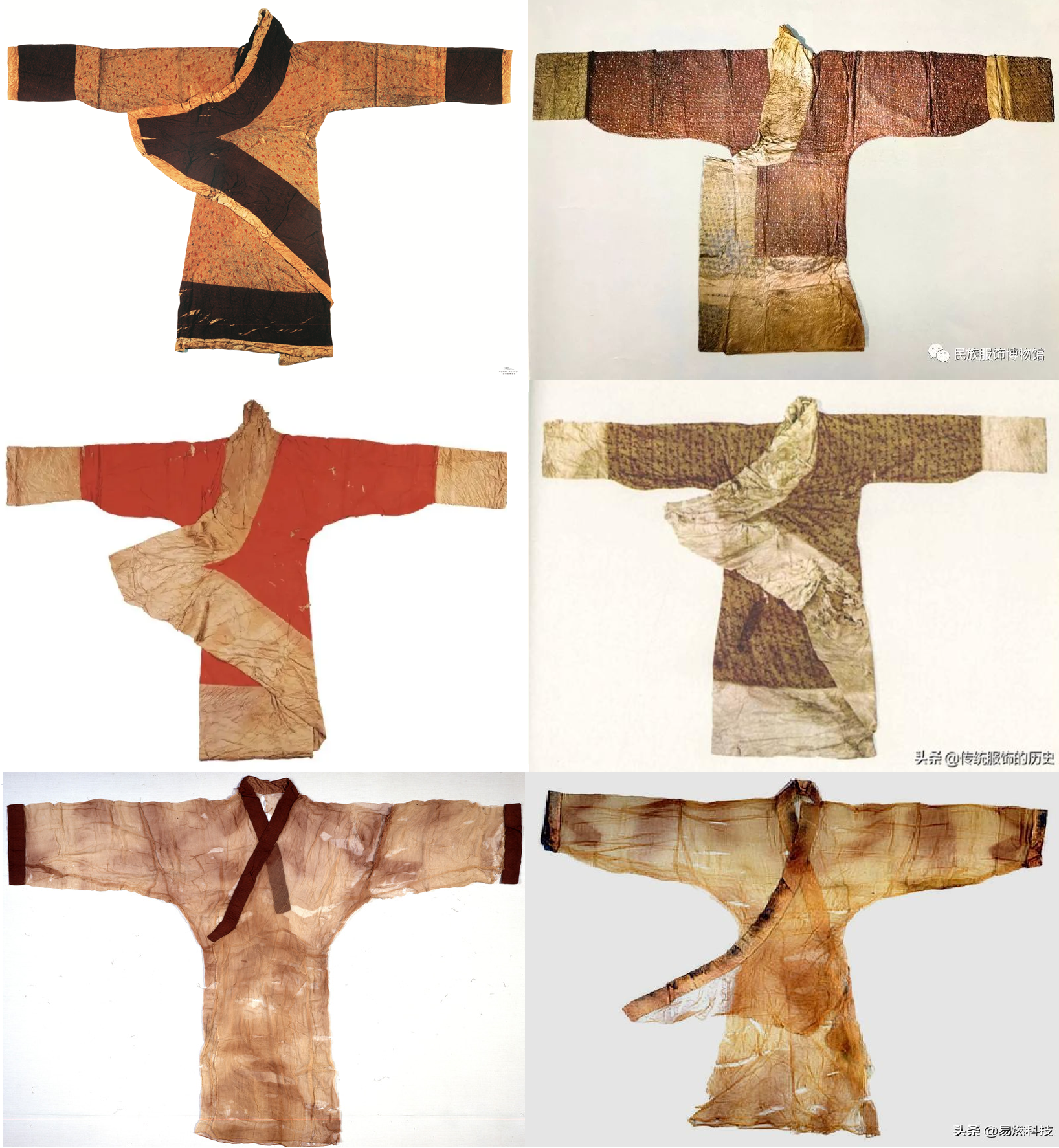
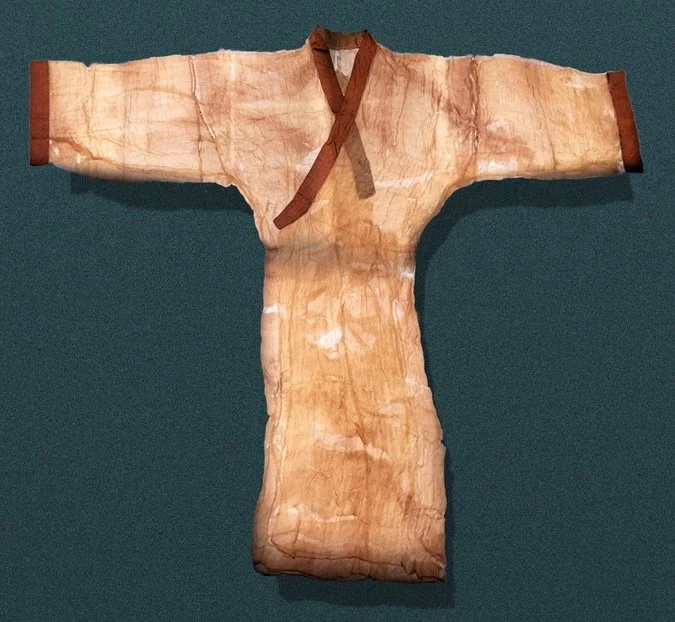
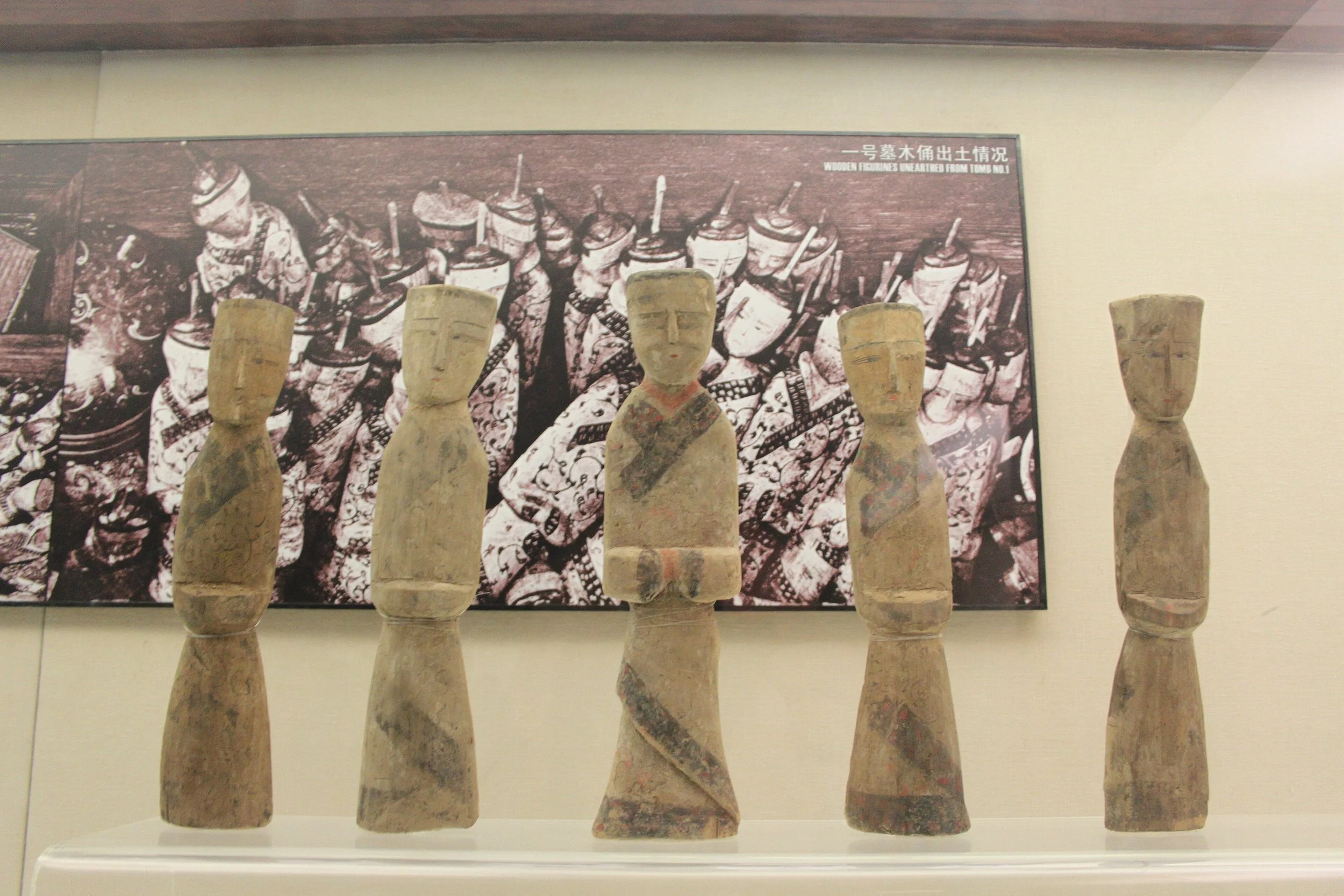
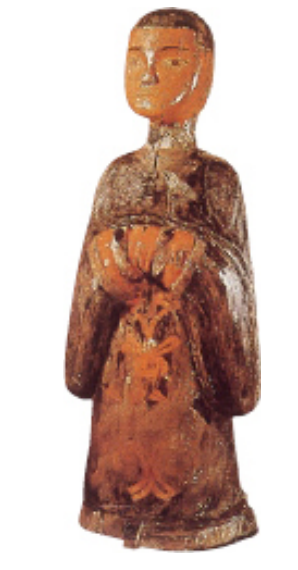
Of course, these strict rules for the construction of the shenyi didn’t persist throughout history, and a variety of styles of shenyi were developed over time, though all maintained the distinctive crossed-collar. The most distinctive shenyi styles are the quju, which has a front panel that wraps all the way around the body; and the zhiju, which has a front panel that goes straight down. The sleeves could have a straight silhouette or be deep and curved. The hem should be long enough to cover the skin, but not long enough to considerably drag on the ground. The shenyi could be belted with a silk ribbon (dadai or shendai) or a leather belt decorated with jade, bone, or precious metals.
The Shenyi was considered moderately formal wear and was worn by men and women of many walks of life, including nobles, scholars, doctors, warriors, and commoners. Identity was expressed through materials, colors, or accessories, rather than the cut of the garment. Shenyi were most commonly made from linen. Silk was also used for more formal ceremonies. The Shenyi was most popular between the Warring States Period and the Han Dynasty, however it experienced a revival amongst Neo-Confucian scholars in the Song and Ming Dynasties.
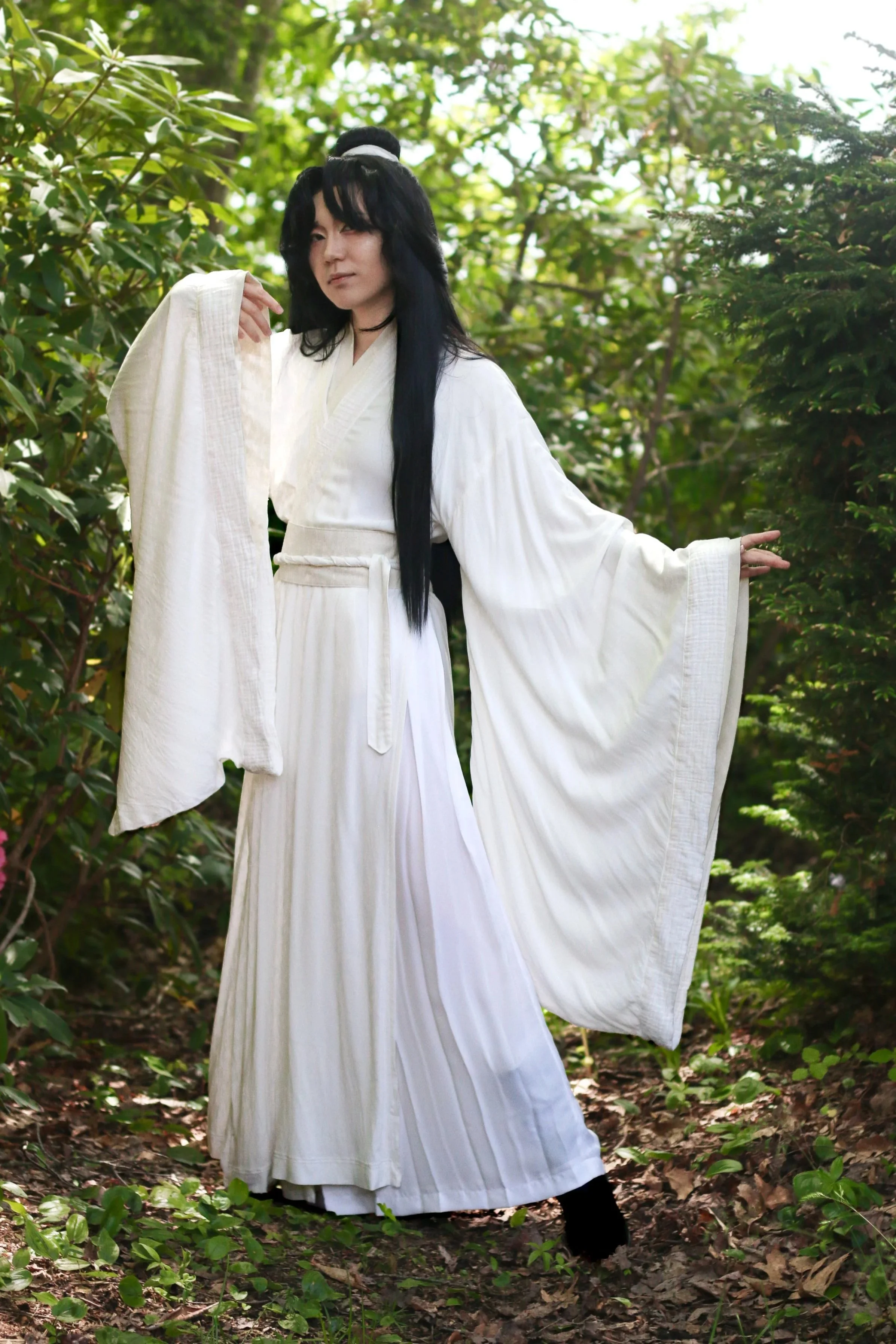
Sew Your Own
Interested in making your own zhiju shenyi? Use “The Cultivator” hanfu sewing pattern (includes yichang, shenyi, and beizi patterns).
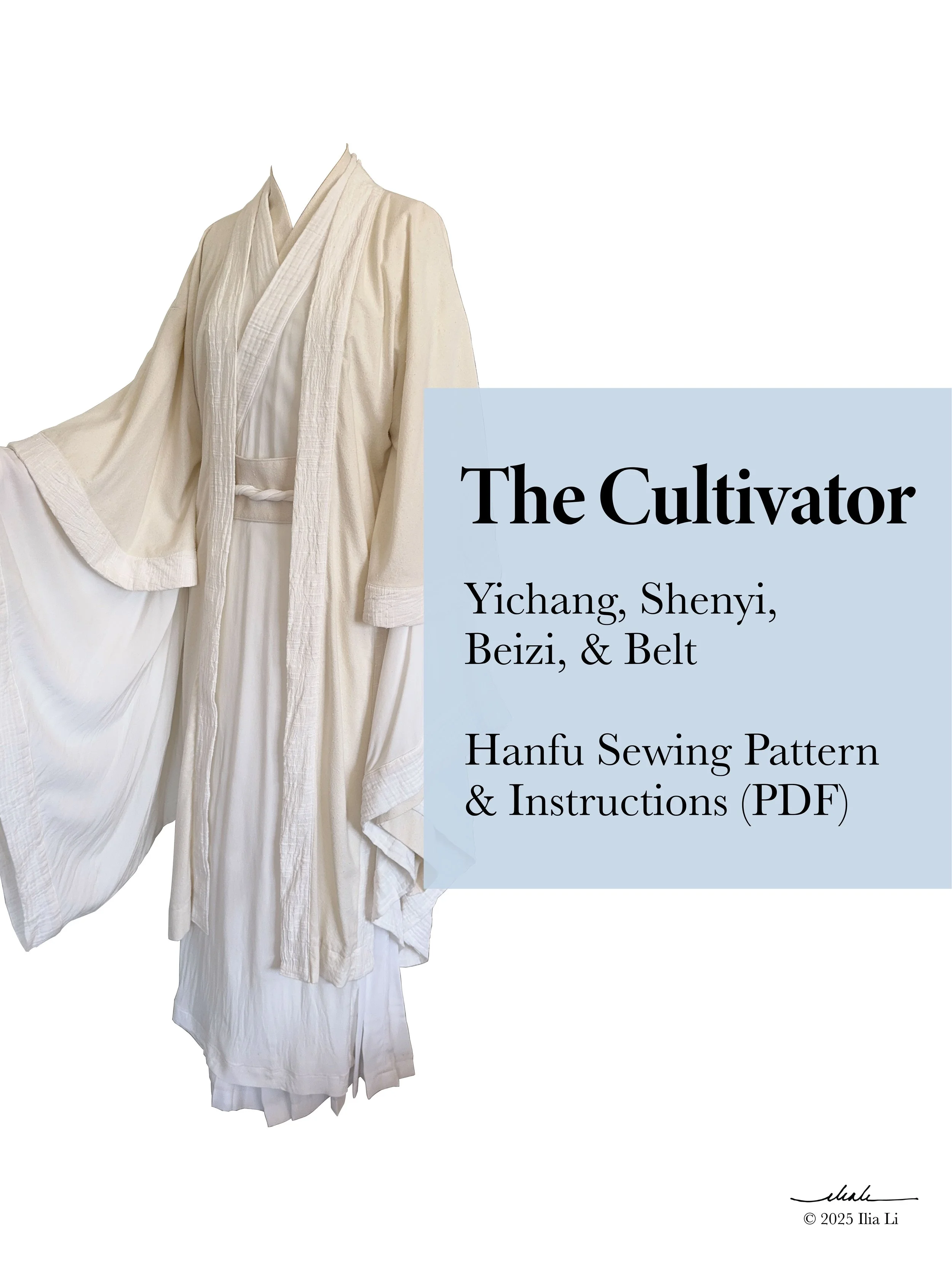
Looking for a Hanfu sewing pattern? Making a wuxia or danmei cosplay or Chinese historical reenactment costume? Want a pattern that provides info on how to properly wear Hanfu and historical considerations like sleeve length and fabric choices? I have made just the pattern for you!
This pattern includes 3 outfits—a yichang, shenyi (with belt), and beizi—which can be worn layered together or separately. This entire ensemble would be most at place during the Song Dynasty, however the yichang and shenyi would be appropriate as early as the Warring States Period.
This digital download includes:
Printable sewing pattern & sewing instructions for 3 garments: Yichang, Shenyi, and Beizi
Printable patterns are compatible with US Letter, A4 paper, and A0 paper.
4 unisex sizes S/M/L/XL and instructions on how to resize your pattern
See size chart image for detailed measurements. Since hanfu are loose fitting this size range covers approximately US sizes XS-XXL womens or XS-L mens
Instructions on how to wear Hanfu in a historically accurate way
Historical considerations for fabrics, colors, motifs, and fit
Estimated yardage & sample cutting layouts
Note that I pattern in metric, so the standard seam allowance is 1cm (3/8in). Information to alter the seam allowance is provided
When you purchase this pattern, a checkout page will open containing a link to the digital download that will last for 24 hours. You will also receive an email with the same link. The download is a zip file which you will need to unzip to access the PDFs of the printable patterns and instructions. Please make sure to provide your correct email address so that the digital download is delivered to you successfully and remember to download it within 24 hours of delivery. To use the digital pattern, print out the pattern PDFs, tape together the numbered grid of pages, and then cut out the pattern pieces.
Note that this pattern is to be used for your personal use only. Commercial use and redistribution are not permitted.
Sources Consulted (photo sources listed in image captions):
Chinese Clothing by Hua Mei
5000 Years of Chinese Costume by Xun Zhou
Confucian Book of Rites (Liji)
