
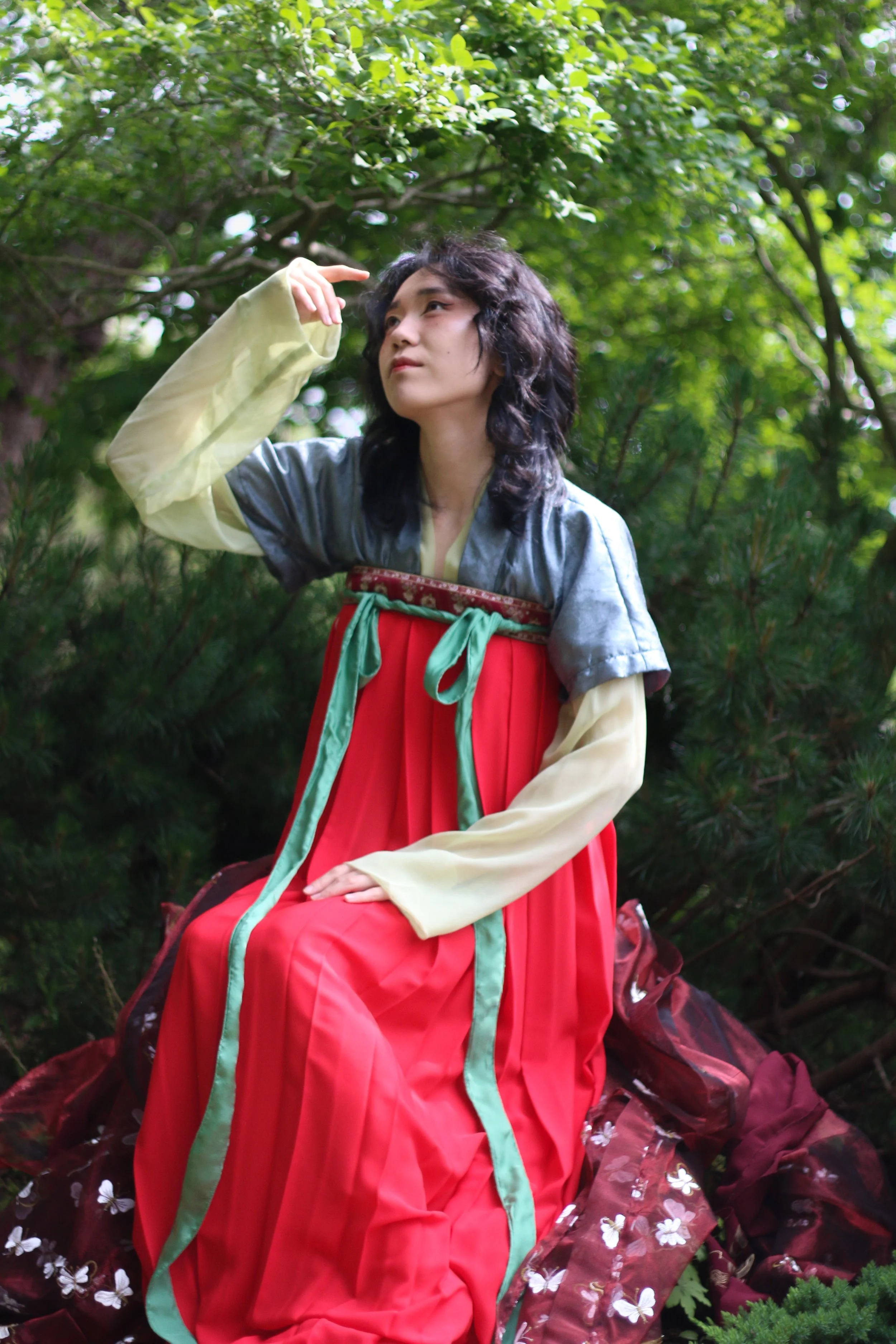
Qíxiōng Rúqún (齐胸襦裙)
The ruqun is a style of Hanfu featuring a narrow-sleeved short jacket called a ru worn fastened underneath a pleated skirt called a qun. The qixiong ruqun is a specific style of ruqun that skyrocketed to popularity in the Tang Dynasty where the ruqun ties above the bust right beneath the armpits. A voluptuous and curvy body was considered ideal at the time, and raising the pleated ruqun to lie over the bust created a more voluminous silhouette. The qun is traditionally made from a single panel of fabric wrapped around the waist. However, modern makers tend to prefer a two panel style that reduces the chance of slipping down. The qixiong ruqun has become emblematic of the Tang Dynasty, but was worn from the Sui Dynasty through the Five Dynasties Period.
Qixiong ruqun were often worn beneath a banbi and/or da xiu shan. Popular accessories to wear with the qixiong ruqun included the pibo, a thin and long silk scarf draped across the arms or tucked into the qun; or the pizi, a wider scarf worn like a cape, draped across the arms, or tucked into the qun. Since the ruqun was long enough to touch the ground and sometimes even trail on the ground, “phoenix head” or “tiger head” brocade shoes with upturned toes (yuntouxie) were worn to prevent the wearer from tripping. Ronghua flower crowns and ornamental hairpins were also popular, and women would sometimes wear veils to cover the face when going out.
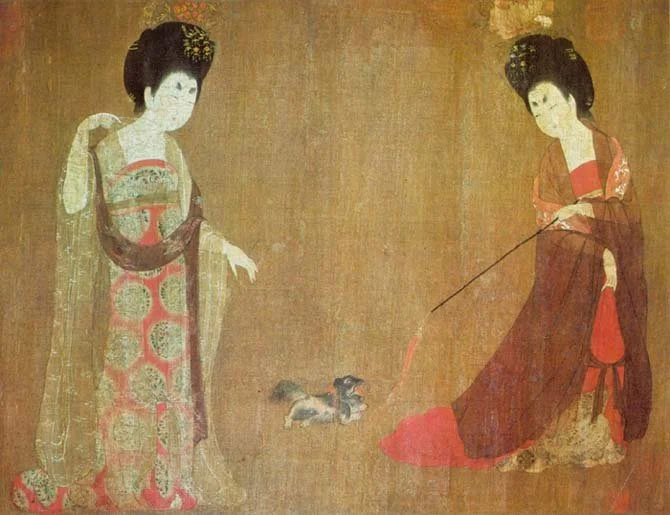
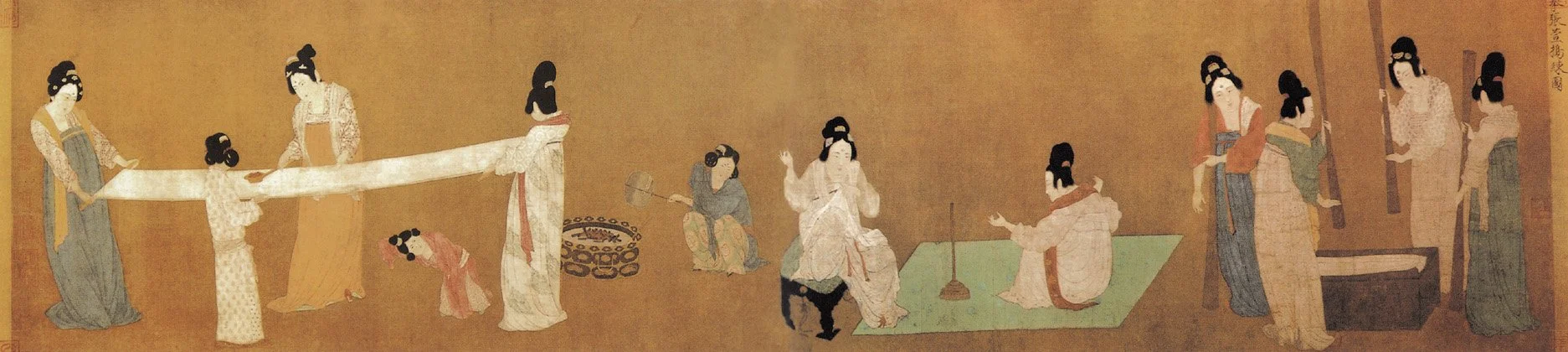

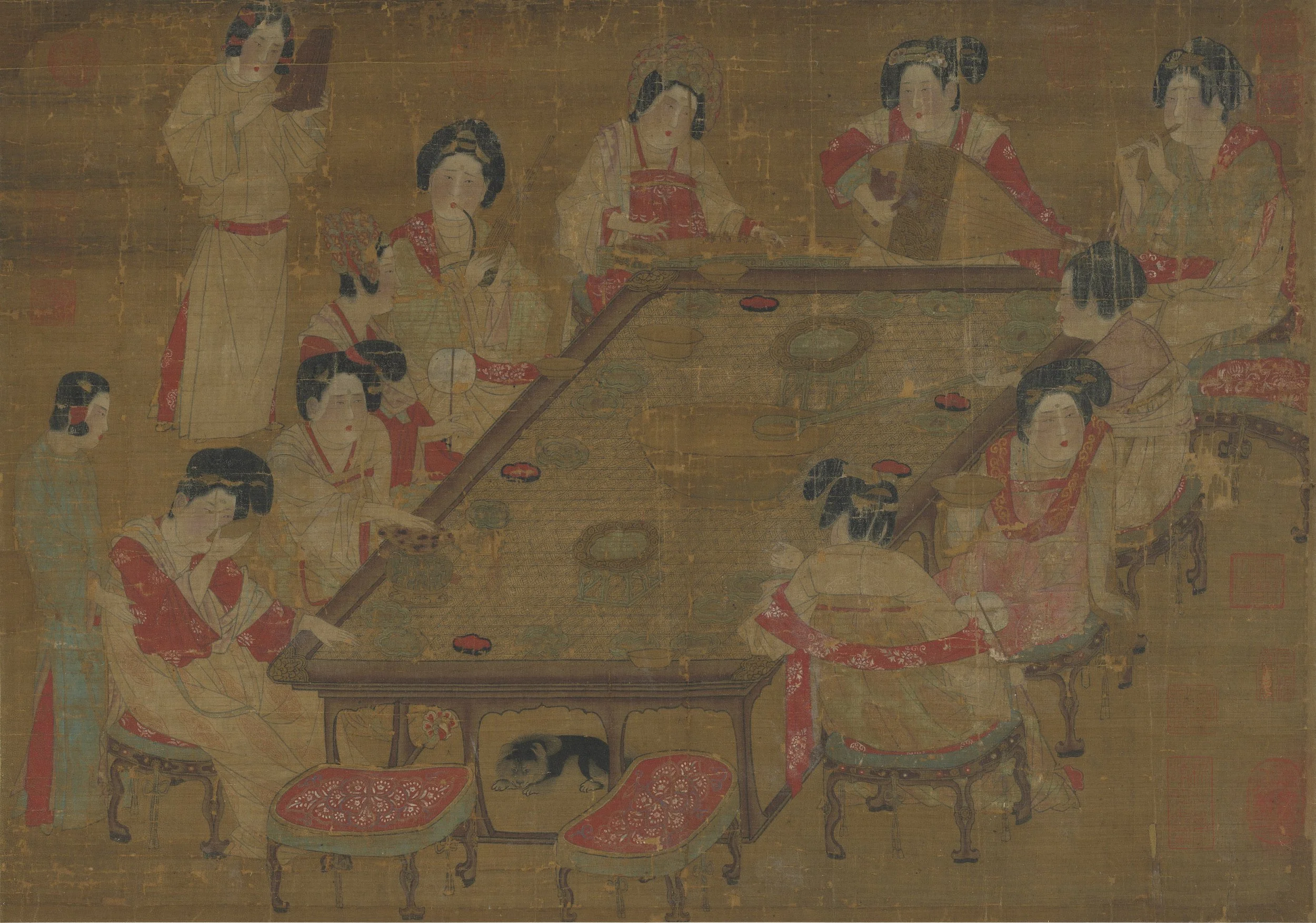
During the Tang Dynasty, China was open to the outside world, allowing foreigners to trade, study, and even hold government positions. This led to a period of unprecedented tolerance and appreciation of diverse religions, arts, and culture. Subsequently, women did not have to adhere to strict traditional dress codes, but were allowed to expose their arms and even wear men’s clothing. Open-minded upper class women even began wearing the qixiong ruqun open enough to expose cleavage.
The dominant aesthetic of the Tang Dynasty was opulence and vibrancy. There was no official decree on what colors were allowed for various statuses, so women were allowed to indulge their personal preference. Advances in silk reeling and dyeing further enabled Tang textiles to branch out to new colors and patterns, and the era was soon defined by huge variety in dress styles. Pomegranate red skirts became especially popular, and were described in many poems of the time, including in the works of Li Bai and Bai Juyi. Turmeric, apricot yellow, deep violet, ultramarine, and sap green were also very popular colors. For patterns, chanzhi twisting branch designs and baoxiang flower motifs reigned supreme. Motifs featuring auspicious birds, animals, insects, and mythical beasts were also common. Textile decorations were done using silk painting, embroidery, and weaving. Qixiong ruqun were typically made from airy silks and satins.
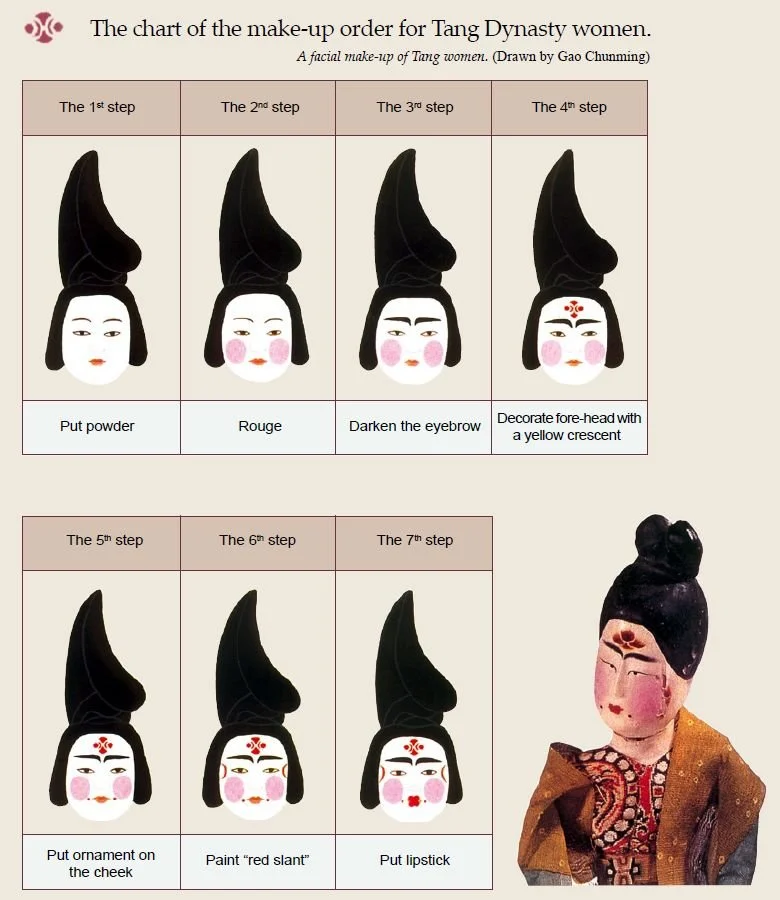
Tang Dynasty Makeup
(Illustration by Gao Chunming)
Makeup trends in the Tang Dynasty were very elaborate, with a wide array of eyebrow styles all with creative names, such as “the drooping pearl” and the “dark fog”. The face was powdered paler, and the lips were painted to look small and round.
The forehead was decorated with a huadian. It’s said that when the Shouyang princess was walking in the palace garden in Spring a plum blossom landed on her forehead. For some reason the blossom could not be washed off or removed, and so the style became all the rage amongst the palace women.
To the sides of the eyes, the “red slant” was drawn. It’s said that Cao Pi, the Weiwen Emperor of the Three Kingdoms Period, had a favorite concubine, Xue Yelai. One day, Xue Yelai fell and cut her temple on a crystal screen and a scar remained after her injury healed. All the palace women tried to imitate her and painted a red mark on both sides of their faces.
Sew Your Own
Interested in making your own qixiong ruqun? Use “The Poetess” hanfu sewing pattern (includes qixiong ruqun, banbi, and da xiu shan patterns).
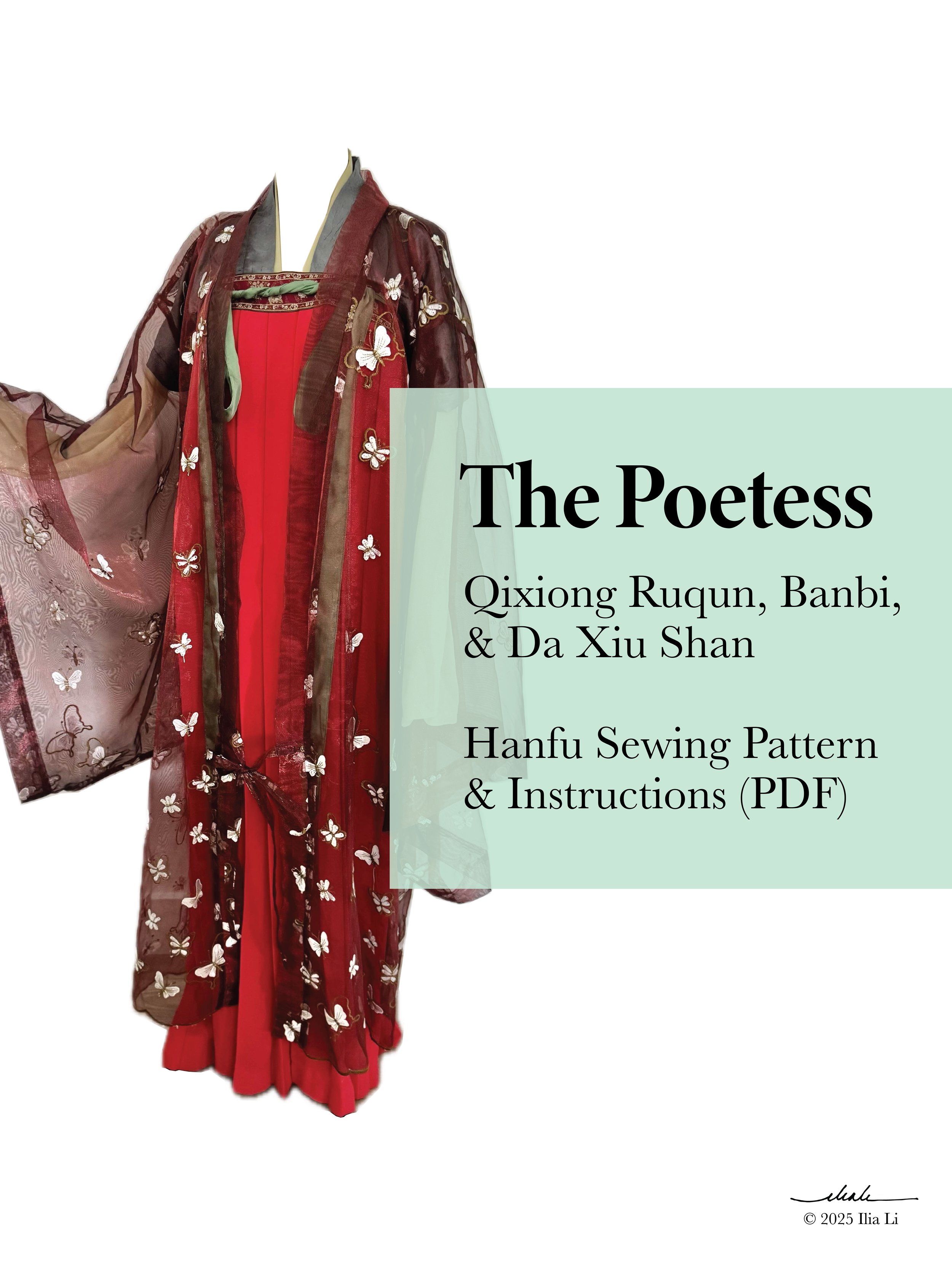
Looking for a women’s Hanfu sewing pattern? Making a wuxia or xianxia cosplay or Chinese historical reenactment costume? Want a pattern that provides info on how to properly wear Hanfu and historical considerations like sleeve length and fabric choices? I have made just the pattern for you!
This pattern includes 3 outfits—a qixiong ruqun, banbi, and da xiu shan—which can be worn layered together or separately. These garments would fit best in the Tang Dynasty, Sui Dynasty, or Five Dynasties Period.
This digital download includes:
Printable sewing pattern & sewing instructions for 3 garments: Qixiong Ruqun, Banbi, and Da Xiu Shan
Printable patterns are compatible with US Letter, A4 paper, and A0 paper
Sizes S/M/L/XL and instructions on how to resize your pattern
See size chart image for detailed measurements. Since hanfu are loose-fitting, this size range covers approximately US women’s XS-XXL
Instructions on how to wear hanfu in a historically accurate way
Historical considerations for fabrics, colors, motifs, & fit
Estimated yardage & sample cutting layouts
Note that I pattern in metric, so the standard seam allowance is 1 cm (3/8 in). Information to alter the seam allowance is provided
When you purchase this pattern, a checkout page will open containing a link to the digital download that will last for 24 hours. You will also receive an email with the same link.The download is a zip file which you will need to unzip to access the PDFs of the printable patterns and instructions. Please make sure to provide your correct email address so that the digital download is delivered to you successfully and remember to download it within 24 hours of delivery. To use the digital pattern, print out the pattern PDFs, tape together the numbered grid of pages, and then cut out the pattern pieces.
Note that this pattern is to be used for your personal use only. Commercial use and redistribution are not permitted.
Sources Consulted (photo sources listed in image captions):
Chinese Clothing by Hua Mei
5000 Years of Chinese Costume by Xun Zhou
Hanfu: A Visual Primer of Historical Han Chinese Attire by the Northern California Hanfu Association
Splendors of a golden era in China: the culture and arts of the Tang Dynasty by Changjun Dong & Xiaoli Dong
