
Dà Xiù Shān (大袖衫)
The da xiu shan is an ankle- to floor-length overcoat with long sleeves that trail to the knees or to the ankles. The length and depth of the voluminous sleeves could reach well over 1 meter. The collar of the da xiu shan is straight and vertical and often features a tie at around knee height. The da xiu shan was a staple amongst the women of the Tang Dynasty, who often wore it over high waisted qixiong ruqun dresses and banbi jackets. In the Song Dynasty, women might wear the da xiu shan over a “hundred fold” or “thousand fold” skirt, as the trends changed to favor even more voluminous skirts. The da xiu shan continued to be worn through the Ming Dynasty. Da xiu shan were only worn by upper class women, such as the empress and concubines. Commoners who wished to wear an overcoat would wear a beizi instead.
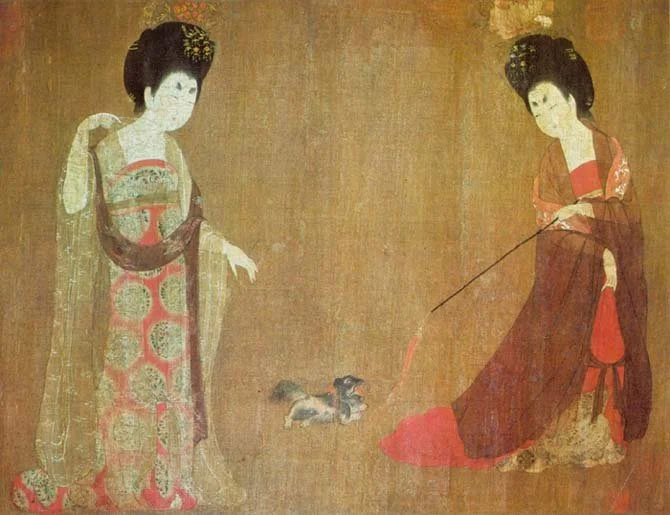
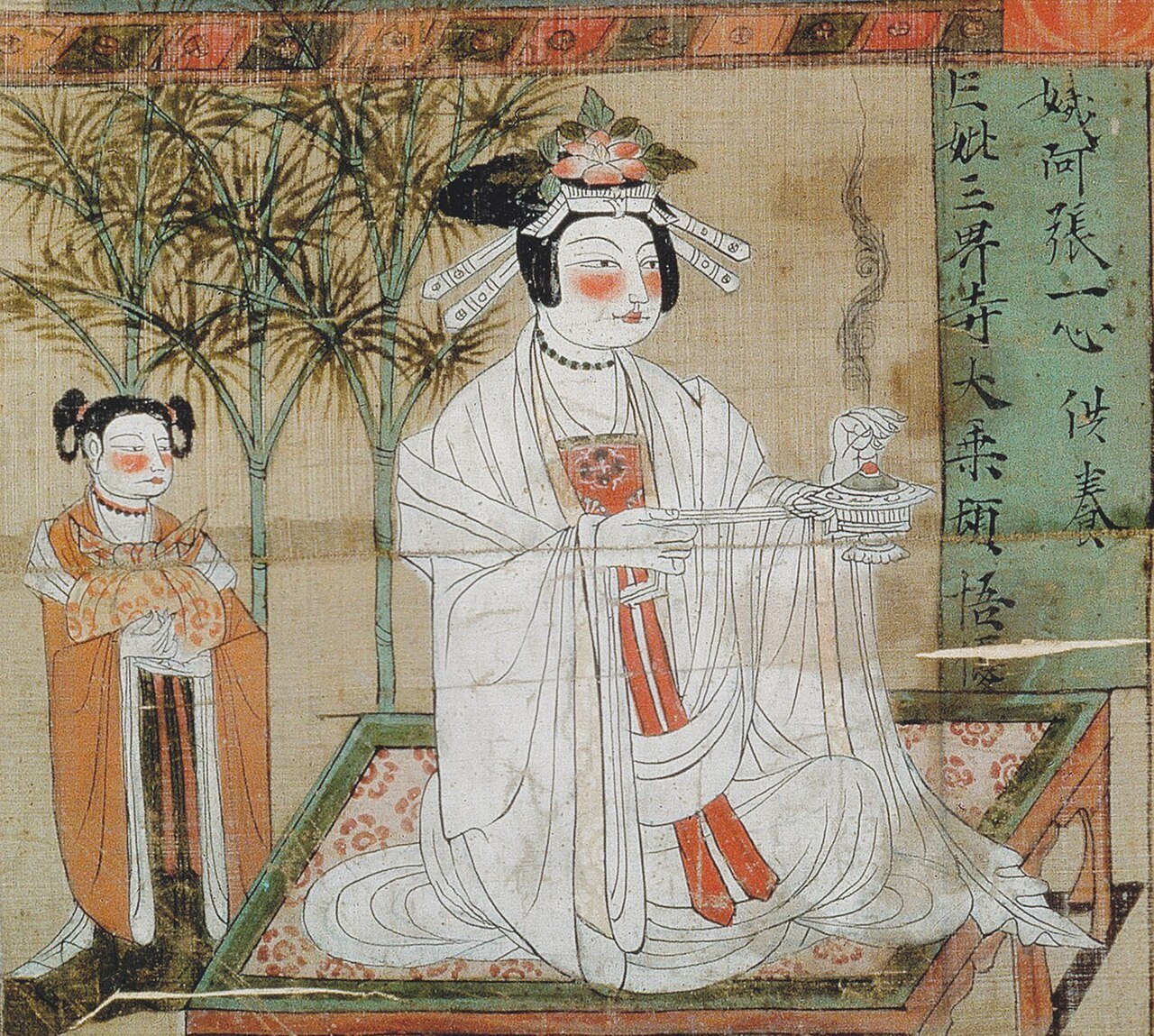
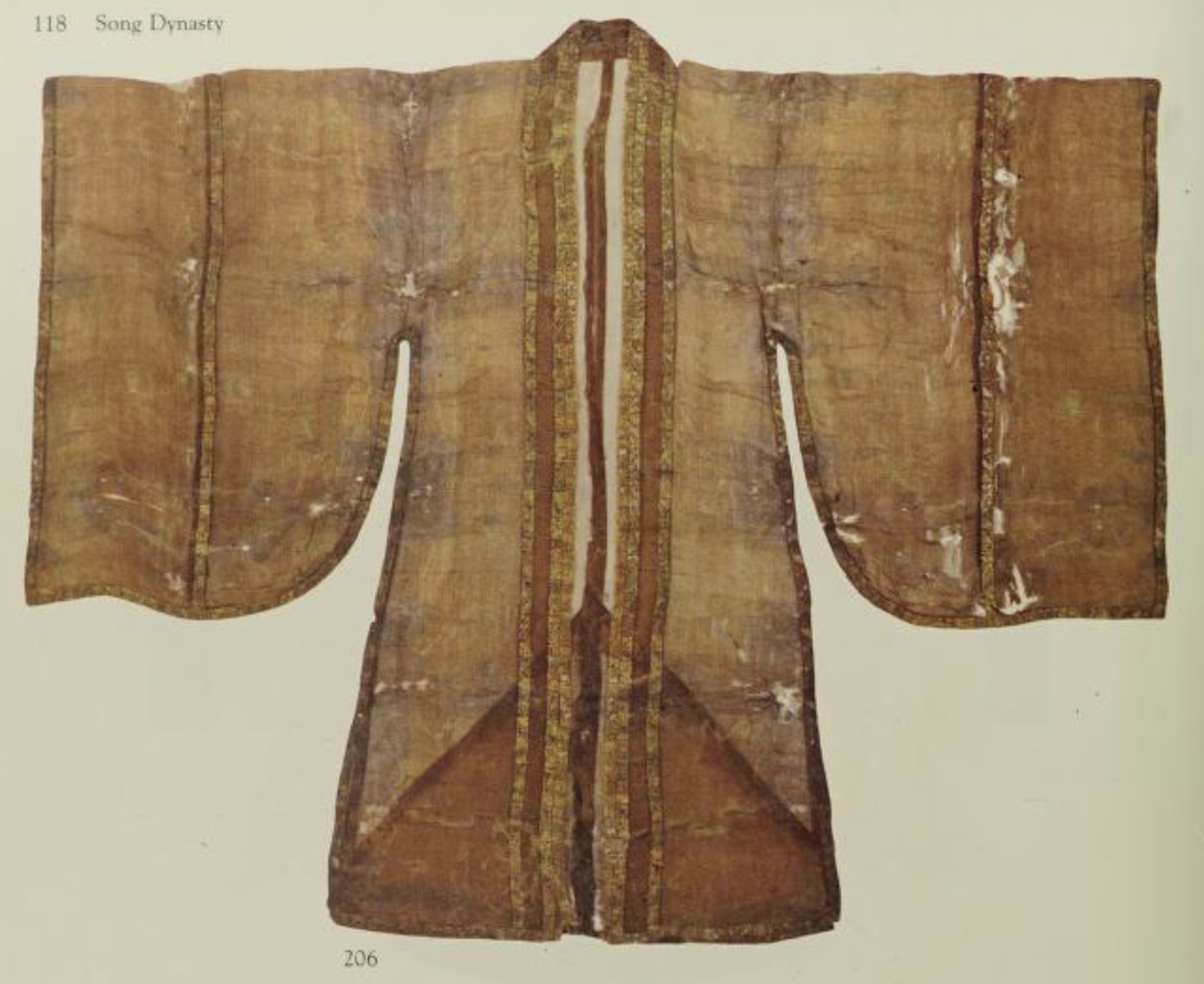
Da xiu shan were typically made from silk or satin, and sheer fabrics were very popular to showcase the layers beneath. Advances in silk reeling and dyeing in the Tang Dynasty enabled textiles to branch out to new colors and patterns, and the era was soon defined by huge variety in dress styles. Pomegranate red, turmeric, apricot yellow, deep violet, ultramarine, and sap green were all very popular colors. For patterns, chanzhi twisting branch designs and baoxiang flower motifs were by far the most popular. Motifs featuring auspicious birds, animals, insects, and mythical beasts were also common. Textile decorations were done using silk painting, embroidery, and weaving.

Sew Your Own
Interested in making your own da xiu shan? Use “The Poetess” hanfu sewing pattern (includes qixiong ruqun, banbi, and da xiu shan patterns).
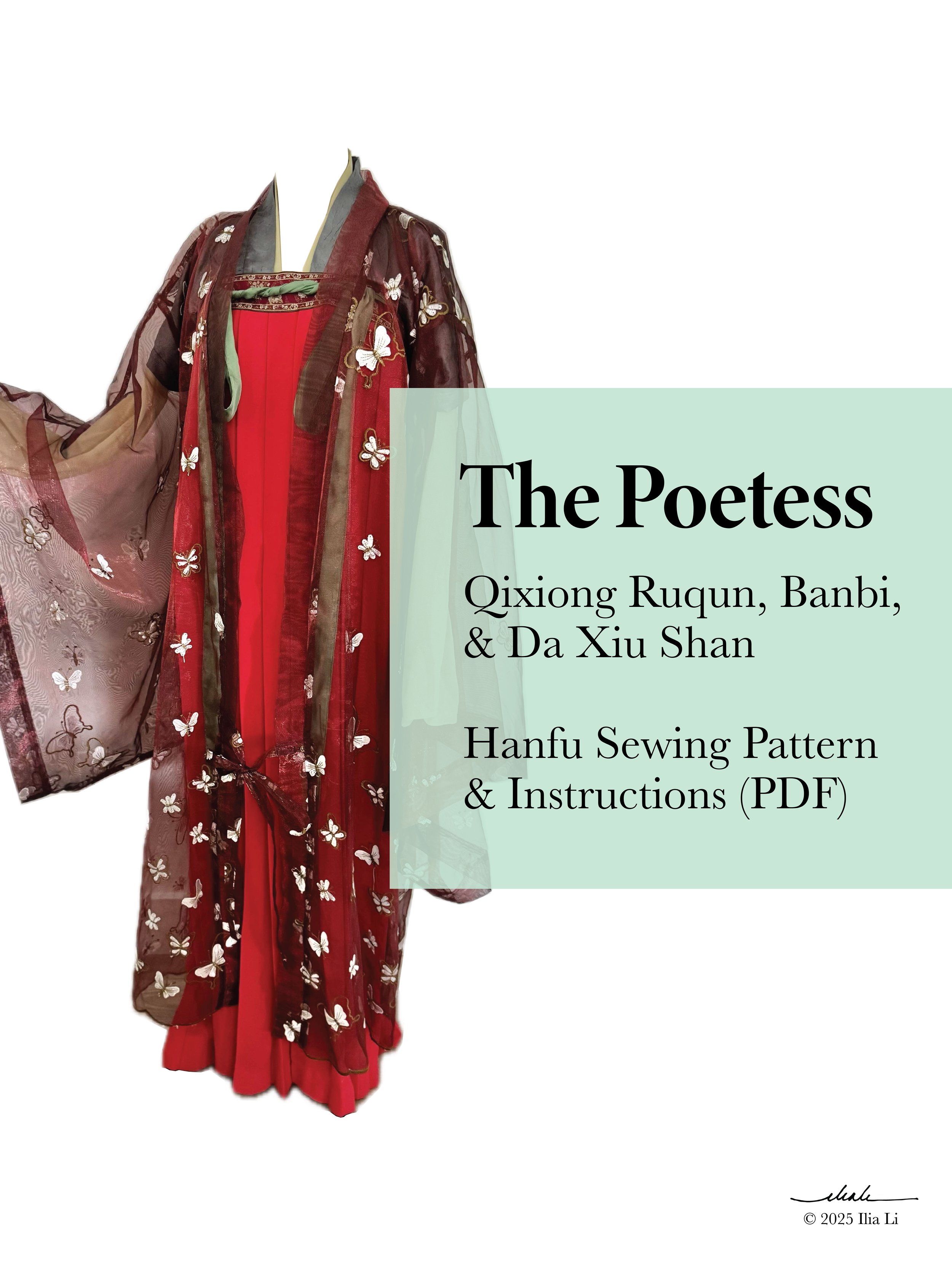
Looking for a women’s Hanfu sewing pattern? Making a wuxia or xianxia cosplay or Chinese historical reenactment costume? Want a pattern that provides info on how to properly wear Hanfu and historical considerations like sleeve length and fabric choices? I have made just the pattern for you!
This pattern includes 3 outfits—a qixiong ruqun, banbi, and da xiu shan—which can be worn layered together or separately. These garments would fit best in the Tang Dynasty, Sui Dynasty, or Five Dynasties Period.
This digital download includes:
Printable sewing pattern & sewing instructions for 3 garments: Qixiong Ruqun, Banbi, and Da Xiu Shan
Printable patterns are compatible with US Letter, A4 paper, and A0 paper
Sizes S/M/L/XL and instructions on how to resize your pattern
See size chart image for detailed measurements. Since hanfu are loose-fitting, this size range covers approximately US women’s XS-XXL
Instructions on how to wear hanfu in a historically accurate way
Historical considerations for fabrics, colors, motifs, & fit
Estimated yardage & sample cutting layouts
Note that I pattern in metric, so the standard seam allowance is 1 cm (3/8 in). Information to alter the seam allowance is provided
When you purchase this pattern, a checkout page will open containing a link to the digital download that will last for 24 hours. You will also receive an email with the same link.The download is a zip file which you will need to unzip to access the PDFs of the printable patterns and instructions. Please make sure to provide your correct email address so that the digital download is delivered to you successfully and remember to download it within 24 hours of delivery. To use the digital pattern, print out the pattern PDFs, tape together the numbered grid of pages, and then cut out the pattern pieces.
Note that this pattern is to be used for your personal use only. Commercial use and redistribution are not permitted.
Sources Consulted (photo sources listed in image captions):
Chinese Clothing by Hua Mei
5000 Years of Chinese Costume by Xun Zhou
Splendors of a golden era in China: the culture and arts of the Tang Dynasty by Changjun Dong & Xiaoli Dong
