
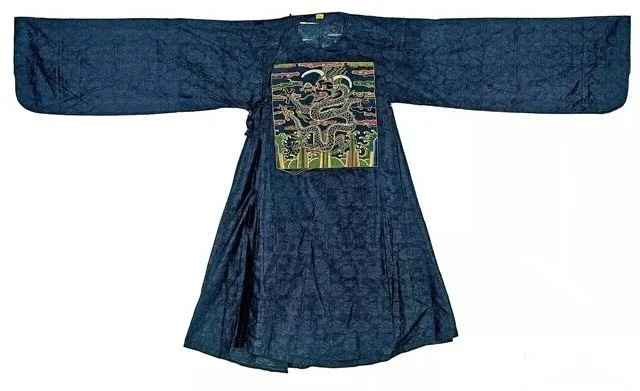
Yuánlǐngpáo (圆领袍)
The yuanlingpao is a long round-collared outer robe worn layered on top of other garments, such as the zhiduo or tieli. The yuanlingpao evolved from the Hufu fanlingpao of Central Asia which features curved overturned lapels.
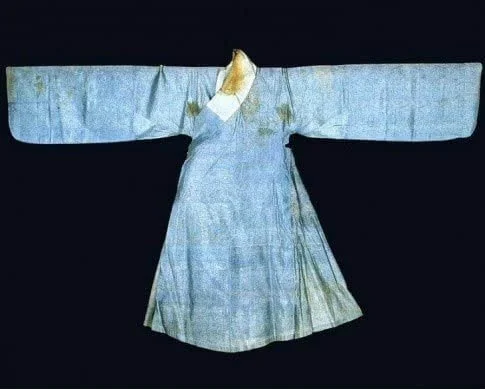
Zhíduō (直裰)
The zhiduo is a cross-collar long men’s robe favored by scholars, officials, and Buddhist monks. Zhiduo can have straight sleeves or wide curved pipa sleeves, and the hem length should fall between the knee and the ankle. Typically, the collar has a white collarguard sewn on top of it designed to be replaced when it becomes soiled or worn out. Zhiduo were worn between the Tang Dynasty and the Ming Dynasty, however styles slightly varied between dynasties.
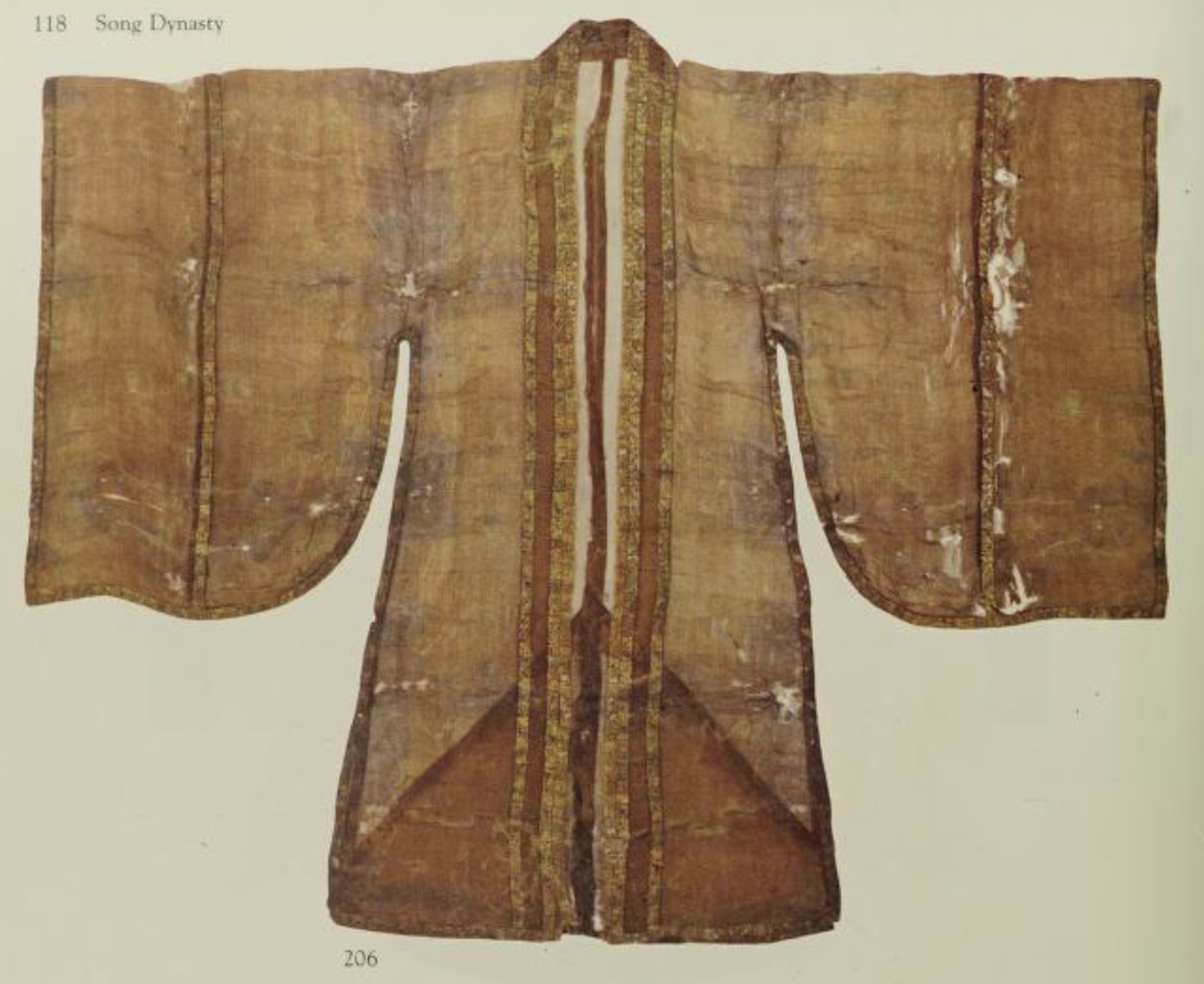
Dà Xiù Shān (大袖衫)
The da xiu shan is an ankle- to floor-length overcoat with long sleeves that trail to the knees or to the ankles. The collar of the da xiu shan is straight and vertical and often features a tie at around knee height. The da xiu shan was a staple amongst the women of the Tang Dynasty, who often wore it over high waisted qixiong ruqun dresses.
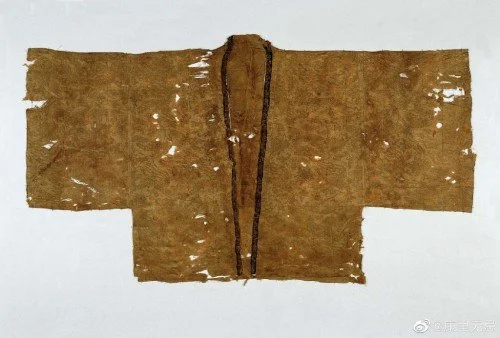
Bànbì (半臂)
The banbi is a short jacket with short sleeves. The collar of the banbi was most commonly straight and vertical (duijin) and could feature ties in the front. However crossed-collar (jiaoling), round-collar (yuanling), u-shaped-collar (tanling), and square-collar (fangling) variations were also made.
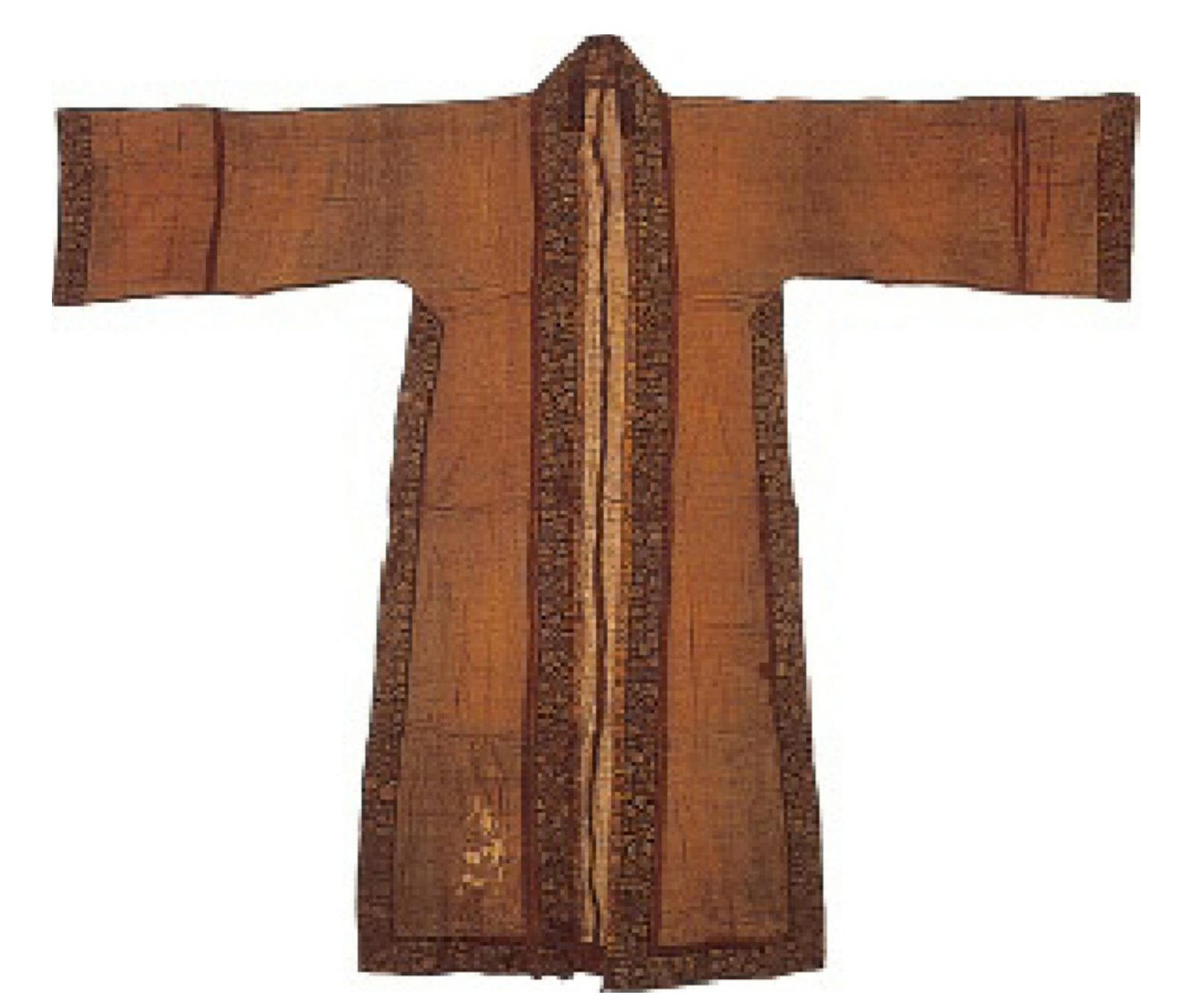
Bèizi (褙子)
The Beizi is an overcoat with straight vertical collars that are not fastened in the front so that the inner layers of the outfit are visible. Beizi can range in length from ankle-length to above the knee; and the sleeves can be deep or narrow, long or short. Often, there are side slits reaching up to the waist or armpit. The beizi was often worn over a yichang style upper garment and skirt (qun) or trousers (ku/kun).
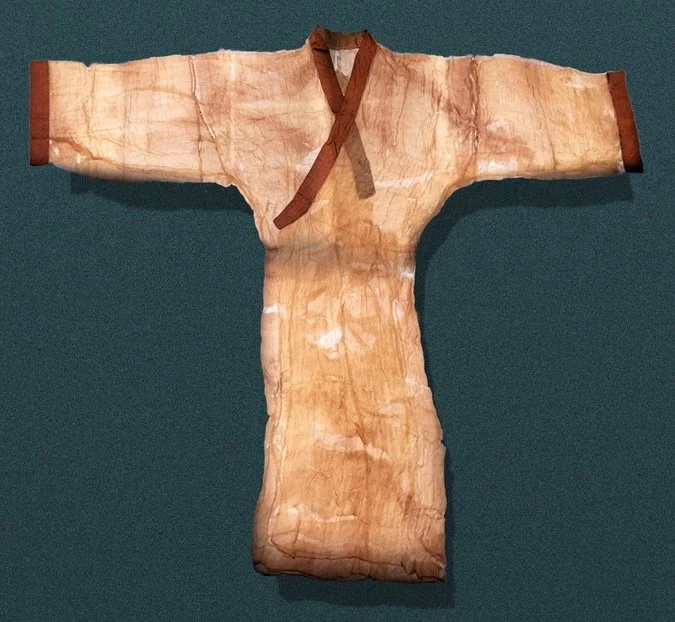
Shēnyī (深衣)
The ancient Chinese placed great symbolic importance between the division of an upper garment, called a yi, and a lower garment, called a chang. The separation of the garments was meant to represent the greater order of the heavens and the earth. In the Warring States Period, the two-piece yichang evolved into a long crossed-collar one-piece garment called the shenyi. The shenyi still had a seam at the waist, to represent the symbolic divide between the heavens and the earth.
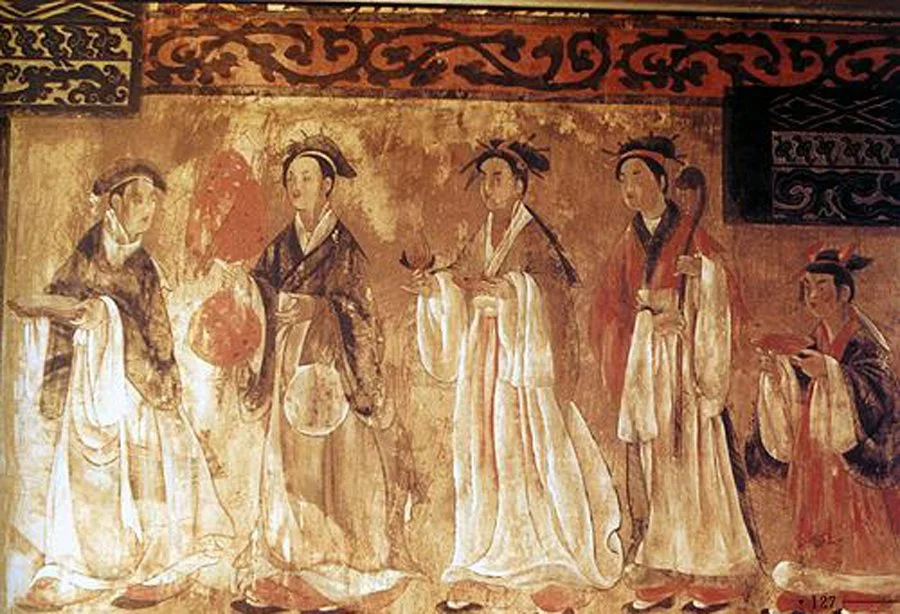
Yīcháng (衣裳)
Yichang is a generic term for a style of clothing consisting of an upper garment, the yi, and a lower garment, the chang. Most commonly, the upper garment would be a cross-collared top and the lower garment would be a skirt (qun) or trousers (ku/kun).