
Mǎmiànqún (马面裙)
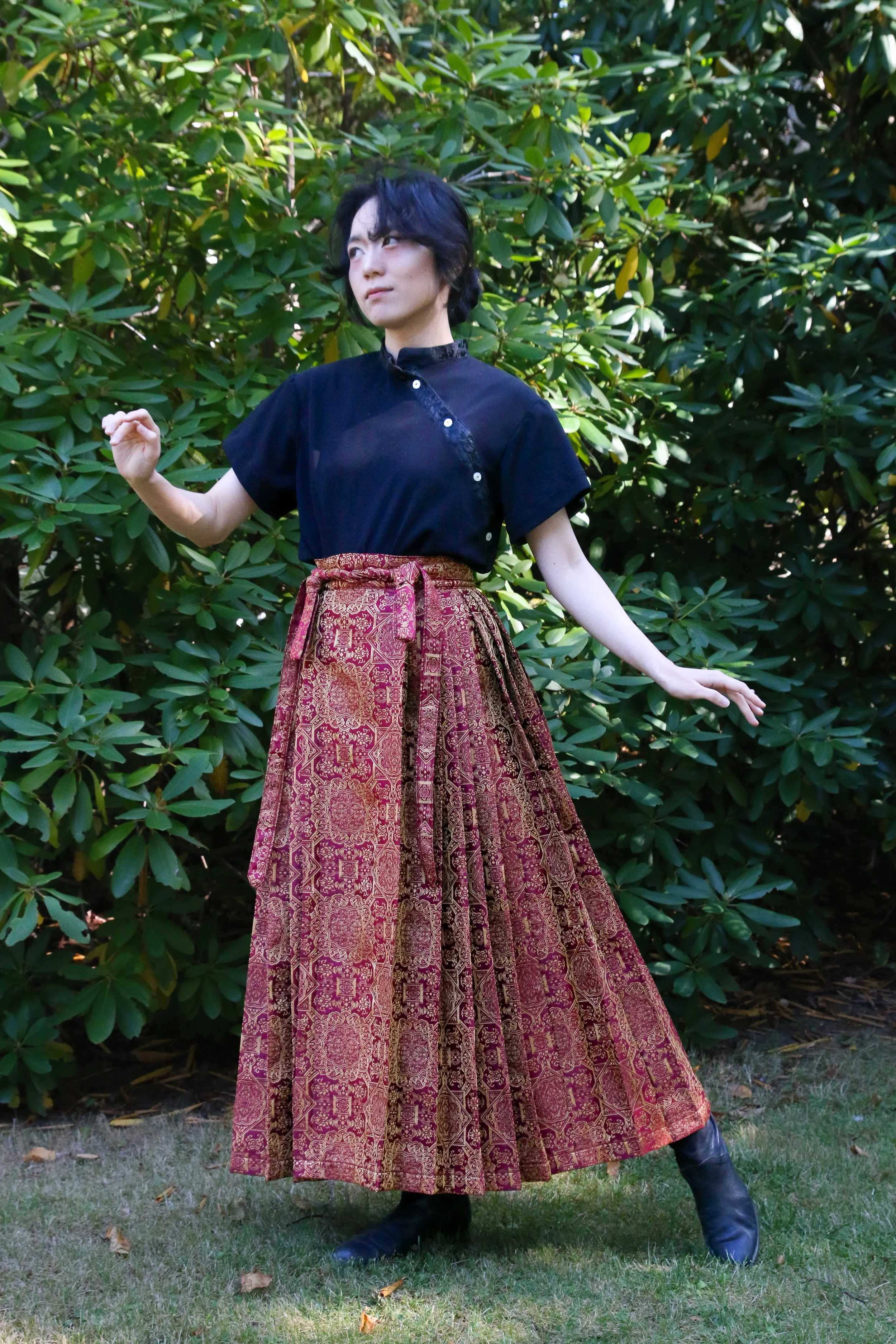
The mǎmiànqún is a long women’s skirt constructed from two overlapping panels of fabric, with pleated portions at the sides and unpleated sections at the center front and center back. The earliest forms of the mamianqun were fastened with long ties wrapping around the waist, however by the Qing Dynasty, these ties would be replaced by loops and button knot closures. Mamianqun translates to “horse-face” skirt and derives its name from the shape of “horse-face” structures on traditional Chinese city walls, which were rectangular bastions protruding from the wall designed to eliminate blind corners and thus increase the defensive capacity of the wall. The silhouette of the wall is similar to how the skirt is broken into alternating pleated and flat portions. The mamianqun was worn from the Song Dynasty through the Qing Dynasty, and is now very popular amongst the modern Hanfu revival movement.
Mamianqun were generally made from silk, and decorated with embroidery or made from rich brocades. Some styles, such as yujin brocade, were so complex that even the most talented artisans could only weave a few centimeters per day. Popular designs included a xīlán (“knee band”; 膝襕) pattern woven in a straight band across the knees, twisting floral designs, and auspicious animals such as birds and butterflies.
Color trends would change throughout the dynasties, however it was generally popular to choose a vibrant color for the mamianqun skirt. In the Song Dynasty, green, blue, white, and apricot yellow were popular. Aristocratic women even had their skirts dyed in tulip juice to give them a pleasant fragrance. In the Ming and Qing Dynasties, red was the most popular.
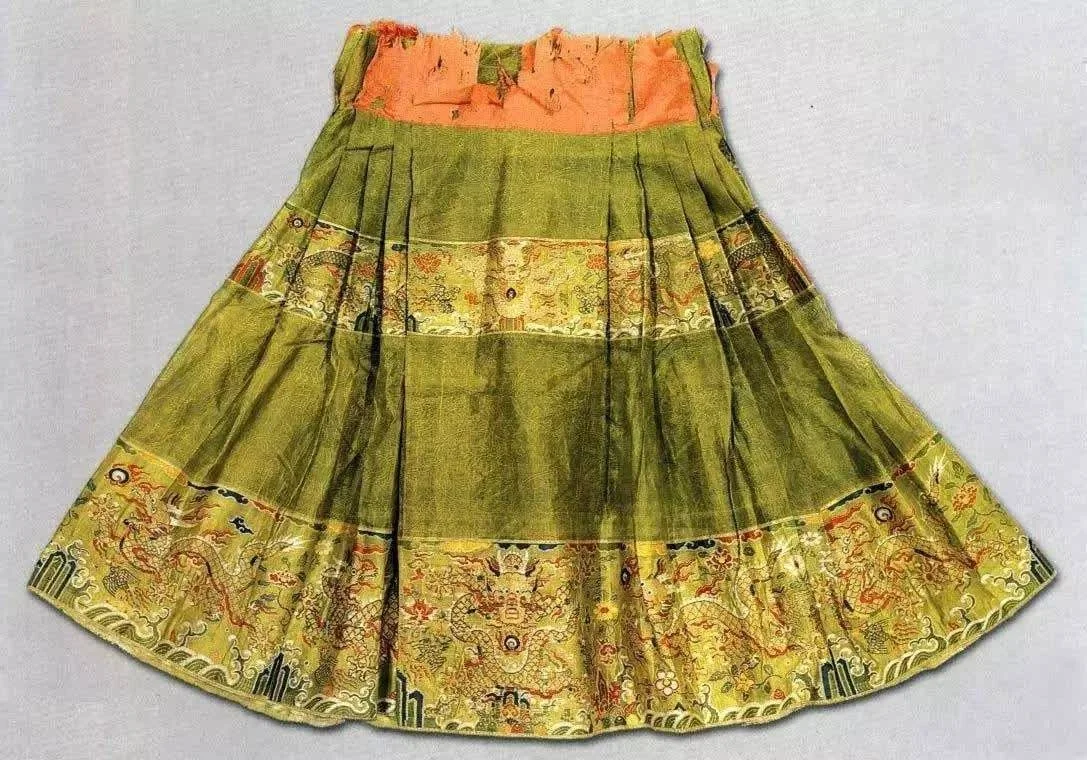
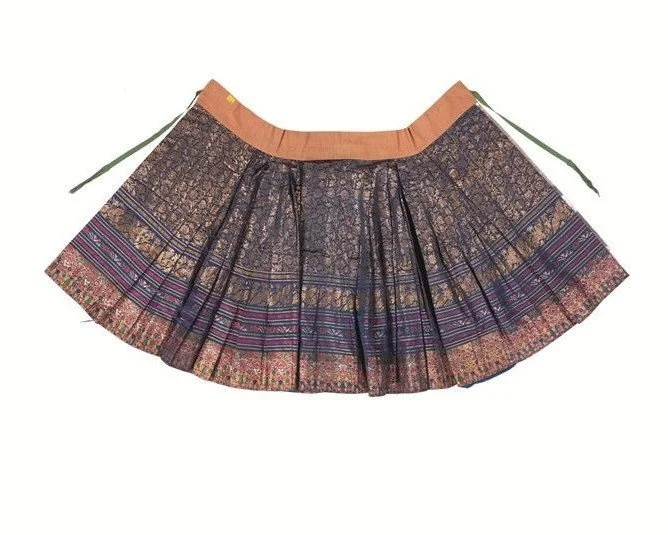
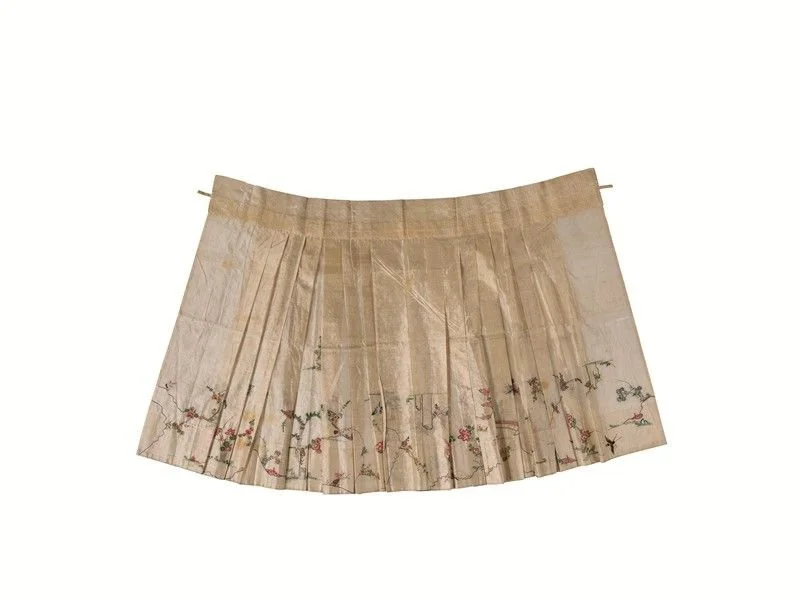
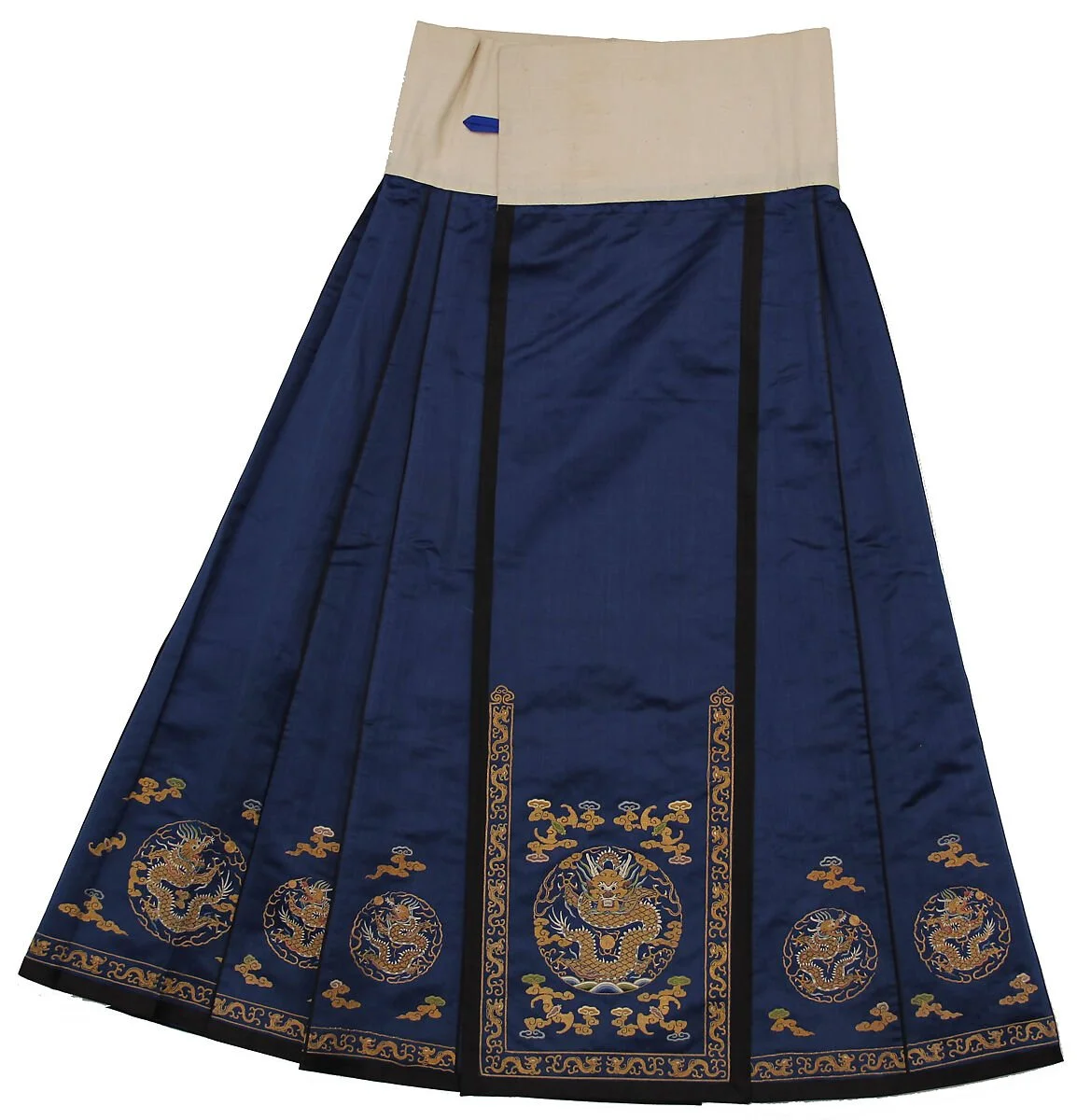
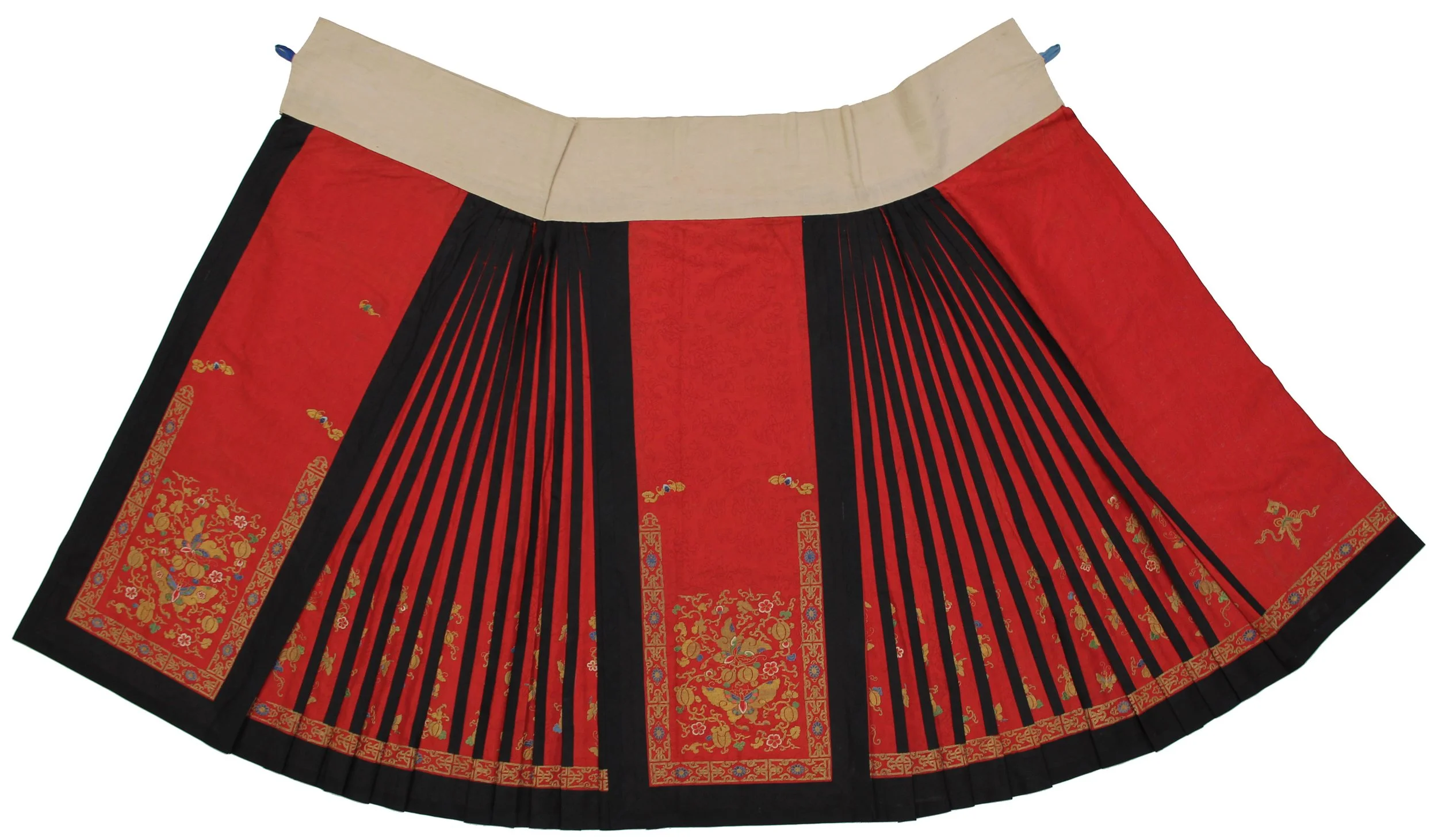
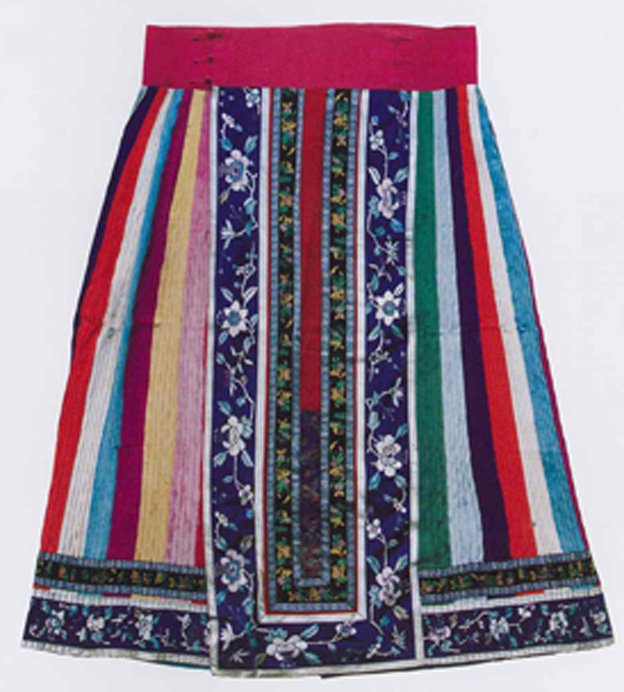
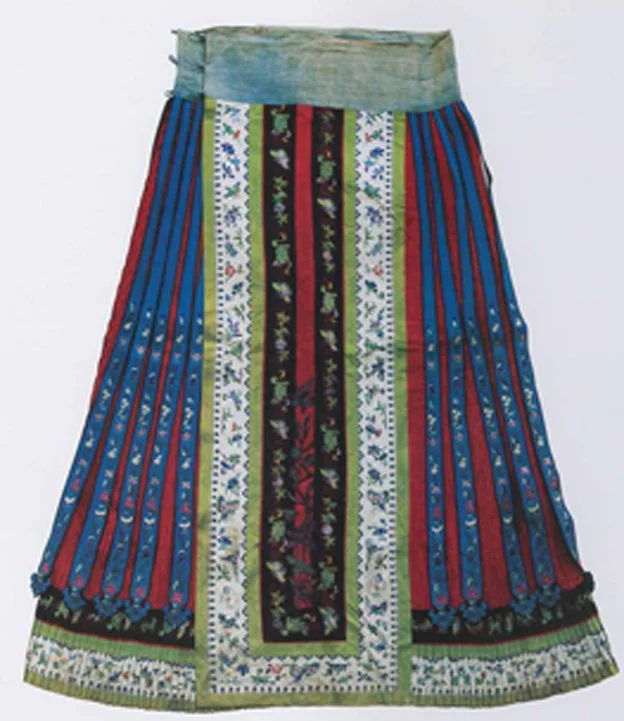
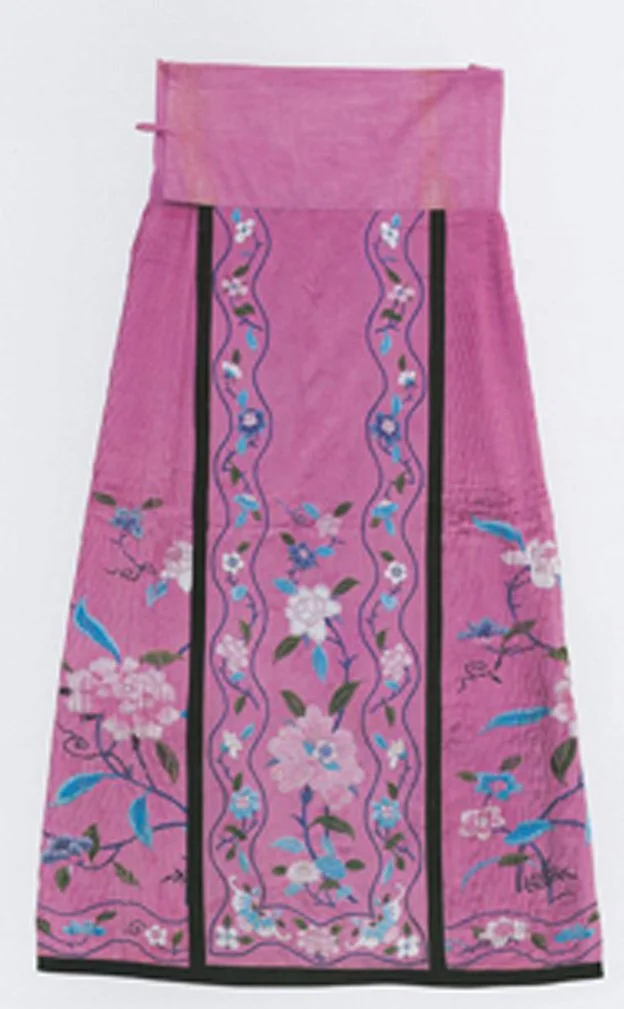
In the Qing Dynasty, many new styles of mamianqun emerged. It became popular to add a black trim along the hem and the edges of the pleats in a style called Lángān qún (栏杆裙). One famous style, called the “moonlight skirt” (Yuè huá qún, 月华裙) was made by using different colors of fabric for each pleat, as if reflecting the light of the moon. Another famous style, called the “phoenix tail” skirt (Fèng wěi qún, 凤尾裙), was decorated with long narrow ribbons made from multicolored silk and satin embroidered with golden threads. Phoenix tail skirts were reserved for women from wealthy families or for a woman’s wedding day. A final distinctive style was the “fish scale” skirt (Yúlín qún, 鱼鳞裙), which was constructed with the pleats threaded together at alternating intervals so that the pleats would partially open and close like an accordion and make a scale-like texture.
When the mamianqun is worn with a long cháng ǎo (长袄) top or a short duǎn ǎo (短袄) top, the ensemble is called an ǎoqún (袄裙).
Sew Your Own
Interested in making your own mamianqun? Use “The Courtesan” hanfu sewing pattern (includes chang ao, bijia, and mamianqun patterns).
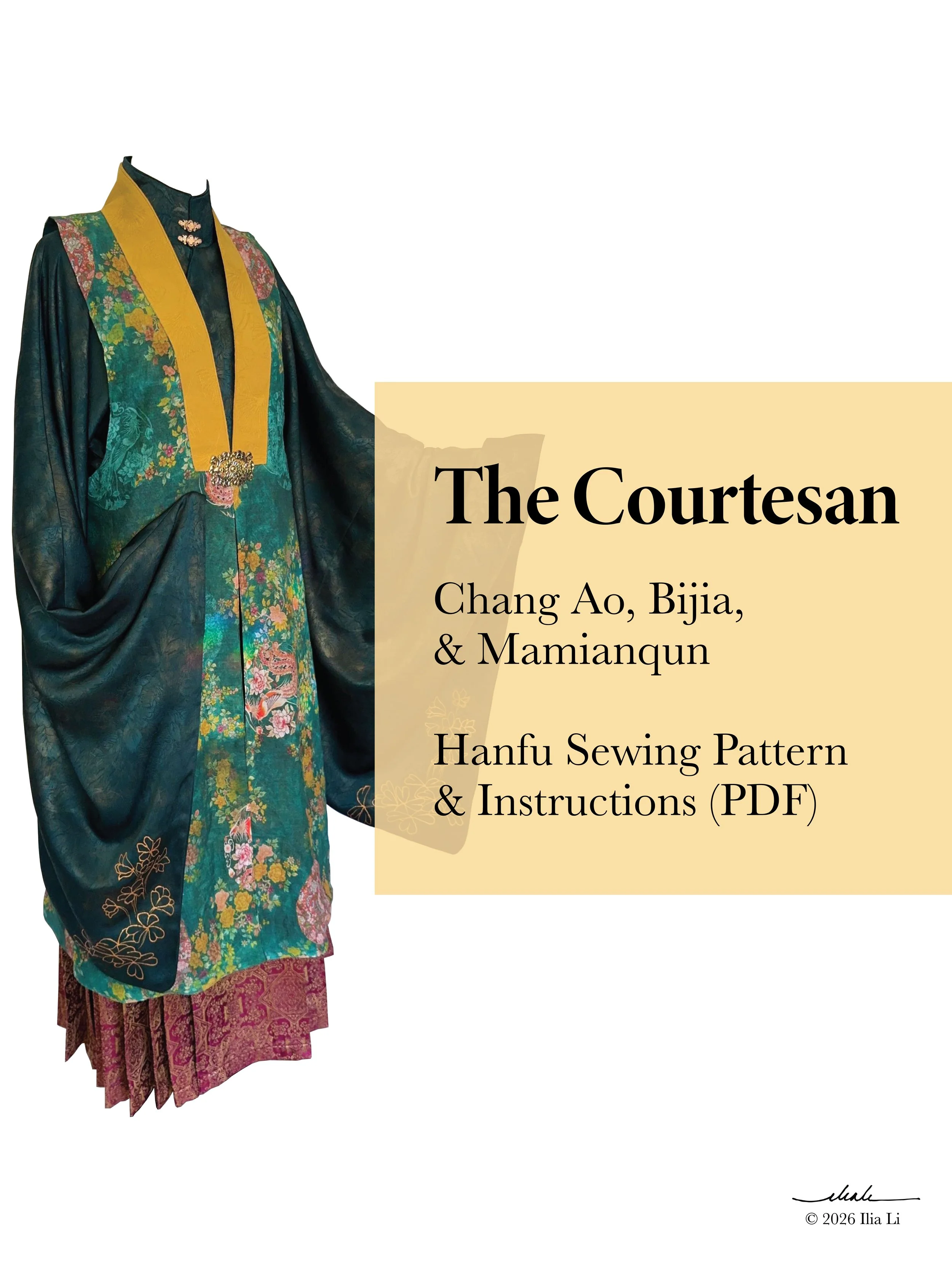
Looking for a Hanfu sewing pattern? Making a wuxia or xianxia cosplay or Chinese historical reenactment costume based in the Ming or Qing Dynasty? Want a pattern that provides info on how to properly wear Hanfu and historical considerations like sleeve length and fabric choices? I have made just the pattern for you! This pattern includes 3 garments—a chang ao, bijia, and mamianqun—which can be worn layered together or separately.
This digital download includes:
Printable sewing pattern & fully illustrated sewing instructions for 3 garments: chang ao, bijia, and mamianqun
Printable patterns are compatible with US Letter, A4, and A0 paper
4 unisex sizes covering approximately US women’s XS-XXL and instructions on how to resize your pattern
See size chart image for detailed measurements
Instructions on how to wear Hanfu
Historical considerations for fabrics, colors, motifs, and fit
Estimated yardage and sample cutting layouts
Note that I pattern in metric, so the standard seam allowance is 1cm (3/8in). Information to alter the seam allowance is provided
When you purchase this pattern, a checkout page will open containing a link to the digital download that will last for 24 hours. You will also receive an email with the same link. The download is a zip file which you will need to unzip to access the PDFs of the printable patterns and instructions. Please make sure to provide your correct email address so that the digital download is delivered to you successfully and remember to download it within 24 hours of delivery. To use the digital pattern, print out the pattern PDFs, tape together the numbered grid of pages, and then cut out the pattern pieces.
Note that this pattern is to be used for your personal use only. Commercial use and redistribution are not permitted.
Sources Consulted (photo sources listed in image captions):
Chinese Clothing by Hua Mei
5000 Years of Chinese Costume by Xun Zhou
Hanfu: A Visual Primer of Historical Han Chinese Attire by the Northern California Hanfu Association
Chinese Dress: From the Qing Dynasty to the Present by Valery Garrett.
凤尾裙小考 by 高冰清
