
Bǐjiǎ (比甲)
The bijia is a women’s vest featuring a vertical opening in the front and side slits reaching up to the hips or underarms. Sometimes, the front and back panels of the bijia were only joined at a single point under the arms, making the garment especially well-ventilated for the hot Summer months. The bijia could range in length from the thigh to the calf, and could feature a short straight collar, a round collar, or a square collar (similar to the men’s zhaojia). Bijia were typically made from silk or cotton and were commonly worn over a top and skirt such as a shan or ao and mamianqun.
The bijia was created by Empress Chabi during the Yuan Dynasty, and was designed with facilitating the Mongol horse-riding lifestyle in mind. Slits at the side and back of the garment and the lack of sleeves provided the wearer with good mobility. The Bijia continued to be worn through the Qing Dynasty, however its popularity was the greatest during the Ming Dynasty.
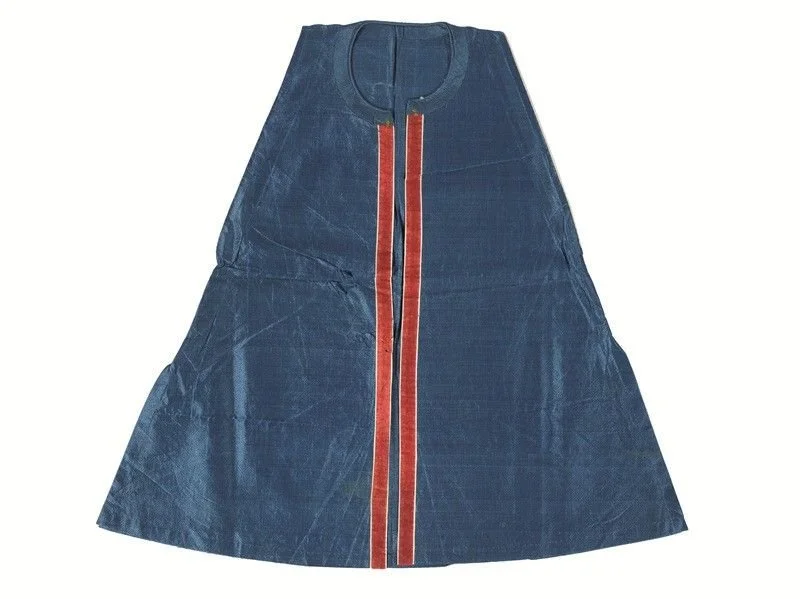
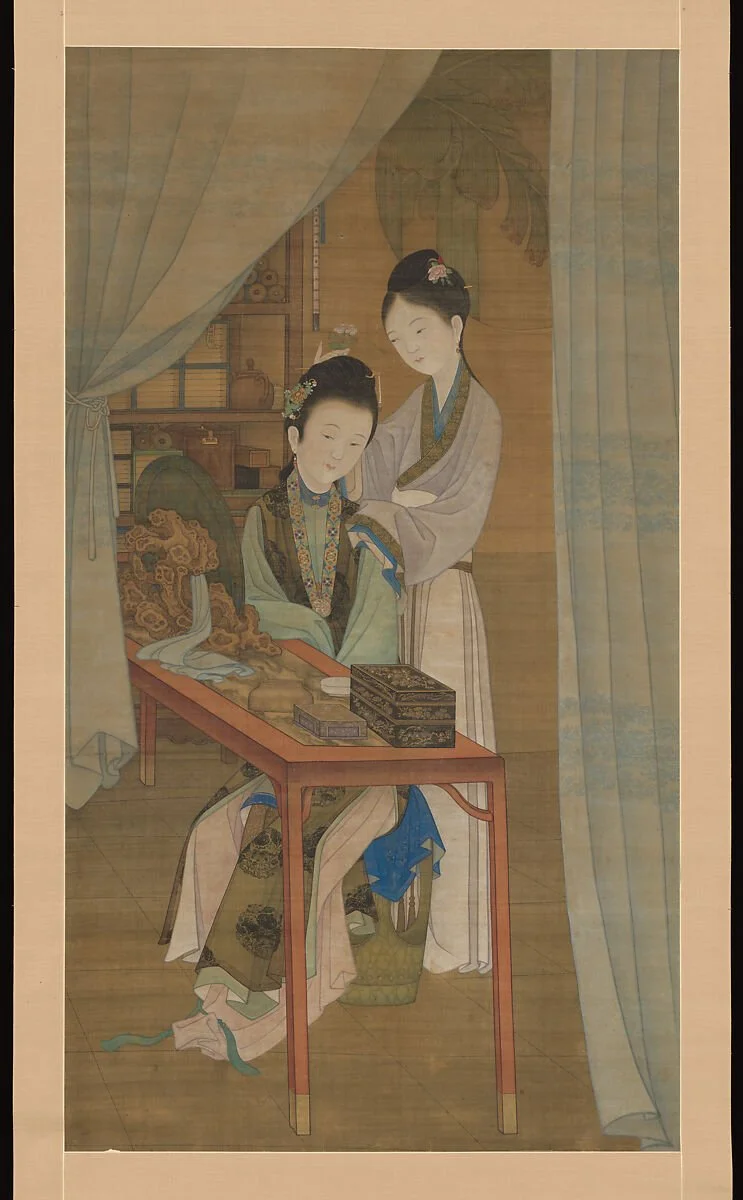
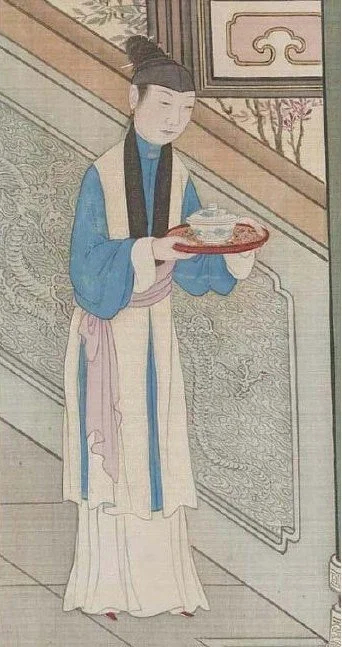
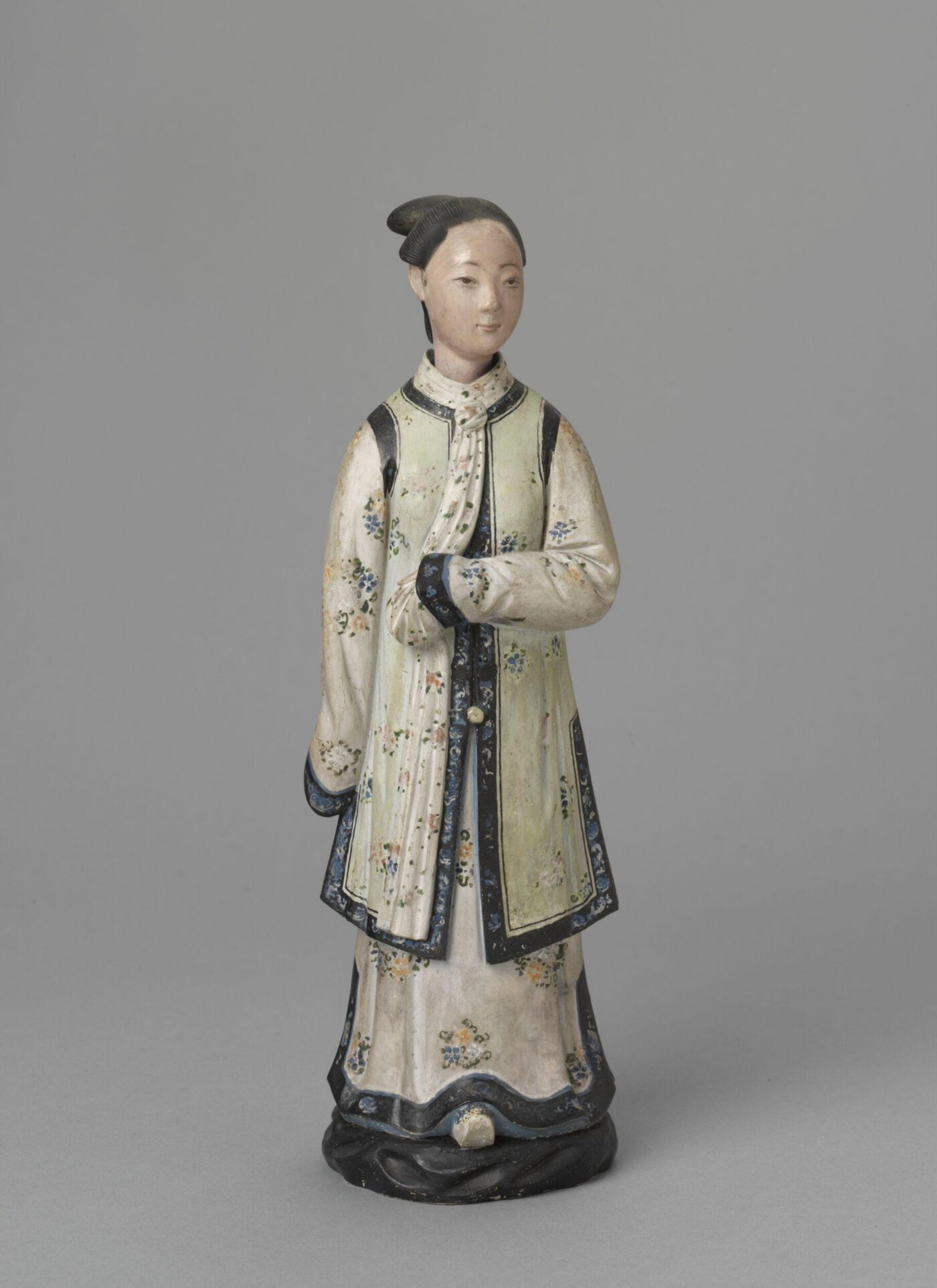
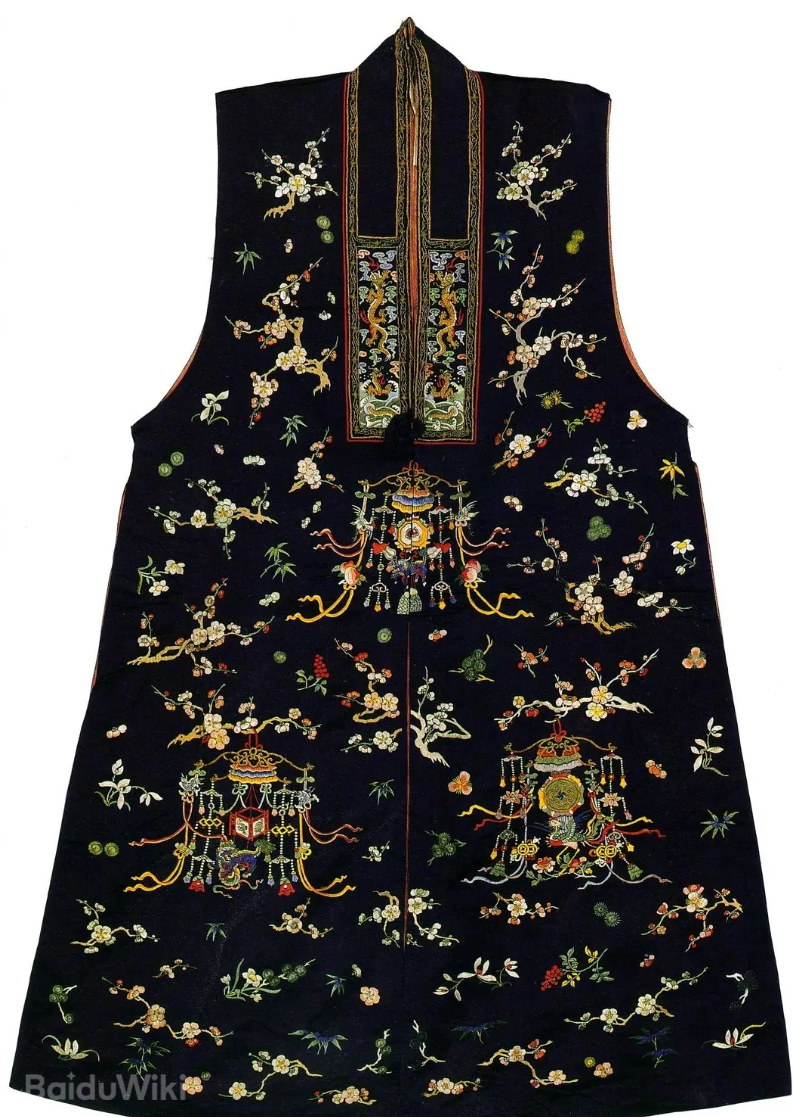
In the Ming Dynasty, a slender figure was the ideal. Women greatly favored the way the bijia’s long and more form-fitting cut gave the illusion of a slim silhouette. Imperial edicts strictly regulated what colors women could wear. Only imperial women and the wives and mothers of court officials could wear crimson, dark blue, and yellow. Commoner women were forbidden from wearing these colors, and could wear light colors like purple, green, and pink instead.
In the early Ming Dynasty, people tended to dress more frugally as the economy recovered from decades of conflict. Bijia might be decorated along the collar and side slit trim, however overall the garments were quite plain. By the end of the Ming Dynasty though, China opened its borders to international trade and people began to dress above their station, competing to display wealth and extravagance. Bijia would be richly embroidered with floral designs and auspicious motifs such as butterflies, peonies, and clouds. This trend of opulant embroidery would continue into the Qing Dynasty.
Sew Your Own
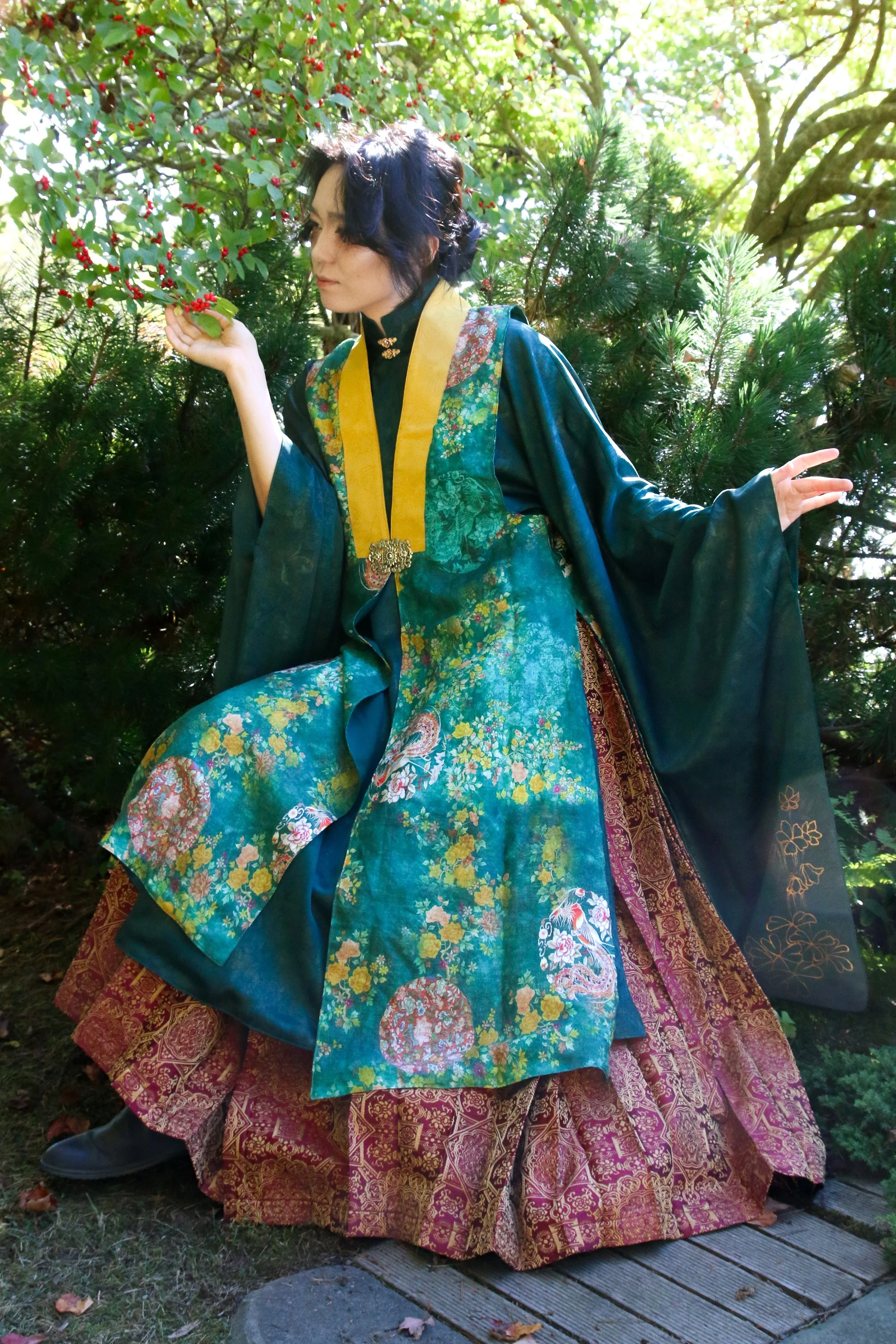
Interested in making your own bijia? Use “The Courtesan” Hanfu sewing pattern (includes chang ao, bijia, & mamianqun patterns).
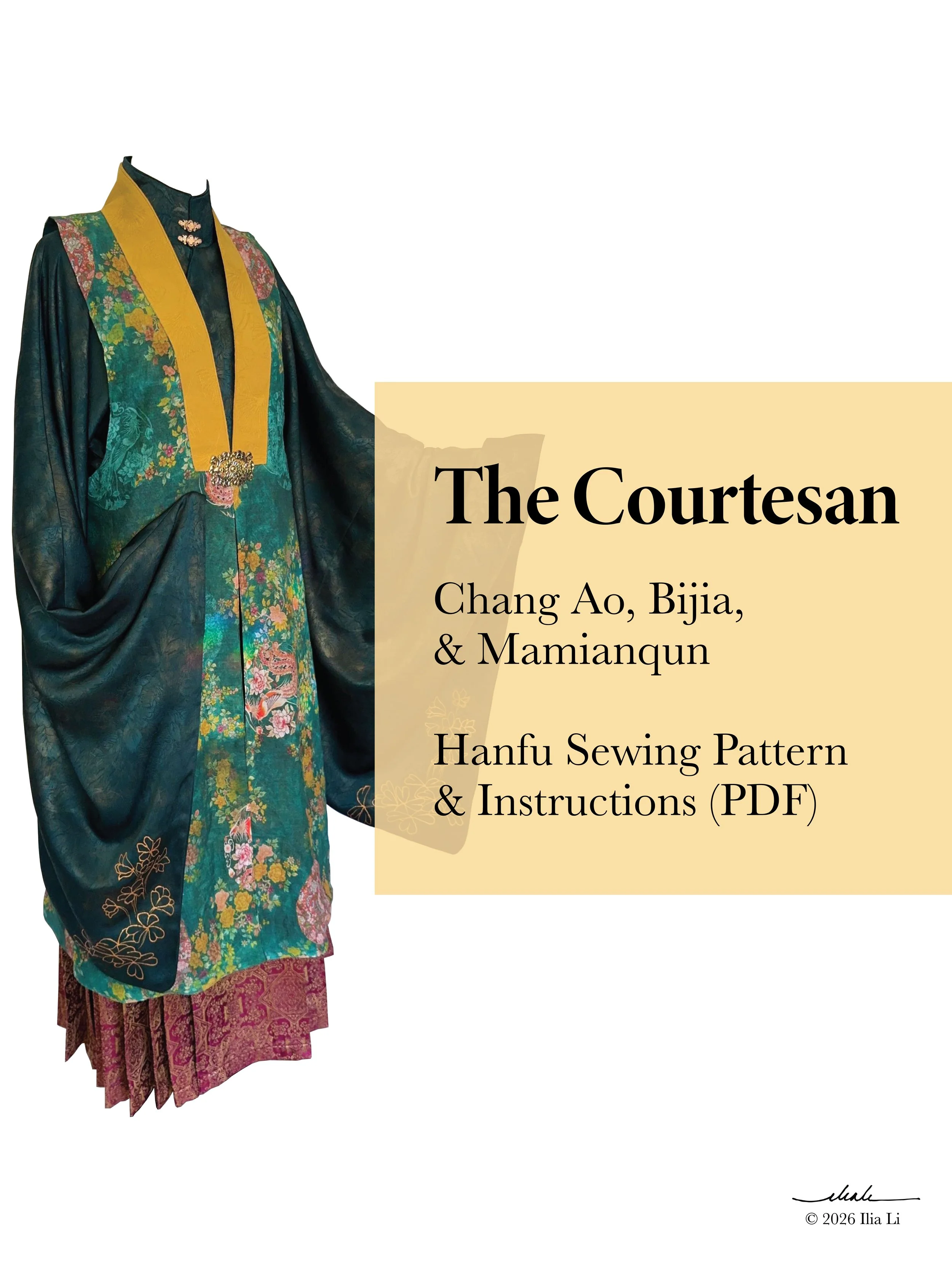
Looking for a Hanfu sewing pattern? Making a wuxia or xianxia cosplay or Chinese historical reenactment costume based in the Ming or Qing Dynasty? Want a pattern that provides info on how to properly wear Hanfu and historical considerations like sleeve length and fabric choices? I have made just the pattern for you! This pattern includes 3 garments—a chang ao, bijia, and mamianqun—which can be worn layered together or separately.
This digital download includes:
Printable sewing pattern & fully illustrated sewing instructions for 3 garments: chang ao, bijia, and mamianqun
Printable patterns are compatible with US Letter, A4, and A0 paper
4 unisex sizes covering approximately US women’s XS-XXL and instructions on how to resize your pattern
See size chart image for detailed measurements
Instructions on how to wear Hanfu
Historical considerations for fabrics, colors, motifs, and fit
Estimated yardage and sample cutting layouts
Note that I pattern in metric, so the standard seam allowance is 1cm (3/8in). Information to alter the seam allowance is provided
When you purchase this pattern, a checkout page will open containing a link to the digital download that will last for 24 hours. You will also receive an email with the same link. The download is a zip file which you will need to unzip to access the PDFs of the printable patterns and instructions. Please make sure to provide your correct email address so that the digital download is delivered to you successfully and remember to download it within 24 hours of delivery. To use the digital pattern, print out the pattern PDFs, tape together the numbered grid of pages, and then cut out the pattern pieces.
Note that this pattern is to be used for your personal use only. Commercial use and redistribution are not permitted.
Sources Consulted (photo sources listed in image captions):
Chinese Clothing by Hua Mei
5000 Years of Chinese Costume by Xun Zhou
Hanfu: A Visual Primer of Historical Han Chinese Attire by the Northern California Hanfu Association
Women and Clothing in the Yuan & Ming Dynasty (1260-1644) by Laurence Wen-Yu Li
Changing clothes in China : Fashion, Fistory, Nation by Antonia Finnane
