
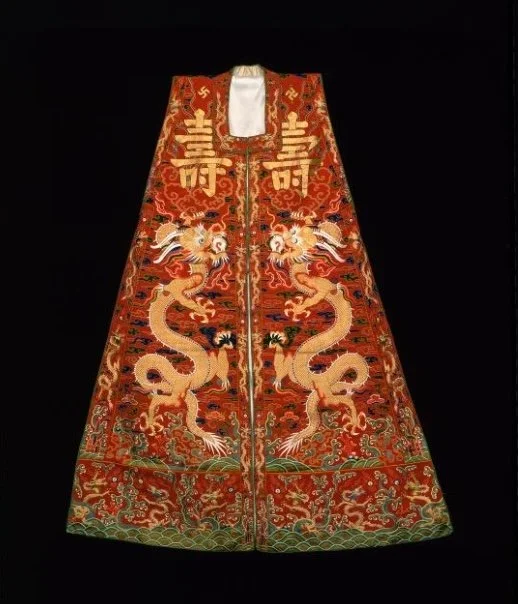
Zhàojiǎ (罩甲)
The Zhaojia is a men’s sleeveless surcoat with a straight opening in the front and a square collar, worn as part of the military uniform in the Ming Dynasty. The length can vary from the thigh to the calf. The zhaojia features side slits and a slit at the center back to accommodate horseback riding.
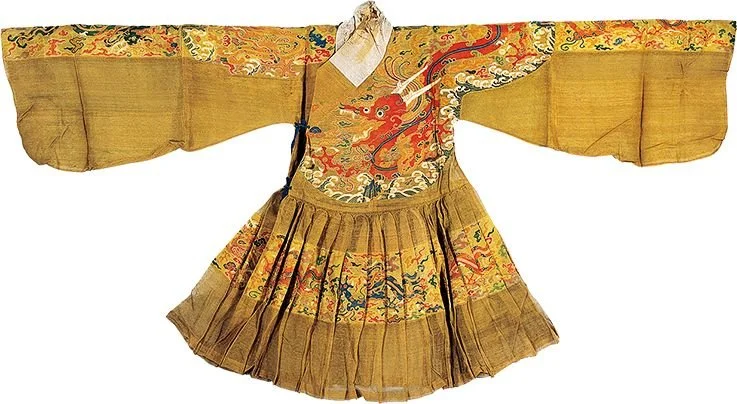
Tiēlǐ (贴里)
The tieli is a crossed-collar men’s robe with a pleated skirt worn in the Yuan Dynasty through the Ming Dynasty. An exclusive form of ceremonial tieli were known as cìfú (赐服). Cifu were decorated with 4-clawed dragon-like creatures and could be broken down into categories: mǎngfú (蟒服, python robe); fēiyúfú (飞鱼服, flying fish robe); dòuniúfú (斗牛服, fighting bull robe); and qílínfú (麒麟服, qilin robe).
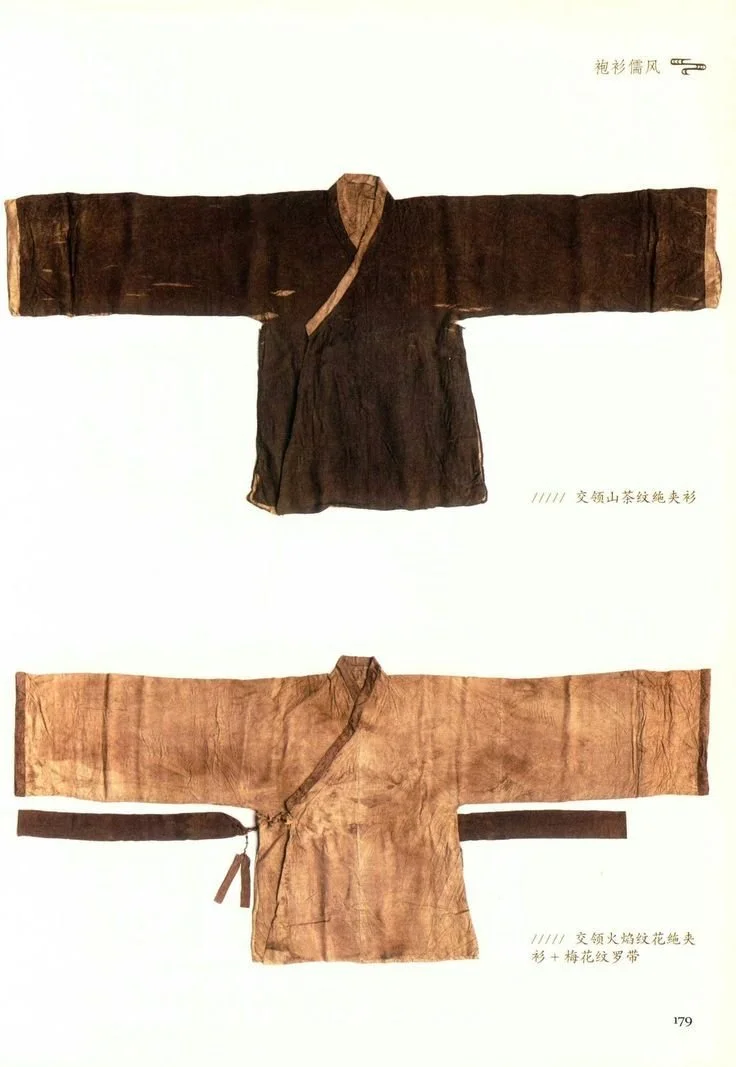
Shùhè (裋褐)
The shuhe is a unisex utilitarian cross-collar top, typically paired with a pair of trousers (called ku/kun), worn by commoners and martial artists. The hem of the shuhe can range in length, typically falling between the hip and the thigh; and the sleeves of the shuhe typically reach between the wrist to slightly beyond the fingertips.
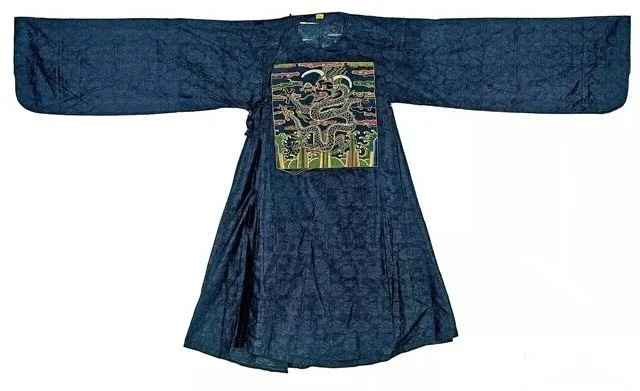
Yuánlǐngpáo (圆领袍)
The yuanlingpao is a long round-collared outer robe worn layered on top of other garments, such as the zhiduo or tieli. The yuanlingpao evolved from the Hufu fanlingpao of Central Asia which features curved overturned lapels.
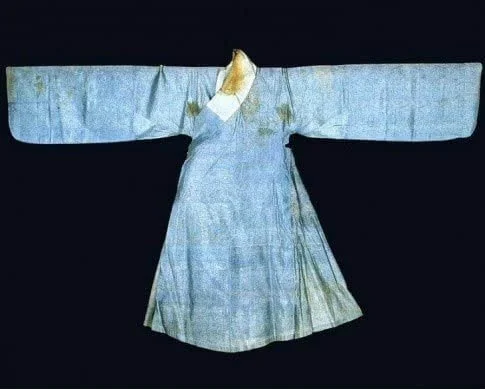
Zhíduō (直裰)
The zhiduo is a cross-collar long men’s robe favored by scholars, officials, and Buddhist monks. Zhiduo can have straight sleeves or wide curved pipa sleeves, and the hem length should fall between the knee and the ankle. Typically, the collar has a white collarguard sewn on top of it designed to be replaced when it becomes soiled or worn out. Zhiduo were worn between the Tang Dynasty and the Ming Dynasty, however styles slightly varied between dynasties.