
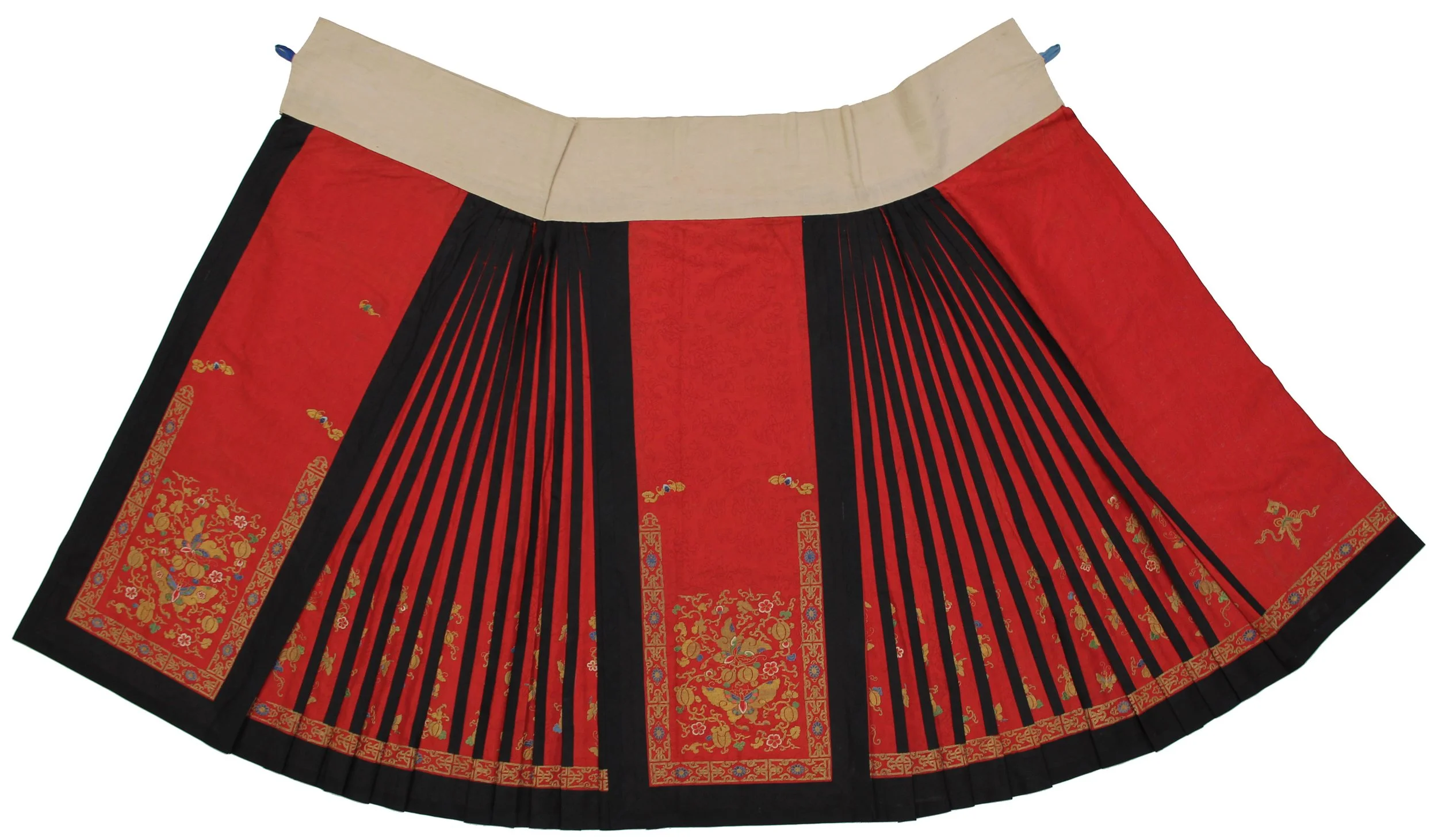
Mǎmiànqún (马面裙)
The mǎmiànqún is a long women’s skirt constructed from two overlapping panels of fabric, with pleated portions at the sides and unpleated sections at the center front and center back. Mamianqun translates to “horse-face” skirt and derives its name from the shape of “horse-face” structures on traditional Chinese city walls, which were rectangular bastions protruding from the wall designed to eliminate blind corners and thus increase the defensive capacity of the wall. The silhouette of the wall is similar to how the skirt is broken into alternating pleated and flat portions. The mamianqun was worn from the Song Dynasty through the Qing Dynasty, and is now very popular amongst the modern Hanfu revival movement.
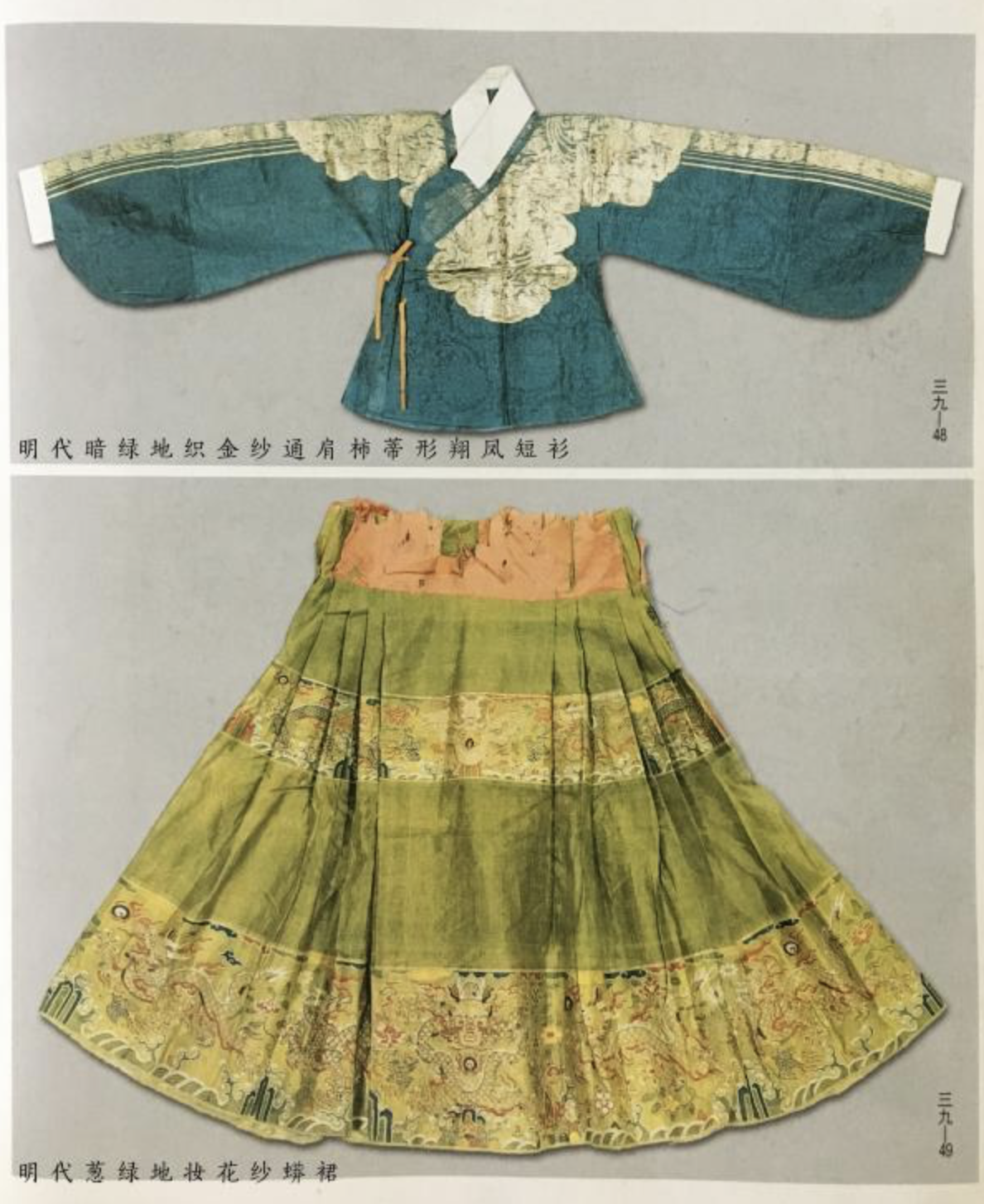
Ǎoqún (袄裙)
The ǎoqún (袄裙) is a set of garments consisting of a long-sleeved top worn layered over a pleated skirt. The upper garment of the aoqun was called the ǎo (袄) if it was lined or the shān (衫) if it was unlined. The lower garment, or qún (裙), was most often a mǎmiànqún (马面裙) skirt. Aoqun were most popular during the Ming Dynasty and Qing Dynasties, and were typically made from silk and decorated with embroidery or made from rich brocades.
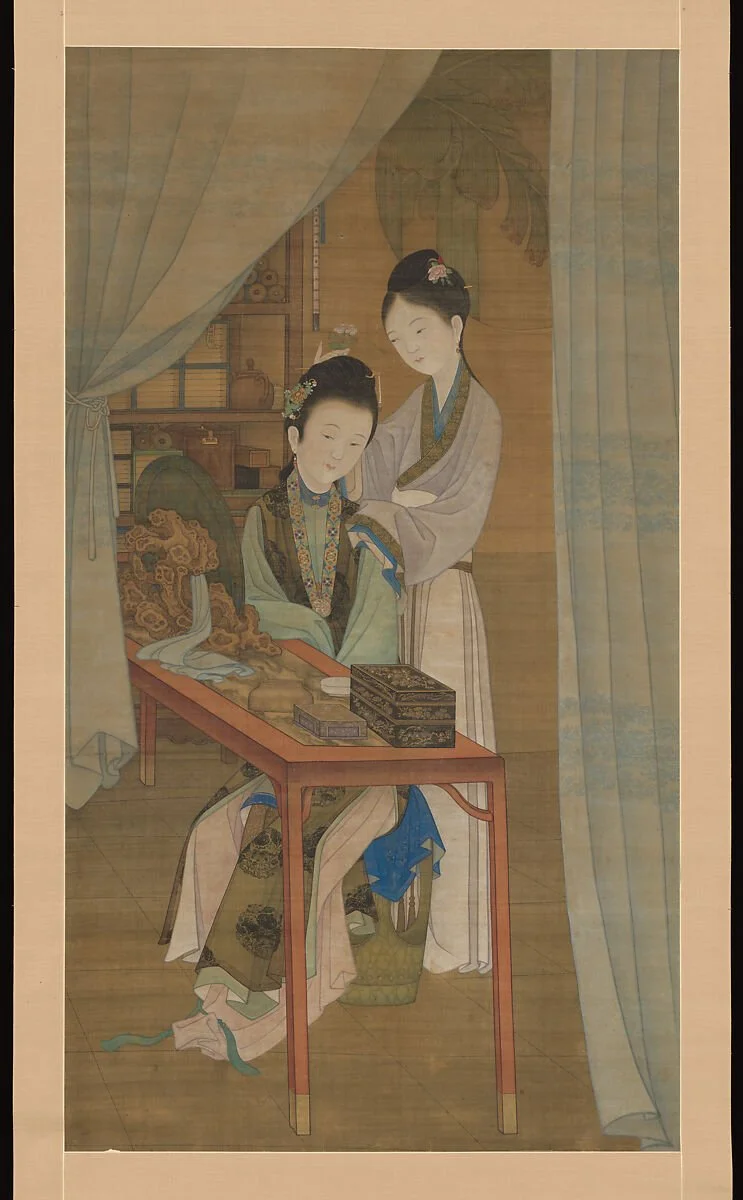
Bǐjiǎ (比甲)
The bijia is a women’s vest featuring a vertical opening in the front and side slits reaching up to the hips or underarms. The bijia could range in length from the thigh to the calf, and could feature a short straight collar, a round collar, or a square collar. Bijia were typically made from silk or cotton and were commonly worn over a top and skirt such as a shan and mamianqun.