
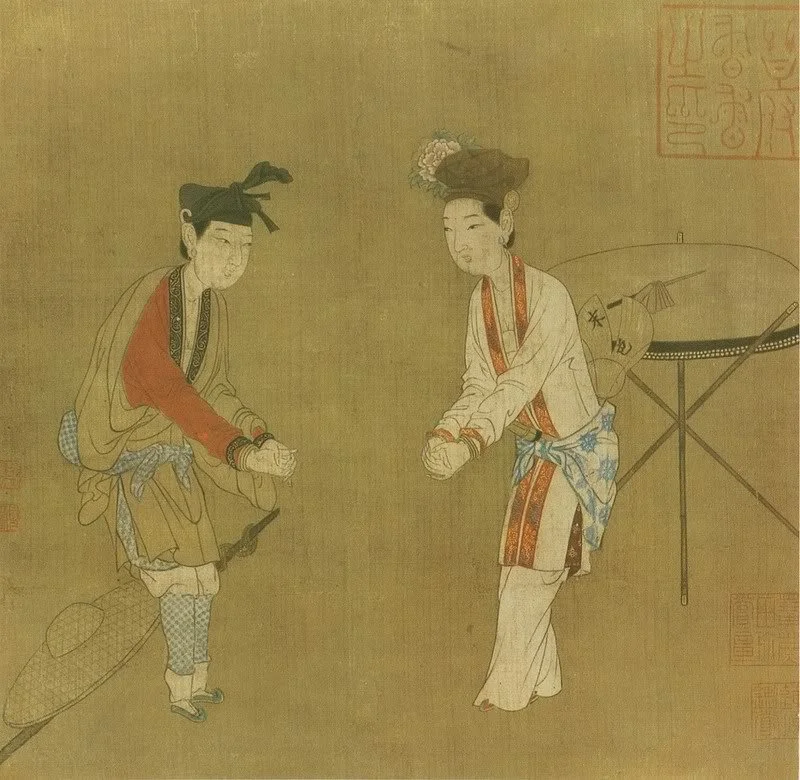
Hédāngkù (合裆裤)
The hedangku are a type of unisex loose trousers with an oversized waistband folded and cinched around the waist with a tie. Hedangku are often worn as an undergarment beneath robes or skirts, or paired with a loose top.
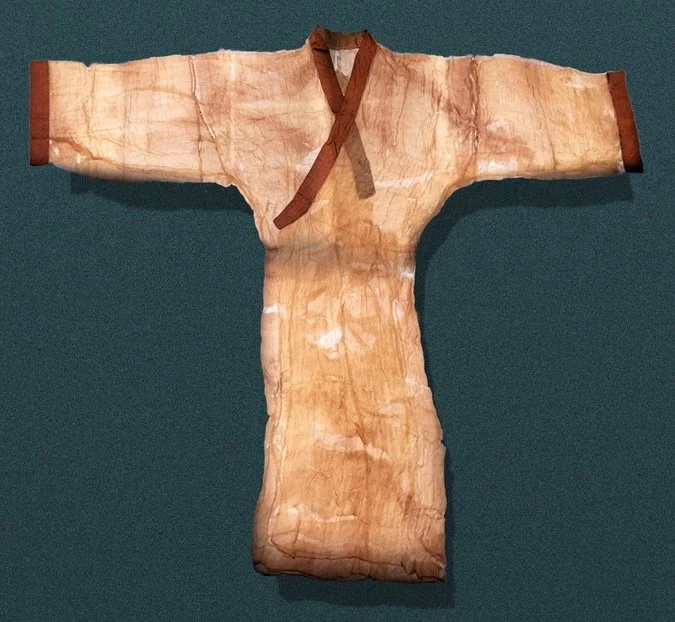
Shēnyī (深衣)
The ancient Chinese placed great symbolic importance between the division of an upper garment, called a yi, and a lower garment, called a chang. The separation of the garments was meant to represent the greater order of the heavens and the earth. In the Warring States Period, the two-piece yichang evolved into a long crossed-collar one-piece garment called the shenyi. The shenyi still had a seam at the waist, to represent the symbolic divide between the heavens and the earth.
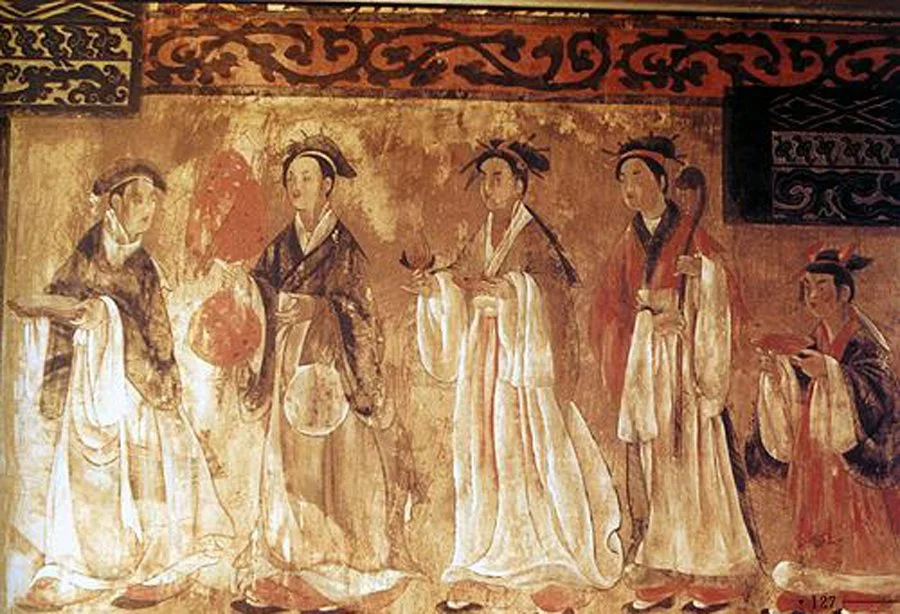
Yīcháng (衣裳)
Yichang is a generic term for a style of clothing consisting of an upper garment, the yi, and a lower garment, the chang. Most commonly, the upper garment would be a cross-collared top and the lower garment would be a skirt (qun) or trousers (ku/kun).